Netanyahu finally announces October 7 inquiry: Why are Israelis furious?
 20 December 2025
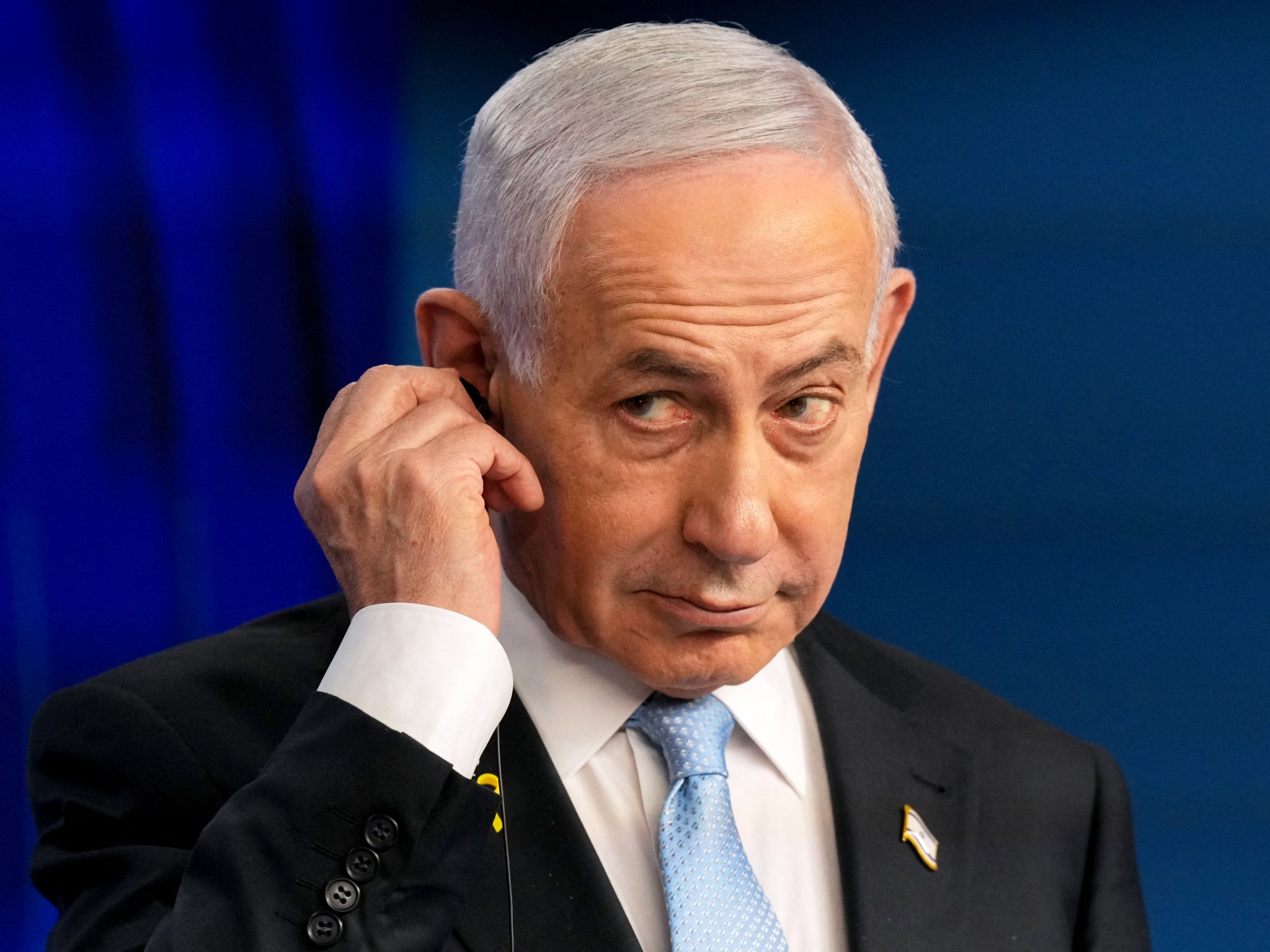

The news that Israeli Prime Minister Benjamin Netanyahu will be heading the inquiry into his own government’s failings ahead of the Hamas-led attacks of October 7, 2023, has drawn sharp criticism from many across Israel.
Calls for a state commission of inquiry, to be led by a sitting or retired Supreme Court justice, have been omnipresent since the attacks.
- list 1 of 4The six problems a Gaza ceasefire has brought Israel’s Benjamin Netanyahu
- list 2 of 4Sorry, not sorry: Netanyahu demands a pardon
- list 3 of 4Israel is imploding
- list 4 of 4How much is US support for Israel costing Donald Trump?
end of list
Senior military figures, the families of many of those killed or taken captive on October 7, and polls of the Israeli public have supported the establishment of an inquiry capable of holding the government to account.
Until now, Netanyahu has gone to great lengths to avoid an official investigation into any failings on his or his government’s part, arguing instead that overseeing his country’s genocidal war on Gaza, which has killed more than 70,000 people since October 2023, has had to take priority.
However, on Thursday, the Prime Minister’s Office announced that Netanyahu would instead be pushing ahead with legislation to establish a politically-appointed inquiry, with him at the helm, with parliament Speaker Amir Ohana, a close ally of the prime minister, expected to play a key role in selecting its members.
The plan outlines a body of six members, who would choose a chair from within the group. The government has said it would first seek cross-party backing for all six appointments. However, if the opposition boycotts proceedings, as is widely expected, Ohana would be authorised to appoint its representatives.
The ministerial team tasked with determining the scope of the inquiry is to meet in West Jerusalem on Monday, coincidentally the same day that Netanyahu is scheduled to give testimony in his long-running corruption trial in Tel Aviv.

Why won’t the inquiry be independent?
An October poll by Israel’s Institute for National Security Studies showed that three out of four Israelis supported establishing an independent state inquiry.
Advertisement
Feelings run particularly high among senior members of the military and the relatives of those taken captive or killed during the October 7 attack.
Earlier this month, proceedings in Netanyahu’s criminal trial were held up after some of the families of the bereaved were accused of holding up signs demanding a state inquiry in court, an allegation they strenuously denied.
Eyal Eshel, the father of one of the soldiers killed on October 7, told the judges that the relatives had not come to create a “provocation”, but simply to “look him [Netanyahu] in the eyes and request the simplest of things – a state commission of inquiry”.
Former Minister of Defence Yoav Gallant has also called for a state inquiry on numerous occasions, as has the former head of the military, Herzi Halevi.
Last Sunday, 22 former captives and dozens of family members signed an open letter demanding that either a state inquiry be established or the government resign.
“We call on the government of Israel to stop evading, stop procrastinating, stop whitewashing and to immediately establish a full state commission of inquiry,” the letter said.
However, Netanyahu and his governing coalition have repeatedly pushed back against the idea of a state inquiry, claiming that a judge appointed by the Supreme Court could not be trusted to rule impartially.
What has been the political response to the inquiry’s announcement?
Outside of the coalition, fury.
Writing on social media, Yair Golan, the leader of the Democrats, wrote, “This isn’t ‘conflict of interest,’ it’s organised crime under the guise of the law. The man responsible for the greatest disaster in our history isn’t looking for answers, he’s looking for an alibi.”
Other anti-Netanyahu politicians have criticised the planned inquiry.
Avigdor Liberman, the leader of the Yisrael Beytenu party, also called for a state inquiry, using a Hebrew expression that means “a guilty conscience gives itself away”.
Meanwhile, Benny Gantz’s Blue and White party said it would ask the parliament’s State Control Committee on Monday to compel the government to set up a state commission of inquiry.
How have families of October 7 victims responded?
Angrily.
“The Israeli government continues to spit in the face of the bereaved families, freed hostages, the hostages’ families, the families of the victims, the residents of the south and of the north, of the reservists and of all citizens of Israel,” a statement released by the October Council, a group representing the families of Israelis killed and taken captive on October 7, said in response to the government’s announcement.
Advertisement
Addressing the government, the letter continued, “You, who will be investigated by the same state commission of inquiry, will not disrupt the investigation or cover up the truth. We won’t let you. You have declared war on us, on the memory of our loved ones, and on the future of our children.”
What previous inquiries have there been?
An army probe in February into its actions ahead of and during the October 7 attacks acknowledged its “complete failure”, saying that the army hugely underestimated the capabilities of the Palestinian group.
Resigning ahead of the inquiry’s conclusion, Halevi conceded the “terrible” security and intelligence “failures” that had characterised the military’s response to the incursion.

In November, an external panel appointed by Halevi’s successor, Eyal Zamir, revealed that the military’s investigation into its conduct had been “inadequate”.
In a separate investigation in March, Israel’s internal security agency, the Shin Bet, conceded a litany of failures ahead of the October 7 attacks, including its failure to correctly identify the threat from Hamas and share what intelligence it had with the military. After a protracted feud with Netanyahu, Ronen Bar, the director of the Shin Bet, announced in April that he would be stepping down.
Netanyahu has yet to take any personal or political responsibility for the security failures before and during the attack on October 7, 2023.
Related News

US military kills 8 in latest attacks on vessels in eastern Pacific
Israel bombards areas across southern Lebanon in latest truce violation

Trump announces $12bn package to aid farmers hurt by his tariffs