Corentyne hire car operators demand crackdown on private vehicles transporting passengers
 12 June 2026
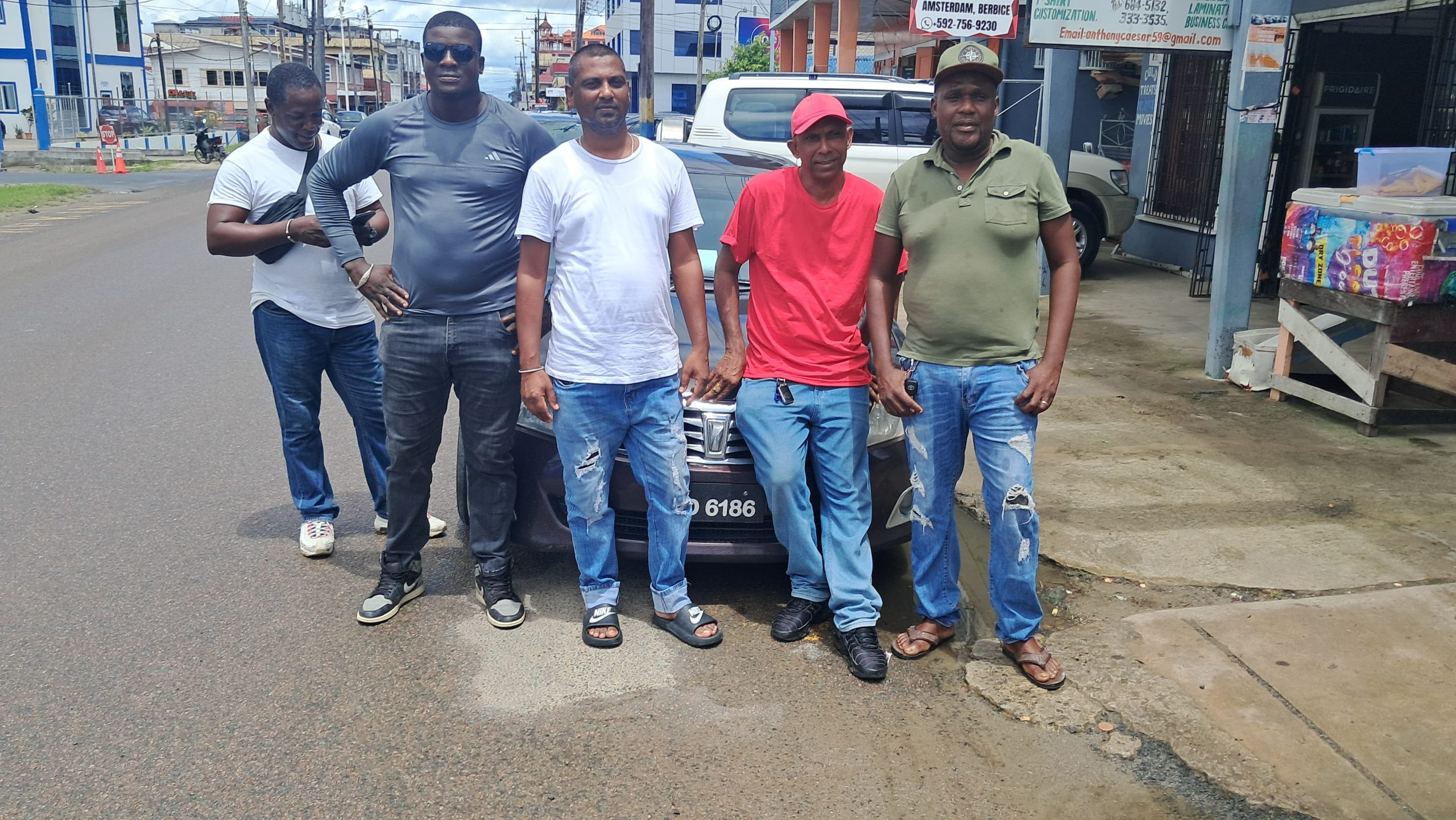


For hire car operators along the Corentyne Coast in Region Six (East Berbice-Corentyne), the issue of private vehicles carrying paying passengers has moved beyond a mere nuisance and is now being described as a serious threat to their livelihoods.
Drivers who operate between New Amsterdam and Skeldon are now calling on Police to intensify enforcement against what they describe as an expanding network of private vehicles offering transportation services without complying with the regulations imposed on licensed hire cars.
Their concerns were recently aired during a gathering of operators, where drivers outlined the impact the practice is having on their earnings at a time when fuel prices, maintenance costs and other expenses continue to rise.
Leading the call for action by the Police was President of the Upper Corentyne Hire Car Association, Rajish Kumar, who said operators have been raising the issue for years with little success.
“The private hire is a disease. Nobody is doing nothing. If you pay attention, you can see private cars operating everywhere. We have been complaining for years, and nothing is happening. As an association, we have raised concerns, and we are still looking for assistance because our members are suffering,” Kumar said.
According to Kumar, the issue extends to more than competition among transport providers.
He argued that passengers who use private vehicles for transportation are often placing themselves at risk, while legitimate operators continue to lose business to persons who are not licensed to provide the same service.
Kumar said members of the association are hoping that renewed public attention will prompt stronger action from the relevant authorities.
For long-time driver Atherley McDonald, who has spent more than 15 years in the industry, the concern is one of fairness.
McDonald said licensed hire car operators are required to comply with numerous regulations and operational requirements, while private vehicles engaged in similar activities are often able to operate without the same restrictions.
“We as hire car drivers, we’re providing a service whereby we have to work with rules. You can’t wear short pants, you can’t get additional music in your car, you can’t use tint, and all kinds of things. We’re working with all these rules and regulations, paying the road service fee and all these things, while private car men are stopping and picking up work and doing all kinds of things,” he said.
McDonald is calling on the Home Affairs Ministry, the Guyana Police Force and other relevant authorities to intervene and ensure that the laws governing public transportation are enforced equally.
Another driver, Ivor Dhuman, said one of the most frustrating aspects of the issue is watching potential passengers board private vehicles while licensed hire cars remain parked nearby.
“When you report to the Police, the Police just leave them alone. The private car picking up passengers in front of you, plus they’re driving more harder than you, with more speed, picking up passengers in front of you. We want the authority to look into the private hire and take them off the road so we could work at ease,” Dhuman said.
Dhuman added that drivers are facing increasing pressure from both rising costs and reduced passenger numbers, making it difficult to maintain a reasonable income.
For Delroy Watts, the issue cannot be separated from the escalating cost of operating a vehicle.
“The gas price is very high. Normally we used to pay $175 for a litre. Now we’re paying $226. So we just raise the price a hundred or two hundred dollars more, and still people don’t want to pay for the gas. The price is so high that you can’t work with it. Not only the gas, the tyres, everything,” he explained.
He said operators are often criticised whenever fares increase, but many passengers are unaware of the financial pressures facing drivers.
Budram Singh, who has worked in public transportation for two decades, echoed those concerns.
According to Singh, “The gas prices are going up. The Police are not doing anything about the private car. A couple of years ago, the fare was $700. We can’t work for $700 now. Everything is going up. The extra money that we are supposed to make, the private car is making.”
No formal complaints
The drivers’ concerns were subsequently put to Regional Division Six Commander Assistant Commissioner Shivpersaud Bacchus.
In responding, Bacchus said his office has not received formal complaints from hire car associations or operators regarding the issue.
“My office hasn’t received any formal complaint from any association or any members or operators from that category. However, the traffic department, as we would have to conduct enforcement exercises throughout the region, and if their private car has been within those stop-and-search exercises or enforcement exercises, we usually do charge those persons,” Bacchus said.
The commander explained that one of the challenges facing investigators is obtaining evidence necessary to successfully prosecute offenders.
According to him, persons found inside vehicles often claim they are merely receiving a lift rather than paying for transportation, making it difficult to establish that an offence has occurred.
Bacchus noted that Police have also targeted taxi services that use private vehicles bearing company logos and other identifying markings.
He said enforcement exercises have previously been conducted in New Amsterdam and across the Corentyne to address those concerns.
Meanwhile, Regional Traffic Officer Assistant Superintendent Charles Hook also addressed the matter, stressing that operating a private vehicle as a hire car is illegal.
“Private hire is an offence. It’s an offence against the state, and persons who travel with private vehicles are not fully covered by the insurance. In the event of them involving an accident, then they wouldn’t benefit from anything in terms of having a reward from the insurance company. So we are asking persons to desist from travelling in private vehicles,” Hook said.
The traffic officer acknowledged that enforcement remains challenging, particularly when operators work from private residences and only travel after receiving telephone calls from customers.
However, he urged members of the public to report offenders and provide vehicle registration numbers whenever possible.
According to Hook, information supplied by citizens can assist Police in identifying and prosecuting operators who use vehicles for purposes other than those for which they are licensed.
Subscribe to get the latest posts sent to your email.
Related News
Queen’s College students explore robotics, agriculture in STEM Workshop after winning YE...
House on reserve halts building of canal, delaying flood relief for vulnerable communities

Taxi driver, teen arrested after allegedly robbing engineer at Parika