

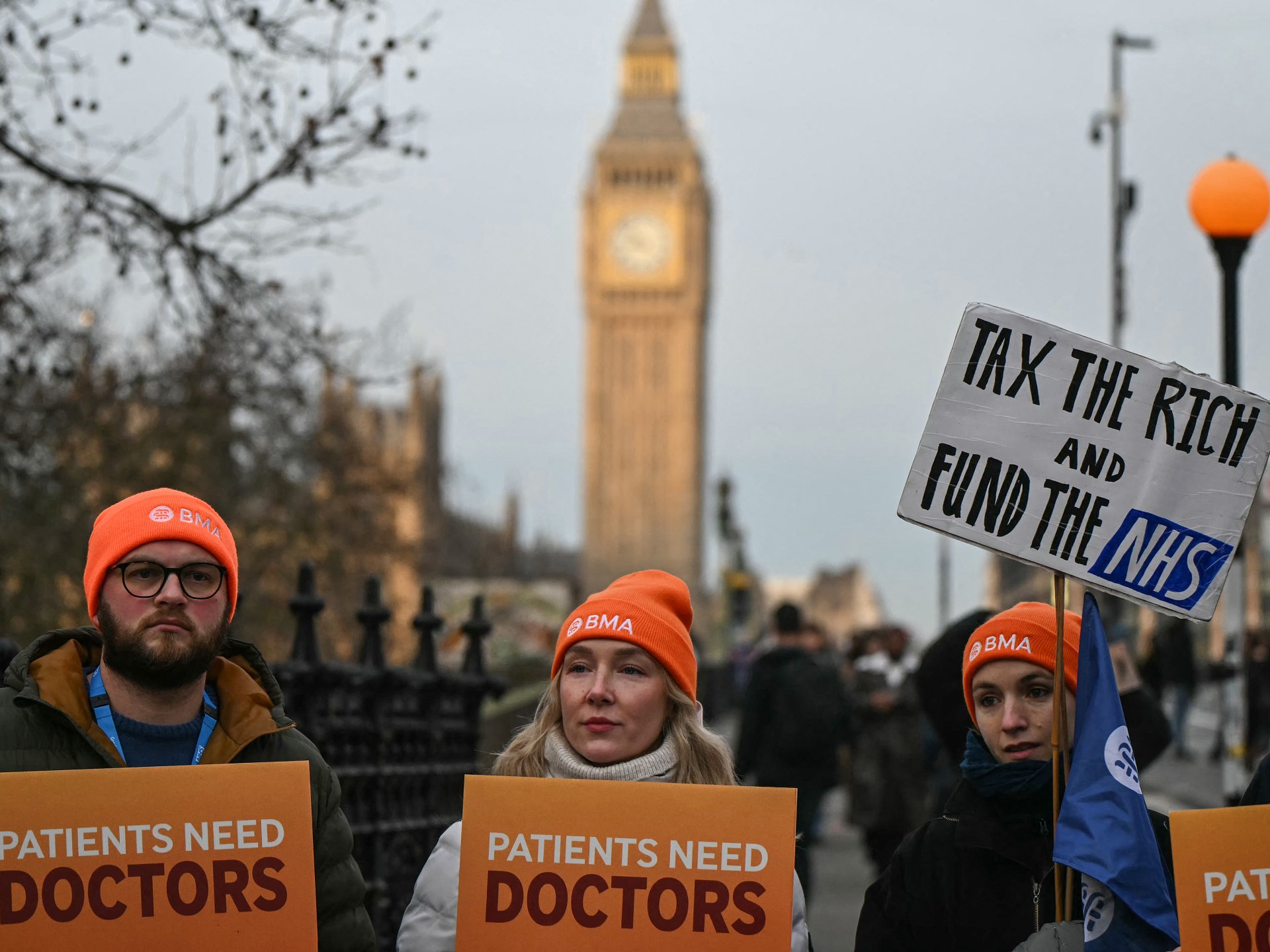

Resident doctors in England have begun a five-day strike in a long-running dispute over pay and working conditions.
Prime Minister Keir Starmer addressed the strike during Prime Minister’s Questions in parliament on Wednesday, describing the walkout as “dangerous and utterly irresponsible”.
- list 1 of 4Faced with Trump’s deportation push, US teachers fear leaving the classroom
- list 2 of 4Is Trump about to wage war in Latin America?
- list 3 of 4DRC says M23 vow to pull out of Uvira is a ‘distraction’
- list 4 of 4Warner Bros Discovery rejects Paramount’s hostile takeover bid
end of list
“My message to resident doctors is: don’t abandon patients,” Starmer said. He urged them to “work with us to improve conditions and rebuild the NHS”.
The prime minister also blamed the previous Conservative government for leaving the National Health Service “absolutely on its knees”.
The doctors, formerly known as junior doctors and accounting for nearly half of England’s medical workforce, walked out at 07:00 GMT on Wednesday. The strike is due to continue until 07:00 GMT on Monday.
The strike follows an online ballot organised by the British Medical Association (BMA), the union representing resident doctors. About 30,000 members voted to reject the government’s proposal, triggering the industrial action.
Jack Fletcher, a BMA representative, said the dispute centred on two main issues: pay and a lack of jobs for qualified doctors.
“There is a jobs crisis, where doctors are trained but unable to secure roles, and there is a pay crisis,” Fletcher said while standing on a picket line outside St Thomas’ Hospital in London.
“We must value our doctors in this country,” he added. “Last year, more doctors left the profession than at any point in the past decade.”
The strike comes as the NHS faces increased pressure, with flu-related hospitalisations in England rising by more than 50 percent in early December. Health authorities across Europe have also warned of an unusually early and severe flu season.
Advertisement
NHS England said fewer doctors than usual would be on duty during the strike period, with staff required to prioritise life-saving care.
The BMA is calling for what it describes as a “genuinely long-term plan” to address pay, after years of below-inflation rises. It is also demanding the creation of new training posts, rather than what it says are recycled positions, to allow doctors to specialise and progress.
The government’s most recent offer, made last week, did not include new pay terms. Shortly after taking office, Health Secretary Wes Streeting agreed to a deal offering a 22 percent pay rise, below the 29 percent sought by the union.
Doctors are seeking “full pay restoration”, calling for salaries to return to their 2008 and 2009 levels in real terms after years of erosion by inflation.
Related News
Tennessee special election results: What we know about Matt Van Epps’s win

Natural disasters hit global economy for $220bn in 2025: Swiss Re

Sabrina Carpenter condemns ‘evil’ use of her music in White House video
