‘We have nothing’: Endless pain for displaced civilians fleeing Sudan war
 23 December 2025
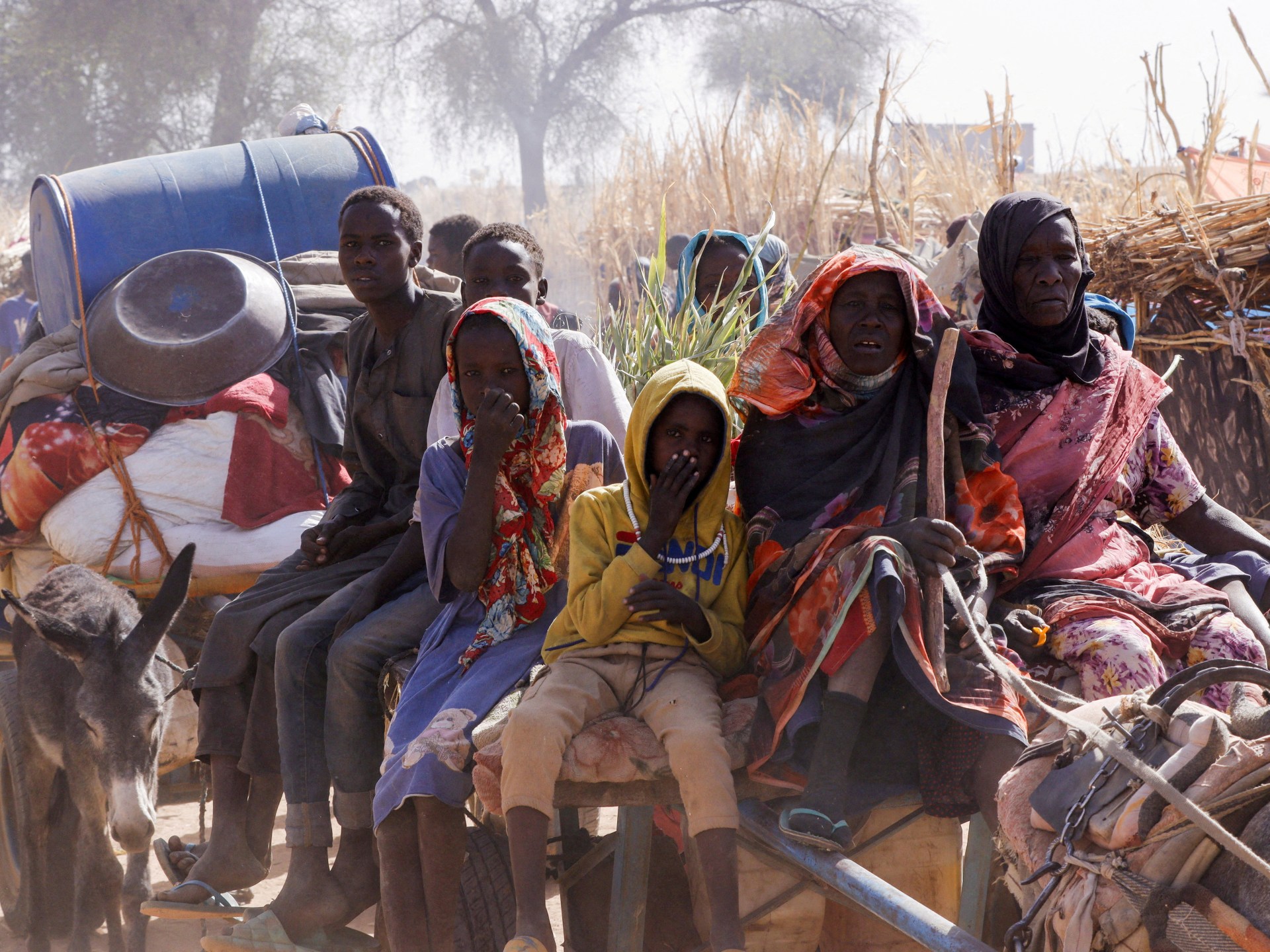

Kosti, Sudan – The flow of displaced people fleeing the fighting in Sudan shows no sign of slowing – the latest hailing from Heglig.
In early December, the paramilitary Rapid Support Forces (RSF) seized the strategic Heglig oilfield in West Kordofan province after its rival, the Sudanese Armed Forces (SAF), withdrew from the area.
Nearly 1,700 displaced people, most of them children and women, escaped the fighting in the southern region and the lack of basic necessities.
Some of them were fortunate enough to board trucks as they fled from their towns and villages in the area. After an arduous journey, the displaced people arrived at their new home – the Gos Alsalam displacement camp in Kosti, a city in the White Nile province.
“We left without anything … we just took some clothes,” said an elderly woman who appeared exhausted and frail.
Inside the camp, the people arriving are faced with extremely harsh humanitarian conditions. Tents are being pitched in haste, but as the number of displaced people grows, so do the immense humanitarian needs. Yet, humanitarian support remains insufficient to cover even the bare minimum.
“We have no blankets or any sheets, nothing. We are old people,” said a displaced elderly woman.
Nearly three years of war between the RSF and SAF have forced 14 million people to flee their homes in a desperate attempt to find shelter and safety away from the heavy fighting that has killed tens of thousands.
Some 21 million across the country are facing acute hunger, in what the United Nations calls the world’s largest humanitarian crisis.
In a small corner of the Gos Alsalam camp, Umm Azmi sits next to her newborn baby. She recalled how she was overtaken by labour on the road and delivered her baby in the open air without any medical assistance.
Advertisement
“I was trying for nine months … but I gave birth in the street – the condition is very difficult,” the mother said.
“I had just given birth, and I had nothing to eat. Sometimes we eat anything we find in the streets,” she added.
Related News

What we know about Ahmed al-Ahmed, ‘hero’ who disarmed Bondi attacker
Trump announces $12bn package to aid farmers hurt by his tariffs

Al Jazeera launches new integrative AI model, ‘The Core’