
Jerusalem – As illegal Israeli settlement activity expands across the occupied West Bank, violent settler groups have emerged at the forefront of escalating attacks on Palestinians and their property with the aim of creating new realities on the ground.
These groups are driven by hard-line religious and nationalist ideology that advocates the expansion of settlements, the expulsion of Palestinians, and the assertion of dominance over what they call “Judea and Samaria”, referring to the West Bank.
Despite differences in their structure and methods of operation, they share the goal of entrenching settler presence, forcing Palestinians from their land, and thwarting any political process that could curb the growth of settlements, which are considered illegal under international law.
A number of their leaders are linked to networks of rabbis and right-wing activists who serve as their ideological and religious authorities. Some settlements and outposts have also become bases from which attacks against Palestinians are launched.
These groups do not operate independently of settlement expansion. Rather, they benefit from a political, legal and on-the-ground environment that strengthens their presence, reflected in the growing number of settlement outposts and plans aimed at expanding settlements.
Below, Al Jazeera highlights the main settler groups driving the escalation in the West Bank, along with information about their leaders, ideological and religious influences, areas of activity, and the major attacks and crimes attributed to them.
![Settler attack on Palestinian home in Al-Mughayyir, in the Israeli-occupied West Bank [Reuters]](https://www.aljazeera.com/wp-content/uploads/2026/07/reuters_6a5a8592-1784317330.jpg?w=770&resize=770%2C433&quality=80)
Hilltop Youth
The Hilltop Youth is among the most prominent violent settler groups active in the West Bank. It is a decentralised network made up mostly of Jewish youths aged between 15 and 20 who live in settlement outposts and pastoral farms scattered across hilltops.
Advertisement
Some of the group’s members have been expelled from educational institutions, while others come from well-known religious families, including those of rabbis and settler leaders. The group’s emergence is politically linked to a speech delivered by former Israeli Prime Minister Ariel Sharon – and then foreign minister – on November 16, 1998, in which he urged settlers to “seize the hilltops” and expand their control over the land, in what was widely viewed at the time as an attempt to undermine the peace process and the implementation of the Wye River Agreement that promised Palestinians faster and further autonomy.
“Everyone there should move, run, grab more hills and expand the area. Whatever is seized will be in our hands, and whatever we do not seize will be in their hands,” said Sharon.
The group takes its name from a strategy of establishing settlement outposts on hilltops. The term “hilltops” refers not only to the terrain itself, but also to a settlement model based on creating new outposts outside existing settlements and later imposing a fait accompli to pave the way for their legalisation.
Members of the group subscribe to a hard-line religious and nationalist ideology that advocates Jewish control over the West Bank. They are influenced by currents such as Neo-Hasidism and elements of New Age spirituality. They are also known for distinctive religious appearance, including wearing long sidelocks and large knitted kippahs or yarmulkes and openly displaying their tzitzit fringes.
Multiple factions under one umbrella
The Hilltop Youth do not have a unified leadership, but instead encompass several settler movements and ideological currents. Following Israel’s withdrawal from the Gush Katif settlements in Gaza in 2005, many members joined the Youth for the Land of Israel movement before later dispersing into several frameworks, most notably Nahala, led by Daniella Weiss alongside Rabbi Moshe Levinger, and the Torah Core in Hebrew Cities movement, led by Meir Bertler, while others joined the Land of Israel and Derech Chaim movements, led by Rabbis Avraham Sigron and Yitzhak Ginsburgh.
The Hilltop Youth’s activities revolve around attacking Palestinians and seizing land for the establishment of settlement outposts. Their methods include occupying hilltops, installing caravans under the protection of the Israeli army, expanding control over Palestinian agricultural land by uprooting trees, grazing sheep on it and preventing Palestinian landowners from accessing their property through intimidation or physical assault.
Advertisement
The group has been linked to thousands of attacks against Palestinians, including the burning of homes and vehicles; vandalism of mosques and schools; the theft or destruction of olive trees, crops and livestock; and racist graffiti such as “Death to the Arabs” and “Either expulsion or death”. According to the organisation Peace Now, the group had established 170 settlement outposts by the end of 2020 with support from the West Bank Settlements Council.
Many of these assaults are classified as “Price Tag” attacks, retaliatory acts that began in 2008 in response to the evacuation or demolition of unauthorised settlement outposts.
The group also receives support from settlement organisations, most notably Amana, the settlement arm of the Gush Emunim movement, which provides construction materials and logistical assistance, in addition to funding from some regional settlement councils. Meanwhile, the Israeli army provides protection for many of these outposts, while Israeli authorities have retroactively legalised a number of them and are considering legalising others.
![A Palestinian uses a flashlight after spotting Israeli settlers on a nearby hill while taking part in a night watch with other volunteers to guard against settler attacks on the West Bank village of Sinjil, Thursday, July 16, 2026. [AP]](https://www.aljazeera.com/wp-content/uploads/2026/07/ap_6a5a5d26d90d1-1784306982.jpg?w=770&resize=770%2C513&quality=80)
Price Tag
The Price Tag movement is a clandestine network of far-right settler groups that emerged in 2008 following Israeli calls to dismantle unauthorised settlement outposts.
The group’s founding is associated with settler leader Gershon Mesika. Its members are predominantly young settlers, many of whom studied under Rabbis Yitzchak Ginsburgh, David Dudkevitch and Yitzhak Shapira. Their main stronghold is the yeshiva or religious school in the settlement of Yitzhar, south of Nablus.
The network’s ideology is based on the belief that any Israeli action against settlement activity – or any Palestinian attack – justifies retaliatory attacks against Palestinians and their property to raise the “price” of such actions, from which the network takes its name.
Its members espouse a hard-line religious and nationalist ideology that advocates the expulsion or killing of Palestinians, as reflected in slogans they leave at attack sites, including “Death to the Arabs”, “Revenge”, and “Price Tag”.
The network has been linked to hundreds of attacks against Palestinians and their property, including the burning of homes and vehicles, attacks on mosques and churches, vandalism of schools, the uprooting or burning of olive trees and assaults on Palestinian farmers.
![A view of damaged houses and burning vehicles after a raid by Jewish settlers on the Mughir town near Ramallah. [Anadolu]](https://www.aljazeera.com/wp-content/uploads/2024/04/AA-20240412-34255672-34255658-JEWISH_SETTLERS_RAID_IN_RAMALLAH_1_KILLED_18_INJURED-1713009413.jpg?w=770&resize=770%2C513&quality=80)
Guard Teams
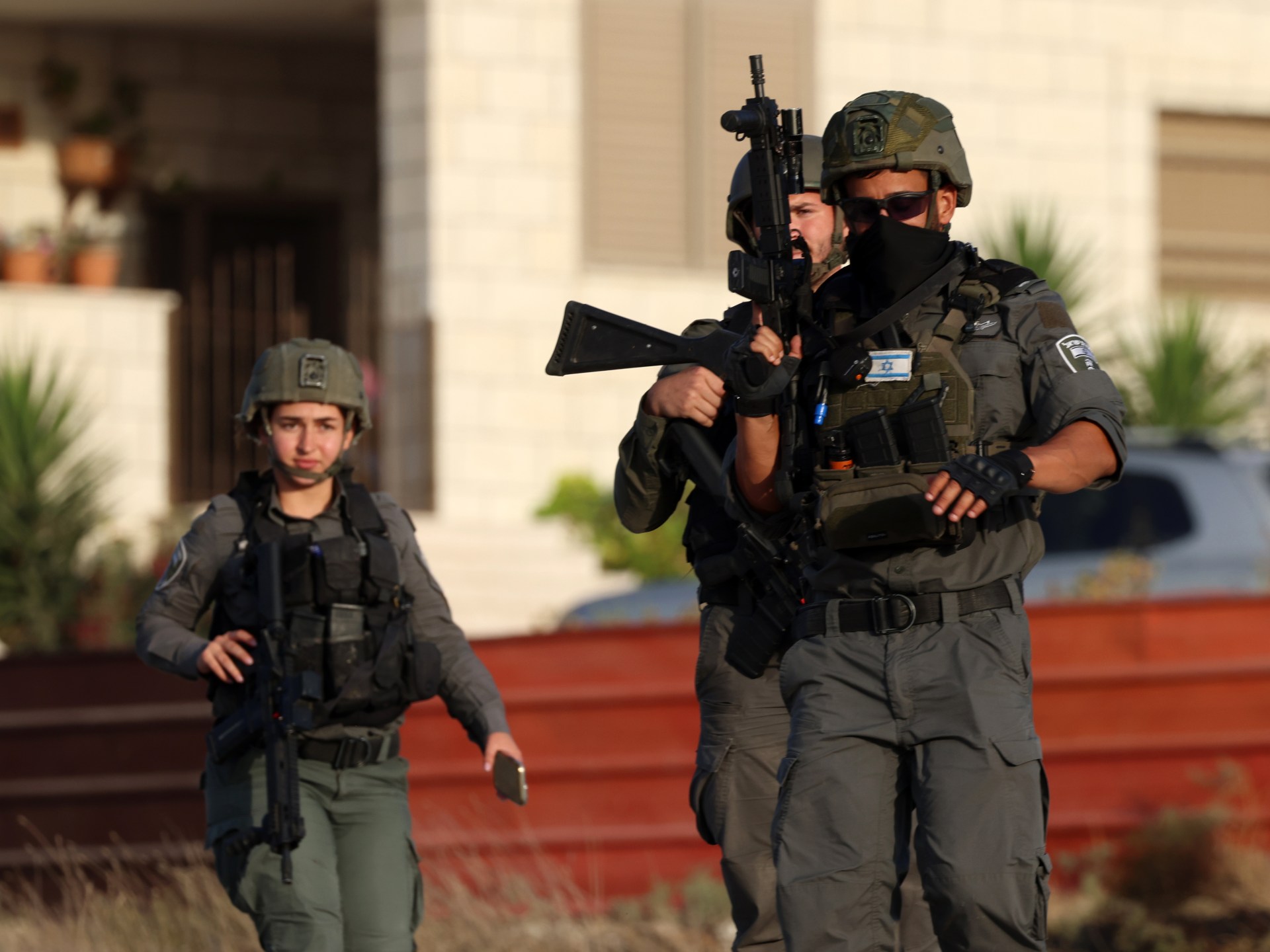
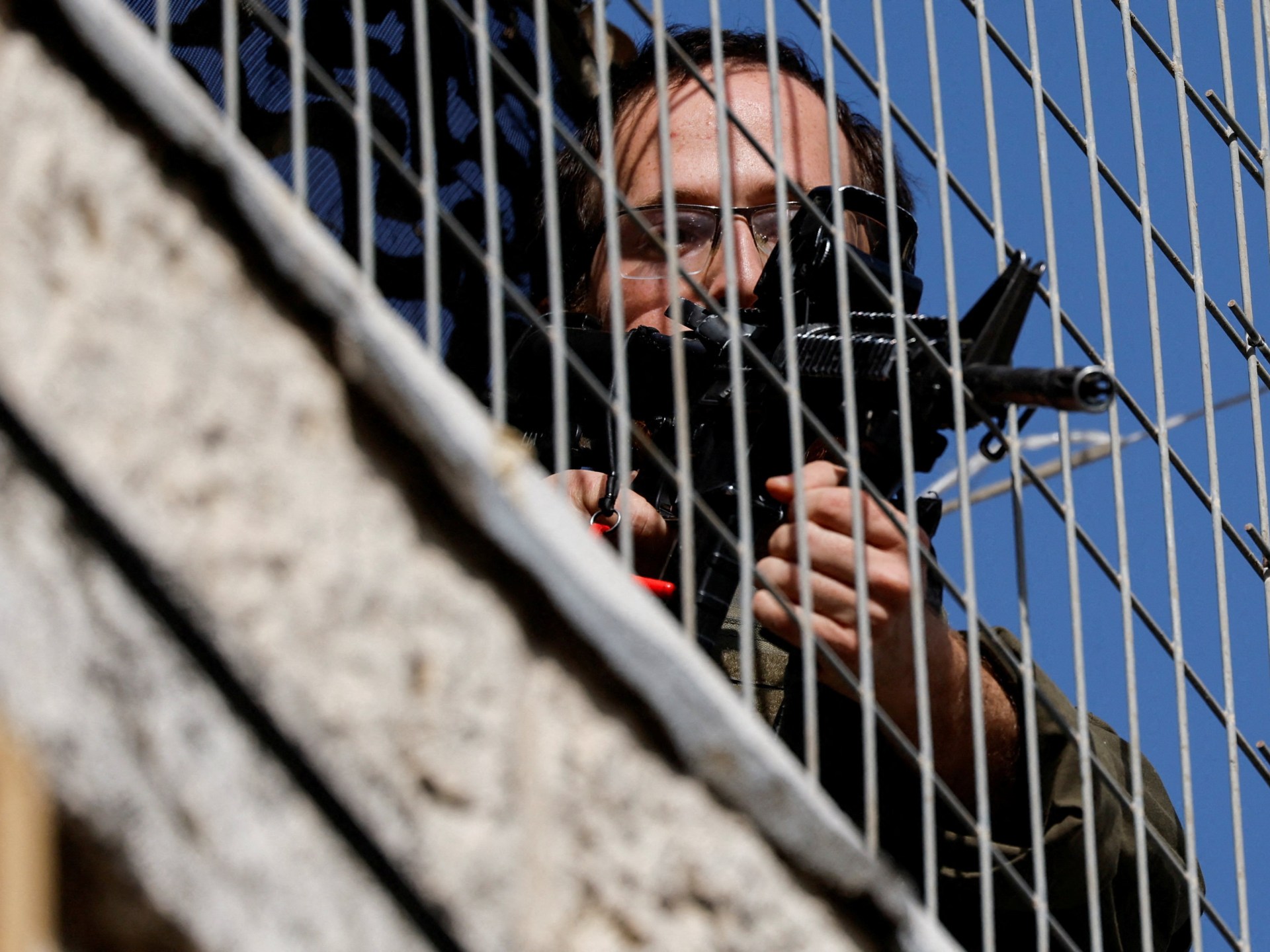
The so-called Guard Teams emerged after the outbreak of the war on Gaza on October 7, 2023. Made up of settlers wearing military uniforms, they appeared after the Israeli government expanded security formations in settlements and supplied thousands of settlers with weapons in a move led by National Security Minister Itamar Ben-Gvir, under the stated aim of strengthening settlement security.
Advertisement
This system also includes rapid response units, regional garrison battalions and security coordinators, all forming part of the civilian-military security apparatus inside West Bank settlements.
According to human rights organisations, including Israeli group B’Tselem, this expansion has increased the involvement of settlers wearing military uniforms or carrying military-issued weapons in attacks against Palestinians, including shootings, physical assaults, land seizures, property destruction, crop damage and livestock theft. The organisation said some perpetrators were soldiers on leave, reservists or members of guard teams, while others wore military uniforms despite not being on official duty.
Reports by Israeli rights group Yesh Din say it is often difficult to distinguish between these categories in the field, creating uncertainty over legal responsibility for violations.
According to Yesh Din, Israeli authorities have faced criticism over accountability for members of these formations, as investigative responsibility frequently shifts between the police and the military prosecution, leading in many cases to investigations being closed or left unresolved.
The expansion of settlers’ access to weapons, combined with the growing overlap between civilian and military roles, has contributed to escalating violence against Palestinians and created a reality in which it is increasingly difficult to distinguish between civilian settlers and military personnel, amid accusations that Israel is encouraging this model to facilitate settlement expansion in the West Bank.
Major attacks
The rise of settler groups has been accompanied by an unprecedented escalation in attacks targeting Palestinians across the West Bank, both in terms of their frequency, geographical scope and the range of targets.
These attacks are no longer limited to isolated acts of violence. In many cases, they have evolved into organised group assaults targeting civilians, property, agricultural land, places of worship and educational institutions as part of a broader effort to expand settlement control and create new realities on the ground.

The attacks have included killings and shootings, physical assaults, the burning of homes, vehicles and businesses, the uprooting of trees and destruction of crops, land seizures, attacks on Bedouin communities, and racist and inflammatory graffiti on Palestinian property. Palestinian and international human rights groups have documented many such attacks as having taken place under the protection of Israeli forces.
Among the most prominent crimes attributed to these groups over the past decade are:
- 2014: Settlers abducted Mohammed Abu Khdeir, a Palestinian child from the Shu’fat neighbourhood in Jerusalem, before burning him to death, in a crime that drew widespread international condemnation.
- 2015: Settlers attacked the Dawabsheh family home in the village of Duma, south of Nablus, with firebombs, killing the infant Ali Dawabsheh and his parents, Saad and Riham Dawabsheh. His brother, Ahmad, survived with severe injuries.
- 2018: Aisha al-Rabi was killed after the vehicle in which she was travelling was struck by stones near Za’atara checkpoint, south of Nablus.
- 2022: Ali Hassan Harb was fatally stabbed while confronting settlers attempting to seize land in the village of Iskaka, east of Salfit.
- 2023-2026: More than 12,000 attacks were recorded across the West Bank, resulting in the deaths of 82 Palestinians and the establishment of 200 settlement outposts.
Advertisement
Attacks this year
According to the Colonization and Wall Resistance Commission, a Palestinian government body, settlers established 42 new settlement outposts during the first half of 2026, including four in Area B, which falls under Palestinian Authority administration under the Oslo Accords. The figures point to the continued expansion of settlement activity beyond areas that had previously witnessed this type of growth.
During the same period, the commission said, Israeli authorities reviewed 113 master plans to expand existing settlements or establish new ones, including 71 plans in the West Bank and 42 in Jerusalem. The plans target more than 1,400 hectares (14,000 dunams or 3,460 acres) of land, and pave the way for the construction of thousands of new settlement units.

According to the commission, the Israeli government also approved the establishment of 34 new settlements during the first half of 2026, bringing the total number approved since the current government took office to 104, in what it described as an accelerating effort to reshape the settlement map across the West Bank.
Over the same period, the commission documented 3,488 settler attacks, which led to the complete displacement of 18 Bedouin communities and the partial displacement of eight others, in addition to the establishment of dozens of new settlement outposts. The figures illustrate the close link between settlement expansion and escalating settler violence.
Data from the Israeli human rights organisation Yesh Din indicate that Israeli police closed around 91 percent of complaint files related to settler attacks against Palestinians without securing convictions. Only 7.4 percent of cases resulted in indictments, while the rate of cases that ultimately led to an actual conviction stood at about 1.8 percent. The organisation said the figures point to a widening pattern of impunity for crimes motivated by nationalist ideology.
Related News
After a deadly raid, a displaced Nigerian mother finds a lifeline in sewing
Israel admits firing on car carrying Hind Rajab, symbol of Gaza’s suffering

US sanctions International Criminal Court president and trial lawyer