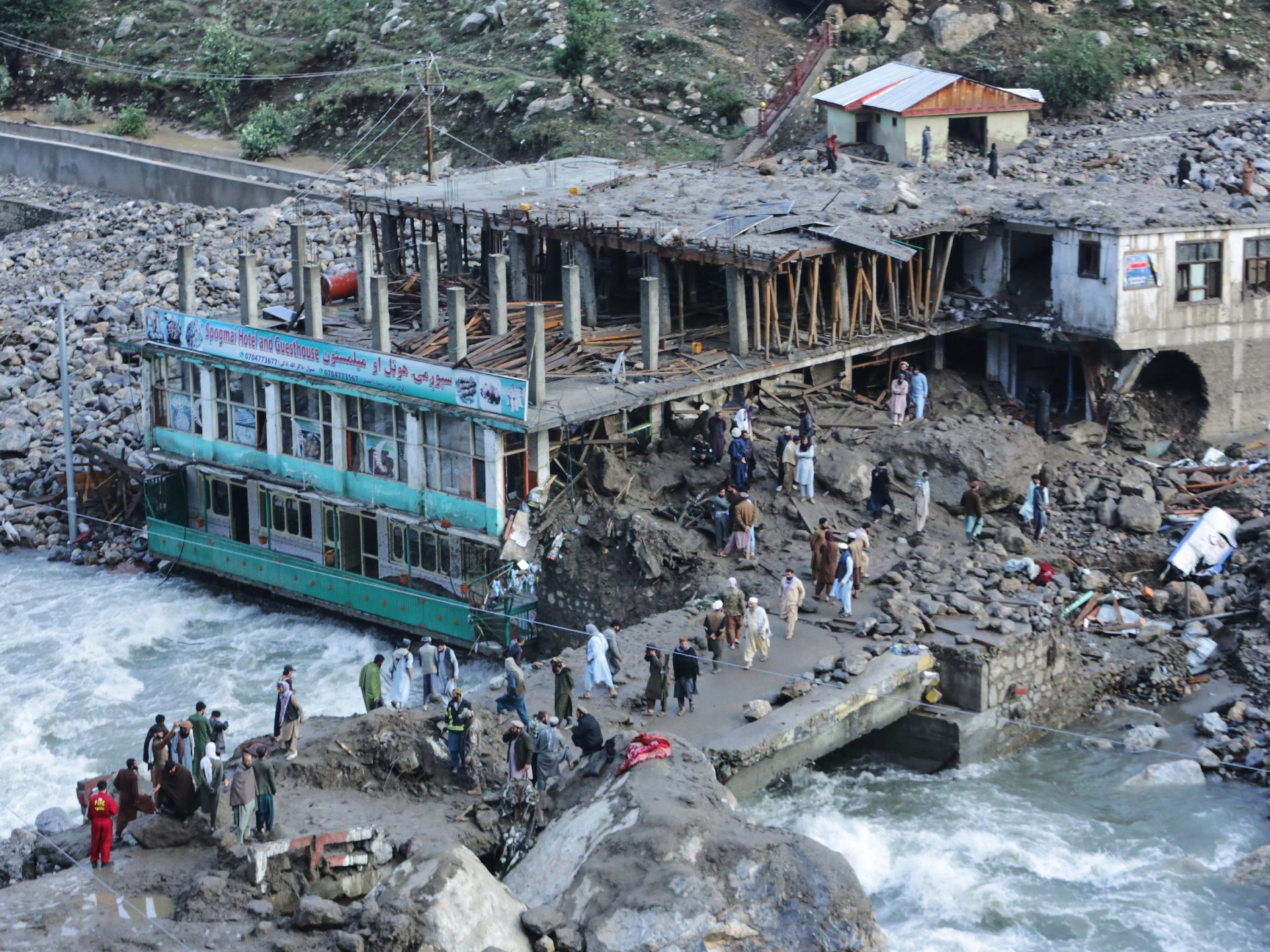

Rescue crews in Afghanistan have been searching for survivors of floods amid the threat that new flash floods could hit.
Teams searched the rubble of houses on Tuesday after sudden waters cascaded down mountainsides the previous day, killing at least 23 people. This year’s monsoon season is causing chaos across the region, with Afghanistan among the most vulnerable to the effects of climate change.
The flooding that hit the eastern province of Nuristan on Monday has left more than 100 missing. As the search for survivors got under way, forecasters warned that more flooding could hit the region.
More extreme weather, with heavy rain, thunderstorms, strong winds accompanied by sand and flash floods is forecast in 10 of Afghanistan’s 34 provinces, the Ministry of Transport and Civil Aviation’s meteorology department said on Monday evening.
![An Afghan man sits near the rubble of a damaged house following flash floods in Parun town in Afghanistan’s Nuristan province on July 21, 2026 [AFP]](https://www.aljazeera.com/wp-content/uploads/2026/07/afp_6a5f92107eb7-1784648208.jpg?w=770&resize=770%2C560&quality=80)
Officials say an unknown number of buildings collapsed in Nuristan on Monday, including in the provincial capital Parun, where footage showed buildings reduced to mud and rubble.
The disaster is part of a bigger pattern as the monsoon season sparks havoc across South Asia.
Afghanistan, like neighbouring Pakistan and India, is highly vulnerable to extreme weather events, particularly flash floods following seasonal rains.
This year’s monsoon has triggered floods and landslides in country after country.
Floods and landslides were reported on Monday to have killed at least 25 people across northern and northeastern India.
Advertisement
In neighbouring Nepal, monsoon-related floods, landslides and lightning strikes have killed 27 people, left one missing and injured 69 others since mid-June
Afghanistan is one of the countries least equipped to handle such conditions, due to decades of war, weak infrastructure, deforestation and a warming climate.
Meanwhile, in remote areas, many homes are built of mud and offer limited protection against sudden deluges or heavy snowfall.

In 2024, more than 300 people died in springtime flash floods. Earlier this year, at least 110 people were killed by widespread flooding and landslides in several parts of the country.
Related News
Car bomb hits Colombia highway day after new president sworn in

Tuchel: England carry ‘scars’ of World Cup heartbreak into France playoff

UN rights chief says Iran executed at least 56 people since March