
Tehran, Iran – Iran has insisted on exercising control in the Strait of Hormuz after another flare-up of attacks that prompted United States President Donald Trump to lash out against Iranian leaders.
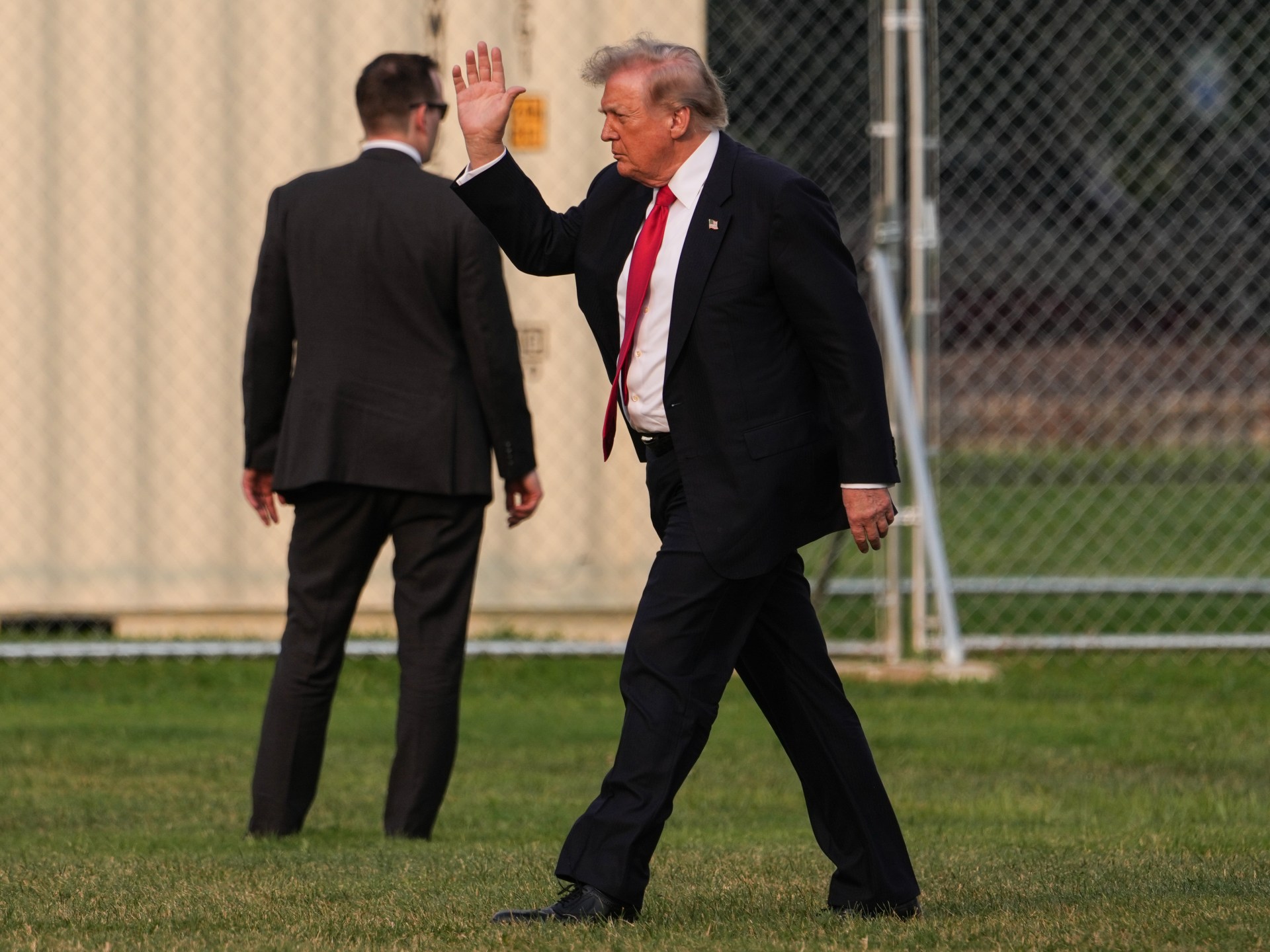
Trump, in the Turkish capital, Ankara, for a NATO summit, told reporters he considers the memorandum of understanding (MoU) that Tehran and Washington signed last month to be over and called Iranian authorities “sick” and “scum” after several ships were hit with drones in the waterway.
The US military attacked southern Iran on Wednesday morning – 20 times harder than Iran’s strikes, according to Trump – and the Islamic Revolutionary Guard Corps (IRGC) and the Iranian army launched projectiles towards Bahrain and Kuwait while shooting down a US drone.
Iran’s Ministry of Foreign Affairs accused Washington of violating provisions of the MoU dealing with the cessation of military operations on all fronts, including Lebanon, and parts of the agreement relating to respect for sovereignty and territorial integrity.
It also condemned the US Department of the Treasury’s move to rescind waivers that allowed Iran to export its oil and get the revenues for 60 days. That waiver, along with the lifting of the US naval blockade of Iran’s southern ports, was the only immediate and tangible material benefit of the MoU for Iran.
A similar but smaller set of incidents took place in late June, sparked by Iran’s efforts to prevent tankers and commercial vessels from transiting through the Strait of Hormuz along a US-backed route near Oman. However, at that time, the US did not withdraw the temporary sanctions waivers it had extended to Iran.
Advertisement
Differing interpretations of Article 5
At the heart of the dispute over the Strait of Hormuz is a difference in interpretation of Article 5 of the MoU. It states that Iran “will make arrangements using its best efforts for the safe passage of commercial vessels, with no charge for 60 days only, from the Persian Gulf to the Sea of Oman, and vice versa”.
Iranian authorities argue that the clause gives Tehran authority over managing traffic through the strait. “This is the only way,” Ebrahim Azizi, spokesman for the Commission on National Security and Foreign Policy in Iran’s hardline-dominated parliament, wrote on X on Wednesday afternoon. “Recognise the new and Iranian order in the Strait of Hormuz.”
But the US insists that the article lists only Iran’s responsibility to ensure that it does not impede transit through the strait – without giving it a veto over who moves through the waterway.
The same article of the MoU also uses softer language requiring Iran to conduct dialogue with Oman and other regional states over “future administration and maritime services” in the important waterway. Iran has conducted high-level talks with Muscat, but no breakthrough appears to have materialised.
Majid Shakeri, an adviser to Iran’s chief negotiator, Mohammad Bagher Ghalibaf, told a state television programme on Tuesday night that Oman must offer assurances that the part of the strait in its territorial waters will not be used for military purposes against Iran. He said this can be guaranteed only through inspections by Iranian authorities, which can be conducted with Omani assistance.
“Either we hold on to this strait, or we go and become martyrs for it one by one,” Shakeri said, adding that extracting “revenue is subordinate to control” over the strait as critical leverage.
Will there be more talks?
Trump said he had no personal hopes of reaching a negotiated settlement with Iran, but the US president did not shut the door to more negotiations.
“I’ll speak to our negotiators. They want to negotiate. They’re good people,” he said about his envoys Steve Witkoff and Jared Kushner, who have held talks with Iran along with Vice President JD Vance.
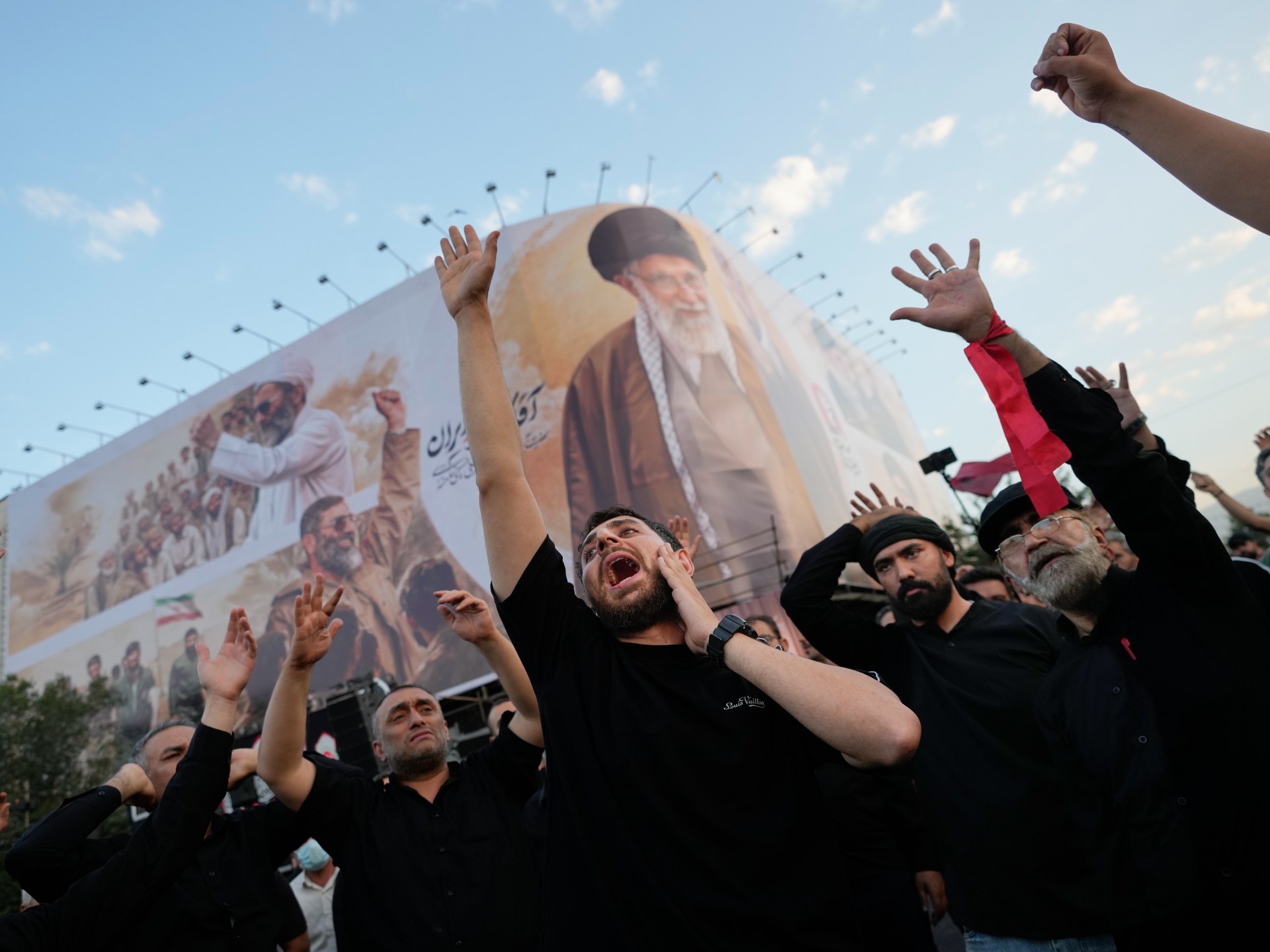
No negotiations were expected until the end of weeklong funeral ceremonies for Ayatollah Ali Khamenei, the supreme leader killed in Tehran at the start of the US-Israel war on Iran on February 28 along with a number of other senior military and political officials.
Khamenei’s remains were taken to Iraq for processions on Wednesday before his burial in the holy Shia city of Mashhad in northeastern Iran on Thursday.
Advertisement
President Masoud Pezeshkian, who was in Iraq for the processions, flew back to Iran after the attacks on his country. In a post on X, he said US foreign policy and conduct at the World Cup followed the same patterns.
“Bending rules, bullying rivals, creating obstacles, and cheating. This is their MAGA playbook. Iran rejects such games. We stand firmly for our rights,” said the president, who has come under fire from hardliners for backing the deal.
The opponents of the MoU inside and outside Iran continue to express eagerness to see its demise.
Mahmoud Nabavian, a hardline clerical member of parliament from Tehran, wrote in a post on X on Wednesday that the overnight attacks again proved that “the result of agreement with the terrorist [US] government, and trusting it and being optimistic, is nothing but pure loss.”
Speaking to state television on Tuesday night, Mohsen Rezaei, former IRGC commander-in-chief and adviser to the supreme leader, told opponents of the deal to remain patient.
“The Americans will destroy these talks themselves. They won’t let them yield any results, as we are seeing now,” he said.
Rezaei also emphasised vengeance for Khamenei and other Iranians must be exacted against Trump and Israeli Prime Minister Benjamin Netanyahu.
Calls for revenge also have permeated Khamenei’s funeral processions, including against Trump personally. Some pro-government users on X went as far as releasing satellite images of the Ankara hotel that Trump was staying at on Wednesday and demanding a missile strike there.
Israel, which also opposes the MoU, has repeatedly threatened Mojtaba Khamenei, Iran’s new supreme leader and Ali Khamenei’s son, and other officials with assassination.
Some Israeli media outlets, including Walla, reported on Wednesday that the Israeli military was preparing for the possibility of renewed war with Iran, including coordination with CENTCOM and updating operational plans.
Related News
Trump says US to deliver ‘beating’ to Iran after bases again targeted
Palestinians injured in Israeli settler attacks across West Bank
After the floods, hunger: Mozambique’s second disaster