Impressive efforts on the ground – PAHO lauds Govt’s MV Barima tragedy response
 30 July 2026
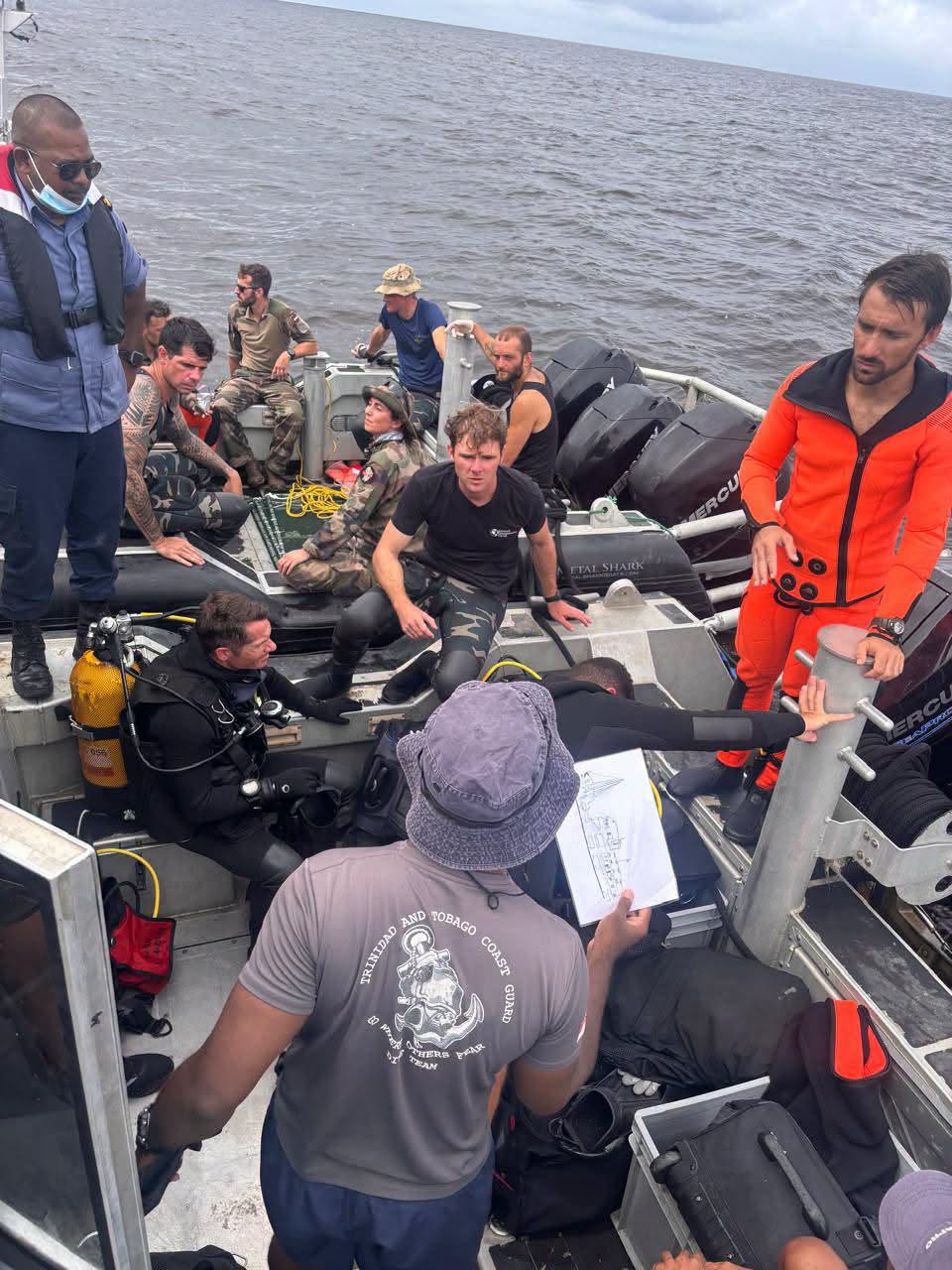


The Guyana Government has been commended for its interventions as part of the emergency response following the MV Barima tragedy, which saw 76 persons being rescued, 73 bodies recovered and 30 others still unaccounted for after the vessel capsized and sank nearly two weeks ago.
Country Representative of the Pan American Health Organization (PAHO) in Guyana, Dr Kim Eva Dickson, made these remarks following a recent visit to Region One (Barima-Waini), where she observed the work being done on the ground. She emphasised the importance of coordination among the various State agencies during such national emergencies.
“We were really impressed with the efforts on the ground… The Ministry of Health is doing so much on the ground in Region One. They have the [Ministry of] Human Services and Social Security there, Education [Ministry] there. But when you’re on the ground, it is visible… This is not coming out to the population [and] we need to get it out… The [Health] Ministry is ready and doing its utmost to support emergencies as they emerge,” the PAHO representative stated.
MV Barima was en route to Port Kaituma, Region One, when the horrific accident occurred on July 18. Since a majority of the victims as well as survivors hail from that Barima region, the Government has established help centres for grieving families of those still missing. Medical and counselling services are also being offered to both survivors and other impacting relatives, as well as other support and assistance from the state. The Government has already covered the funeral expenses for dozens of victims of the ferry accident.
Moreover, President Dr Irfaan Ali this week continued his one-on-one engagements with those affected by the MV Barima tragedy. In keeping with an earlier commitment, the Head of State said the Government will remain closely engaged with every family impacted by this tragedy, ensuring they receive the care, support, and assistance they need – not only in the immediate aftermath, but throughout their journey toward healing and recovery.
Emergency response capabilities
Dr Dickson’s praise for the Government’s response came on Wednesday during the signing of an agreement between the Health Ministry and PAHO/WHO to build technical capacity across Guyana as part of the country’s efforts to strengthen its response systems to public health threats.
Following the COVID-19 pandemic, which had highlighted how ill-equipped countries are to response to health emergencies, the Guyana Government launched a One Health Project aimed at strengthening national capacity to prevent, detect and respond to public health threats by upgrading laboratories, expanding surveillance systems, improving emergency preparedness, and reinforcing coordination across human, animal and environmental health sectors.
This initiative also seeks to strengthen Guyana’s International Health Regulations (IHR) core capacities while enhancing resilience against zoonotic and emerging diseases.
Through this new pact, the Health Ministry will be working with PAHO to deliver targeted technical activities, including laboratory strengthening, disease surveillance and emergency response, workforce training, and multisectoral One Health coordination.
According to Health Minister Dr Frank Anthony, many local health professionals will be trained under this initiative.
“With this component that PAHO is going to help us implement, there is a lot of training… We will train and hire new people under this project because, to achieve what we intend to do, we currently do not have all the human resources that are required. This project will provide us with the opportunity to recruit and build that capacity,” Minister Anthony said.
Greater resilience
While the PAHO Representative lauded the Region One response as progress Guyana has made in strengthening its systems, the Health Minister said more needs to be done to transform existing systems and build even greater resilience. In fact, he said this partnership with PAHO will build on the foundation works that the Ministry has already started post the COVID pandemic to strengthen its public health system.
“You don’t have to wait until there is a problem to build a system. You have to build systems in anticipation of problems. So, whenever these problems occur, we’re able to fix it… That’s what we’re trying to do here… This technical component that we will be working on with PAHO is extremely important, and I hope that the staff and all of our partner agencies will take this very seriously,” Dr Anthony stressed.
Guyana One Health Project
The Guyana One Health Project is being financed by a US$15 million grant from the Pandemic Fund and a US$7 million loan through an International Development Association (IDA) Credit by the World Bank. Of that US$22 million, some US$1.78 million is being used to finance this component of the initiative that will be executed through the partnership with PAHO.
Country Officer at the World Bank’s office in Guyana, Hubert Forrester, says this new partnership with PAHO will support the technical and implementation work needed to help translate the project’s ambitions into concrete results.
“Through this engagement, we expect stronger institutional coordination, improved technical support to implementation, and enhanced technical capacity to advance the One Health agenda in a way that is practical, measurable and responsive to Guyana’s needs. Ultimately, the success of the project will be measured not only by the systems strengthened or the plans prepared but by the benefits delivered to the people of Guyana,” the World Bank official stated.
On its second attempt, Guyana successfully received approval in January 2024 for financing from the Pandemic Fund – a global financing mechanism dedicated to strengthen country’s critical pandemic prevention, preparedness, and response efforts – for its national action plan for health security, that is, the Guyana One Health Project.
Introduced by the World Health Organization (WHO), the “One Health” concept is an integrated, unifying approach that aims to sustainably balance and optimise the health of people, animals and ecosystems. It recognises that the health of people is closely connected to the health of animals and their shared environment.
Subscribe to get the latest posts sent to your email.
Related News
Letter: Role of Opposition is to keep government in check not to oppose for sake of opposing

Linden chef killed in 3-vehcile collision along Linden Highway

Consumers complain about extra MMG fees as agents defend charges over low commissions