Ageing pipelines, dirty household storage tanks contributing to murky water – De Armas
 10 November 2026


…says 80% of Guyanese now have access to treated water
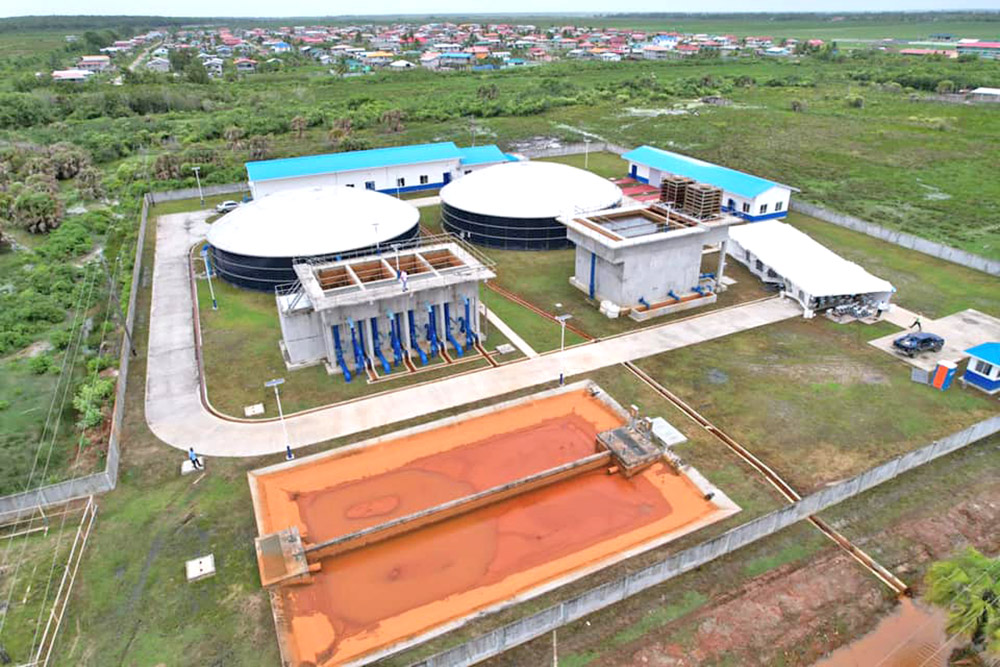
While Guyana has expanded access to treated water from just over half of its population in 2020 to approximately 80 per cent today, ageing transmission and distribution pipelines, coupled with poorly maintained household storage tanks, continue to pose challenges to the quality of water reaching consumers, according to Guyana Water Incorporated (GWI).
This was revealed by Director General of the Public Utilities and Aviation Ministry, Alfonso De Armas during his appearance on Starting Point podcast on Saturday when he was asked about concerns surrounding water supply, including reports of murky water and challenges with ensuring countrywide access, he stressed the importance of recognising the progress Guyana has made in expanding access to treated water since 2020.
According to him, it is important that citizens do not lose sight of GWI’s journey and the improvements made since the Government returned to office in 2020.
He acknowledged the concerns being raised about water quality and supply but said there was insufficient discussion about how far the country had come, noting that, in 2020, just over half of Guyana’s population had access to treated water.
“Now we’re at 80%, going on to 90% with our coastal water supply improvement programme that should be completed very soon. So, we have built a number of water treatment plants up and down our coast, starting up in Essequibo, all the way down to the quarantine. That’s the first thing. So, we’ve moved access to treated water from 50 per cent to about 80 per cent. We have drilled about 300 plus wells in the hinterland and on the coast. We have improved our transmission and distribution system, which is still a work in progress.”
$65B investment
He explained that approximately $65 billion was invested in GWI over the past six years, noting that the expenditure went towards constructing new water treatment plants, drilling additional wells and installing new transmission and distribution lines. He added that the investments were also necessary to accommodate thousands of newly constructed homes, all of which require access to a reliable water supply. Turning to the ongoing complaints about murky and muddy water, he acknowledged that these concerns stem from several factors, stressing that while the Government would prefer to have no complaints, it was important to take a pragmatic and realistic approach to addressing them.

He maintained that newly constructed water treatment plants produce clean, high-quality water, describing the output as almost perfect. “In fact, things like iron content, which the World health Organisation (WHO) has set a maximum standard of 0.3 milligrams per litre, our water treatment plants are way below that. The new ones that we’ve built up and down the coast, way below that. But it’s not enough to just produce this water, right? You also have to distribute it to customers’ homes, and that is where some of the issues come in. Because not a lot of, well, now we have, but we have, a lot of aged infrastructure, aged transmission and distribution lines, which unfortunately, once the treated water gets into it, it’s rusty, it has a lot of impurities in there, and so that makes the water, that can make the water murky.”
He added “now we’ve made significant strides in replacing those lines. It often means a lot of discomfort for residents, because you have to dig up the road and replace those lines. But we’ve made significant progress. So yeah, those are some of the issues. And sometimes, because we have a lot of, many of our residents have their own storage tanks, those black tanks, very often they’re not cleaned out.”
“They should be cleaned out every six months or so. And so sometimes when the water level drops, the impurities, they just, they rise to the top, and they can also cause some of that murky water. That doesn’t mean though, that GWI is just saying, well, you know, it’s going to stay like that until we replace all the transmission distribution lines.” He noted that GWI operates as a highly customer-facing organisation, explaining that one of the issues he observed upon becoming Director General was the growing demand from customers seeking to report concerns and have their complaints heard.
He said the number of customers attempting to contact the company often exceeds the capacity of its call centre, which has a limited number of staff available to receive and address complaints.
Subscribe to get the latest posts sent to your email.
Related News

Police issue stern warning over violence, threats and destruction

GPF strengthens capacity to combat human trafficking & organised crimes

Cop under close arrest for assaulting 14-Y-O son