
Beijing, China – China has stepped up diplomatic efforts in the Horn of Africa, sending senior envoys to four countries to ease mounting tensions that threaten to plunge the region into another devastating conflict.
Beijing’s special representative for African affairs, Liu Xianfa, travelled to Ethiopia, Djibouti and Egypt in early November, while its special envoy for Horn of Africa affairs, Hu Changchun, visited Eritrea. They met senior officials, including Eritrean President Isaias Afwerki and the foreign ministers of Ethiopia and Egypt.
Announcing the visits on November 2, Chinese Foreign Ministry spokesperson Mao Ning said they were aimed at “promoting talks for peace, easing tensions, and playing a constructive role for upholding regional peace and stability”.
The visits followed a sharp deterioration in relations between Ethiopia and Eritrea, raising fears of another war between the neighbours. Meanwhile, longstanding disputes involving Egypt threaten to draw other countries into a wider confrontation.
What’s behind the regional tensions?
Ethiopia and Eritrea fought a devastating border war between 1998 and 2000, killing tens of thousands of people. A historic peace agreement in 2018 ended two decades of hostility, but their reconciliation began to unravel following Ethiopia’s civil war in the northern Tigray region.
Eritrean forces fought alongside Ethiopian government troops against Tigrayan fighters, but Eritrea was excluded from the 2022 peace agreement that ended the main phase of the war.
Advertisement
Central to their latest dispute is Ethiopia’s push to secure access to the Red Sea. The country has been landlocked since Eritrea gained independence in 1993 and relies heavily on neighbouring Djibouti’s ports for international trade. Ethiopian Prime Minister Abiy Ahmed argues access to the sea is essential for his country’s future, but his government’s interest in Eritrea’s strategic port of Assab has raised fears in Asmara over its territorial sovereignty.
Both governments accuse each other of supporting armed groups.
Complicating matters is Ethiopia’s longstanding dispute with Egypt over the Grand Ethiopian Renaissance Dam on the Blue Nile. Cairo fears the project could threaten its water supply, while Addis Ababa insists it has the right to harness the river for electricity generation and economic development.
Egypt has strengthened its relationship with Eritrea, adding another dimension to the growing tensions. Recent reports of Ethiopian and Eritrean troops gathering near their shared border have heightened fears of a wider conflict.
Why is China getting involved?
China has billions of dollars at stake in the Horn of Africa, which sits along one of the world’s most important maritime trade routes. Between 2000 and 2023, China committed $17.8bn in loans to Ethiopia, according to United States-based research institute AidData.
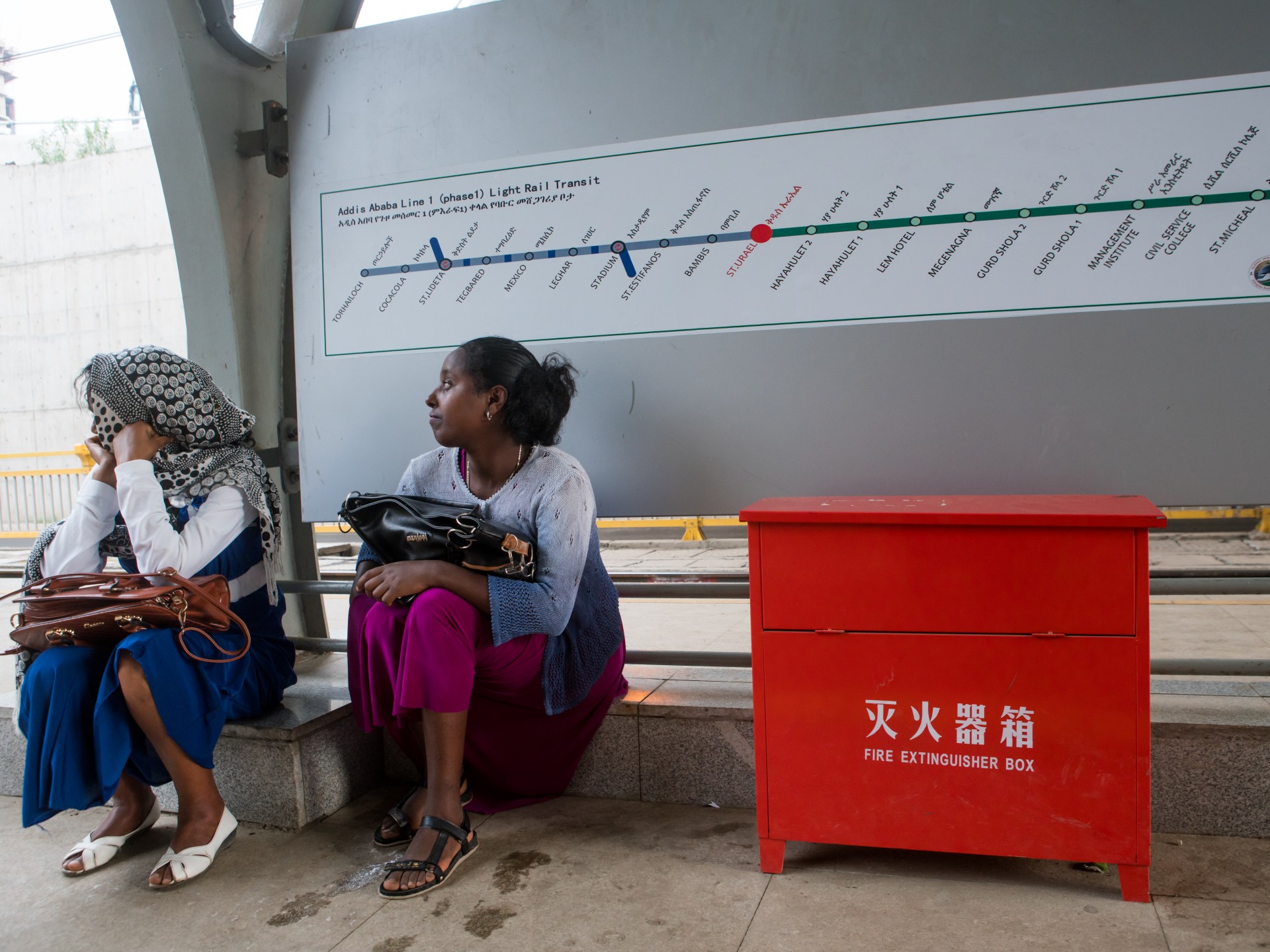
Edson Ziso, a visiting research fellow at the University of Adelaide, says China has played a “starring role” in Ethiopia’s economic transformation. Among Beijing’s flagship infrastructure projects is the $4.3bn Addis Ababa-Djibouti railway, which connects landlocked Ethiopia to the coast.
Meanwhile, Djibouti hosts China’s first overseas military base, which opened in 2017. The country sits near the Bab al-Mandeb strait, a crucial shipping passage connecting the Red Sea to the Gulf of Aden. “The Strait of Hormuz stalemate has already highlighted the huge cost conflict can inflict on the global economy when vital shipping lanes are choked,” says Ziso.
China’s efforts also reflect President Xi Jinping’s desire to portray his country as a major diplomatic player and contributor to global peace and stability, say analysts. Beijing has promoted what it calls the “Outlook on Peace and Development in the Horn of Africa”, a 2022 framework that emphasises African-led solutions to security challenges.
Zoon Ahmed Khan, a research fellow with the Beijing-based Center for China and Globalization, says Beijing’s approach is focused on helping countries in the region “control their security destiny”, rather than imposing solutions from outside. She says Beijing’s view is that “development gaps fuel instability,” but success depends on all parties accepting that “confrontation leaves all of them worse off.”
Advertisement
Can Beijing make a difference?
China’s close relationships with governments across the region put it in a position to encourage dialogue, but its ability to broker meaningful compromises remains unclear.
Beijing’s principle of noninterference has helped it cultivate relationships across Africa. Yet the disputes involving Ethiopia, Eritrea and Egypt concern deeply sensitive questions of territory, sovereignty and water security. Economic incentives may not be enough to resolve them, caution analysts.
Among the obstacles, Khan says, are actors outside the region who have “stoked confrontation and disrupted African-led processes”. Ziso says the involvement of proxy forces, fighter groups and rebels also presents a significant challenge.
And while all regional countries have close ties with Beijing, some, particularly Egypt, have longstanding security relationships with Washington. Ziso says this could limit China’s ability to achieve a breakthrough if governments perceive Chinese-led solutions as jeopardising relations with the US.
Against that backdrop, China’s recent diplomatic visits have produced statements of support for greater cooperation and regional peace, but no formal negotiations or concrete agreements have been announced.
“China is thus walking a thin line,” Ziso says, adding that all four countries – Egypt, Ethiopia, Eritrea and Djibouti – are critical to Beijing’s economic and strategic interests. “China may need to look beyond its own interests in pursuit of concrete and sustainable de-escalation.”
Related News

Indian man sentenced to 19 years in US Sikh separatist assassination plot

Visualising how the US midterms turned the map blue

Protests held across Europe over wages, services, high living costs