

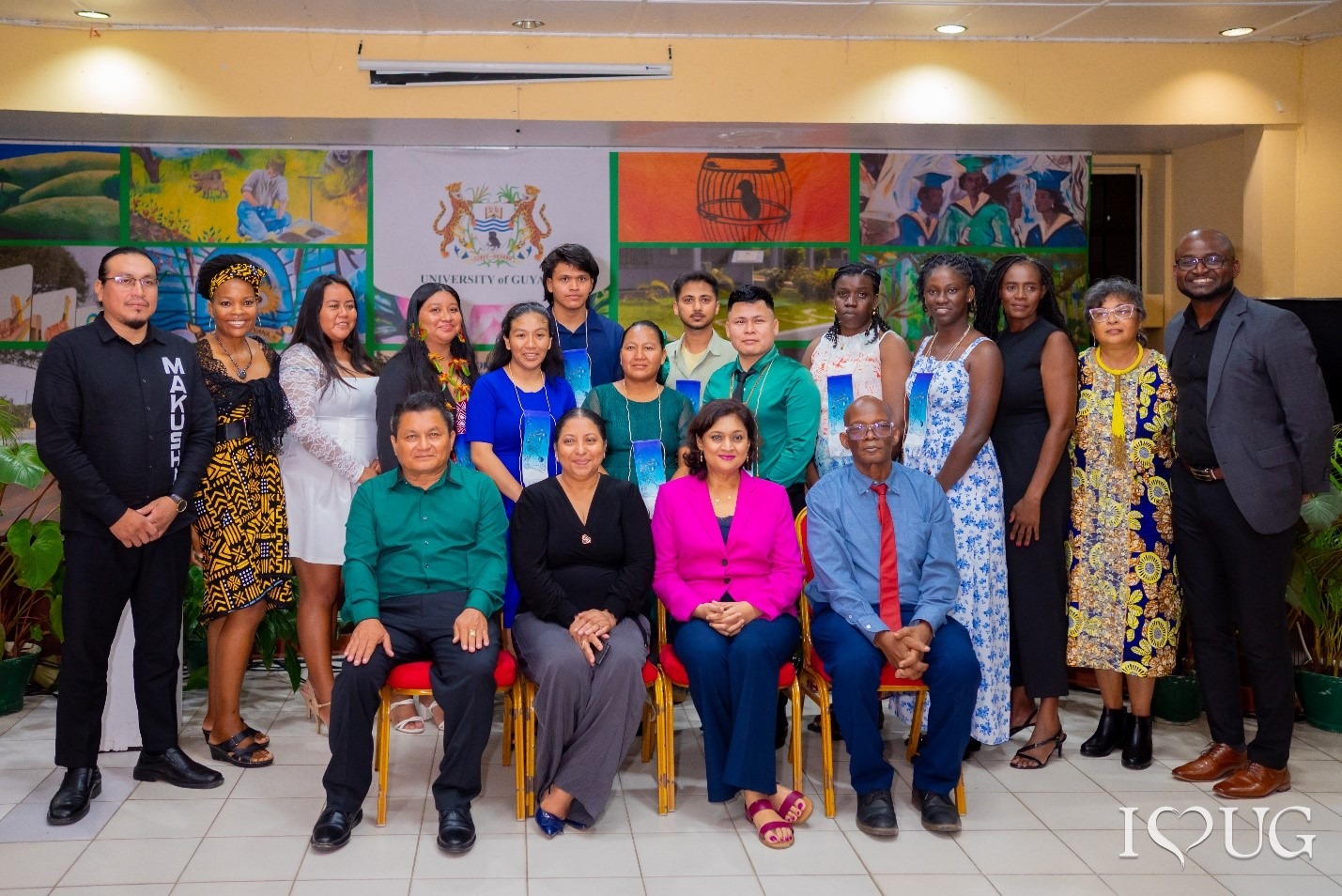


R-L standing: Dean of the Faculty of Engineering and Technology, Dr. Kofi Dalrymple; Lecturer in the GLU, Ms. Charlene Wilkinson; Director of the International Centre of Excellence for Modern and Indigenous Languages, Literatures and Linguistics, Dr. Penelope Montfort; 9 students who graduated from the inaugural Wapichan Language Course; Coordinator of the GLU, Dr. Tamirand Nnena De Lisser; and Principal Regional Development Officer, Ministry of Amerindian Affairs, Mr. Anil Roberts.
The University of Guyana (UG), on Wednesday, June 17, 2026, celebrated the graduation of 12 students from its Elementary Wapichan Language Course (WAP1101). This is a major milestone in the University’s efforts to preserve, promote, and strengthen indigenous languages through higher education.
The graduates received their certificates during the inaugural GLU Indigenous Languages Awards Ceremony held at the Education Lecture Theatre (ELT), Turkeyen Campus, hosted by the Guyanese Languages Unit (GLU), a unit within the International Centre of Excellence for Modern and Indigenous Languages, Literatures and Linguistics (ICEMILL), Faculty of Education and Humanities.
Vice-Chancellor of the University of Guyana, Professor Paloma Mohamed Martin, during her remarks, congratulated the graduates for being among the first to undertake the programme and acknowledged the years of advocacy and effort that made the initiative possible. “…we also want to thank you for being self-respecting enough, being respectful of the language and your Guyanese-ness, and courageous enough to be the first to have taken the leap to learn this language,” Professor Mohamed Martin said.
The Vice-Chancellor emphasised that the University’s establishment of indigenous language courses reflects its dedication to preserving Guyana’s cultural heritage while broadening opportunities for learning and research. She revealed that the University will be offering approved and accessible indigenous language courses in the 10 indigenous languages of Guyana, including Creolese, and also in Garifuna, an indigenous language spoken along the Caribbean coast of Central America and the Eastern Caribbean. She also encouraged the graduates to continue their language learning journey.
Professor Mohamed Martin also acknowledged the many educators, advocates and indigenous scholars who worked tirelessly to advance the formal teaching of indigenous languages while paying tribute to pioneering figures, including the late Dr Desrey Fox, who was an esteemed Guyanese Akawaio academic linguist, and George Simon, a renowned Lokono-Arawak artist, archaeologist, and educator from Guyana’s Pakuri Village (St. Cuthbert’s Mission), for their contributions to indigenous knowledge and cultural preservation.
Minister of Local Government and Regional Development, Hon. Priya Manickchand, MP, who delivered special remarks at the ceremony, praised the programme and reflected on the importance of language in empowering communities and preserving identity. “I was once someone who believed that speaking well mattered more than surviving,” Minister Manickchand said.
Drawing on her experiences engaging hinterland communities, she spoke about the importance of communicating with people in the languages that best reflect their realities and experiences and noted that language remains closely tied to participation, understanding, culture, and identity.
Coordinator of the GLU and Chair of the programme, Dr Tamirand Nnena De Lisser, said, “This evening is more than an awards ceremony. It is a celebration of the linguistic and cultural heritage that forms an essential part of Guyana’s identity.”
She thanked the audience, noting that “your presence underscores our collective commitment to a future in which Guyana’s linguistic diversity is respected, celebrated, and sustained.”
Ms. Charlene Wilkinson, lecturer in the GLU, described the ceremony as a landmark moment for Guyana. “This celebration has never happened before in Guyana, in any recorded history that I know of,” Ms Wilkinson said. “I want us all to go home tonight remembering that you are part of something extremely new, first time, and something extremely sacred,” Ms Wilkinson said, as she addressed the students.
Ms. Wilkinson noted that the initiative reflects the University of Guyana’s longstanding role in nation-building and emphasised that language remains central to identity, culture, memory, and community.
Representing the Ministry of Amerindian Affairs, Principal Regional Development Officer Mr. Anil Roberts emphasised the importance of indigenous languages in preserving traditional knowledge and cultural identity. “The language represents central knowledge of forests, rivers, biodiversity, spirituality, governance, and social life,” Mr Roberts said.
He noted that the protection and promotion of indigenous languages help to strengthen cultural rights and ensure that valuable knowledge is passed from one generation to the next.
Representing the Ministry of Education, Director of the National Centre for Educational Resource Development (NCERD), Mrs. Omwattie Ramdin, congratulated the graduates and pointed to the wider significance of language preservation. “The certificate you will receive today [June 17, 2026] represents much more than the completion of a course. It symbolizes commitment, perseverance, respect for culture, and a willingness to contribute to something larger than ourselves,” Ms Ramdin said.
She reminded graduates that language carries the history, traditions, stories, and identity of a people and encouraged them to continue serving as ambassadors for the Wapichan language.
Director of ICEMILLL, Dr. Penelope Montfort, highlighted the educational value of multilingual learning and the role native languages play in shaping identity and understanding. “Native languages form the root of our identity, influencing how we think, how we learn, how we understand the world,” Dr. Montfort said. She told the graduates that they had become part of an important chapter in Guyana’s educational and linguistic history.
Meanwhile, course lecturer Dr. Adrian Gomes reflected on the commitment demonstrated by the students throughout the programme, noting that many entered the course with little or no prior experience in speaking, reading, or writing the language. “Yet, despite these challenges, the students demonstrated a remarkable commitment and perseverance,” Dr. Gomes said.
He noted that one of the most rewarding aspects of teaching the course was witnessing the confidence students developed as they progressed. “For some, the course became more than an academic exercise. It became a journey of reconnecting with identity, heritage, and community,” he said.
The ceremony also featured personal testimonies from members of the graduating cohort, who spoke about balancing work, family responsibilities, and academic commitments while completing the programme. Several graduates shared that the course deepened their appreciation for indigenous culture and strengthened their connection to their heritage and community.
During his closing remarks, Dr Kofi Dalrymple shared a personal story that underscored the importance of never allowing anyone to silence one’s voice. He encouraged the students to continue learning, speaking, and using their voices in whatever language they choose, while remaining true to their identity, culture, and heritage rather than conforming to someone else’s expectations.
Certificates were subsequently presented to the 12 graduates for their successful completion of the University’s inaugural Elementary Wapichan Language Course.
Subscribe to get the latest posts sent to your email.
Related News

Origins: Guyana Fashion Festival opens tomorrow
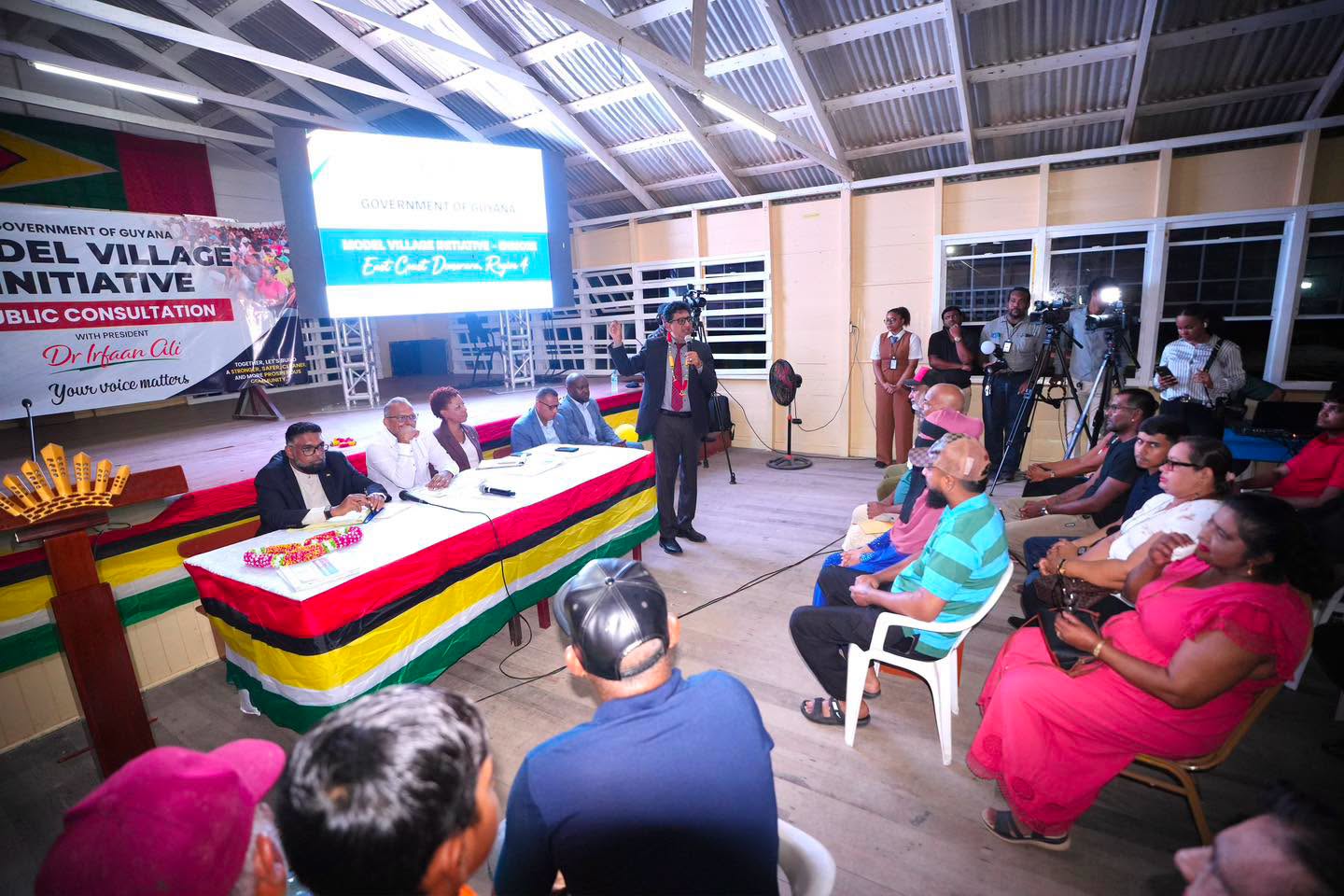
Enmore to become industrial, manufacturing hub

15 children among 67 rescued so far as search efforts continue afrer MV Barima capsizing
