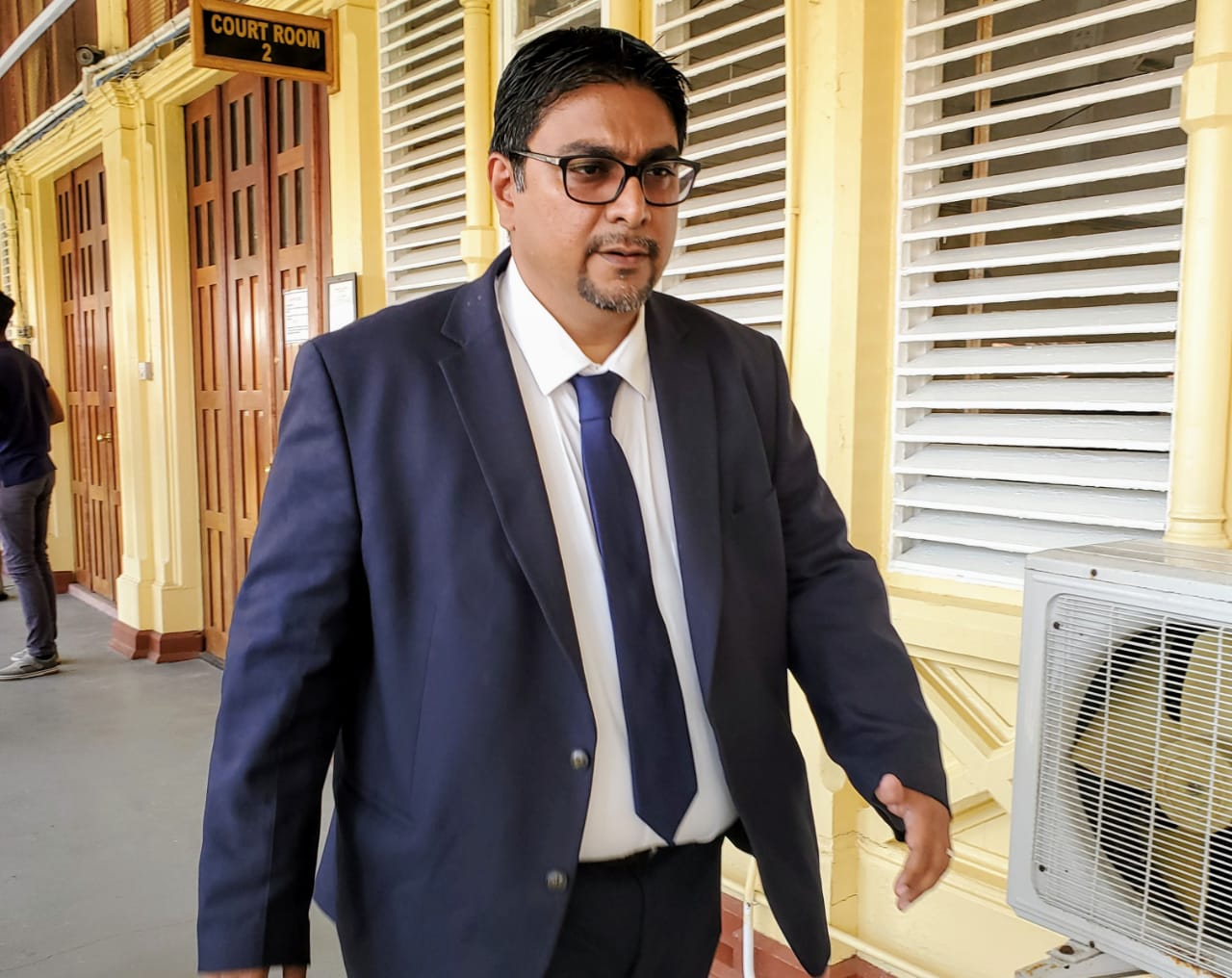


Concerns are mounting within legal circles that an increasing reliance on procedural rules in the courts of Guyana is undermining access to justice, with attorney-at-law Sanjeev Datadin warning that litigants are being denied fair hearings due to strict adherence to technical requirements.
The attorney, speaking on recent developments in civil litigation at a recent trialogue on procedural rigidity within the legal system, pointed to interventions by the Caribbean Court of Justice (CCJ), where matters were remitted to lower courts with clear guidance that cases must be determined on their substantive merits rather than procedural defects.
“The case was to be judged on its merit and not on a technical fault,” the attorney said, referencing a ruling that has reignited debate over how justice is administered locally.
According to the attorney, who is also a People’s Progressive Party/Civic (PPP/C) Member of Parliament, there is a growing trend in which courts place “far too much weight on procedural rules rather than merits,” resulting in outcomes where individuals are effectively shut out of the judicial process for failing to meet strict timelines.
He explained that under current practice, litigants who fail to file documents such as a defence within the prescribed time can face default judgment, regardless of the strength of their case.
“If you don’t file your defence in time, default judgment is given. But if the man comes to court and he’s late and he says, ‘look, this is my defence,’ he should not be shut out,” the attorney contended during a social media programme which was aired live.
Instead, he said that the courts should seek to balance efficiency with fairness by imposing costs for delays while still allowing matters to be heard on their merits.
“You can make an award for costs for the wasting of judicial time, but he should not be shut out,” the attorney said, adding that the overriding objective of the civil justice system is to ensure fairness, do justice, and allocate judicial time proportionately to the seriousness of cases.
Substance alongside procedural compliance
The issue is not unique to Guyana, the attorney noted, referencing rulings from both the CCJ and the Privy Council, which have emphasised that courts must consider the substance of claims alongside procedural compliance.
“The explanation as to why he is late is one part, but for you to do justice, you have to look at the merits of the claim,” he explained.
However, the attorney warned that an overemphasis on procedure could have far-reaching consequences beyond the courtroom, including eroding public trust in the justice system.
“Procedural matters are going to put people with cutlasses on the road because they will be angry that they haven’t got justice,” he cautioned, underscoring the potential for frustration among litigants who feel unheard.
He stressed that in a civilised society, disputes are meant to be resolved through the courts, but this principle is weakened when individuals are denied the opportunity to present their cases.
“If the judge is not going to give you a chance to hear your case because you are late, then how do you feel satisfied?” the attorney questioned, pointing to the real-world implications for persons facing loss of property or adverse judgments.
The attorney further argued that the current system places “disproportionate weight” on procedural compliance, resulting in what he described as a justice process driven more by “form than substance.”
While acknowledging concerns among judges that relaxing procedural rules could prolong cases, he noted that existing mechanisms already allow for balanced enforcement. These include cost penalties and conditional orders, commonly referred to as “unless orders”, which give litigants an opportunity to comply before facing dismissal or final judgment.
“There is a procedure that the courts should follow… you pay costs, then if you’re repeatedly delinquent, the court makes an unless order,” he explained.
He also pointed to systemic pressures contributing to the issue, including tight filing deadlines and heavy caseloads, which have resulted in a surge of applications for extensions of time.
“The bulk of judicial time now is wasted… the majority of things are by applications for extension of time because the timelines are so short,” the attorney said, noting that many lawyers are managing multiple matters simultaneously.
Against this backdrop, the attorney called for a more balanced approach that prioritises fairness while maintaining efficiency within the justice system.
Subscribe to get the latest posts sent to your email.
Related News

GCCI backs the establishment of Guyana Development Bank

Guyana Jewellers' Association advances sector development through strategic partnership wi...

2020 elections fraud trial: Tensions rise in court as Nigel Hughes suggests witness is "ra...