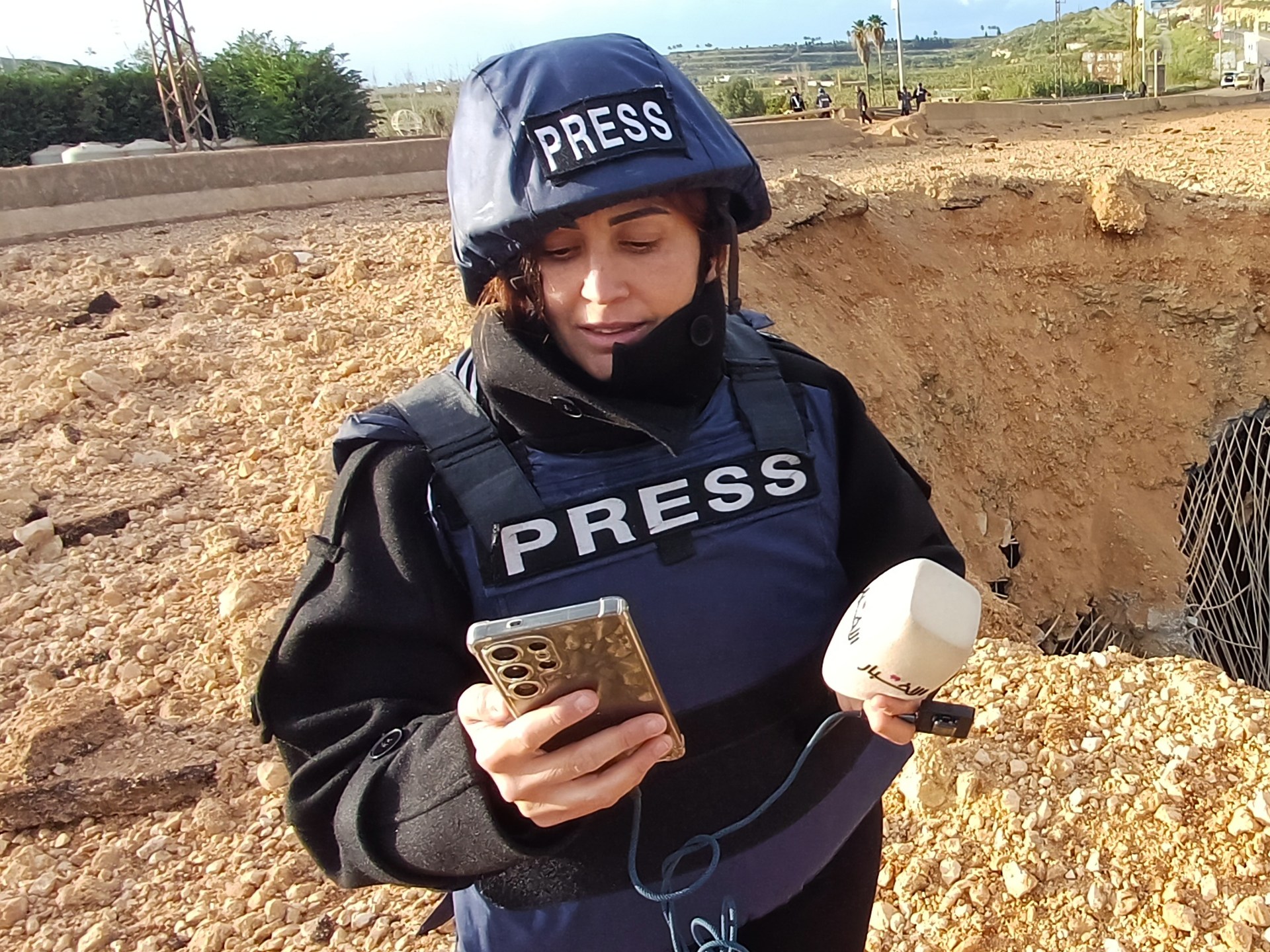

Lebanese Prime Minister Nawaf Salam has accused Israel of crimes against humanity for killing journalist Amal Khalil and wounding her colleague Zeinab Faraj in an air strike in the village of al-Tayri in southern Lebanon.
Khalil and Faraj were reporting on an earlier Israeli attack on a vehicle on Wednesday, when they were targeted while fleeing towards a building to take shelter.
- list 1 of 4Israeli attacks on Lebanon kill at least five people, including journalist
- list 2 of 4Israel kills journalist and wounds another in south Lebanon targeted attack
- list 3 of 4Bad optics? Israel jails soldiers who smashed Jesus statue in Lebanon
- list 4 of 4Israeli strike kills five in Gaza, including three children
end of list
Paramedics rescued Faraj and recovered Khalil’s body from the rubble hours later.
Here’s what we know so far:
The journalist was last heard from at about 4:10pm local time (13:10 GMT), when she called her family members and the Lebanese military, according to colleagues and media reports.
She had taken cover inside the house after an earlier Israeli air raid killed two people near the car in which she was travelling with Faraj.
Rescue workers initially tried to reach the veteran Al Akhbar journalist, but came under Israeli fire and were forced to withdraw, according to Lebanon’s Ministry of Public Health.
A second strike then hit the house where the two journalists had sought refuge. Khalil’s body was recovered shortly before midnight, more than seven hours after the attack.
Khalil was killed in what Lebanese officials described as a “double-tap” strike in al-Tayri.
Rescuers were able to pull Faraj, who was seriously wounded, from the scene and recover the bodies of two people killed in the first strike. But efforts to reach Khalil were delayed after Israeli forces fired on emergency workers, the ministry said.
Advertisement
Khalil had been covering a renewed escalation of hostilities between Israel and the Lebanese group Hezbollah, which resumed in early March amid wider regional tensions linked to the US-Israel war on Iran.
Khalil is the ninth journalist killed in Lebanon this year.
Born in 1984 in Baysariyyeh, southern Lebanon, she had covered the region for Al Akhbar since the 2006 war. Her latest reporting focused on Israeli demolitions of homes in villages where Israeli troops are positioned inside Lebanon.
In an interview earlier this year with The Public Source, Khalil said her reporting sought to highlight the resilience of residents in Lebanon’s border villages.
“I debunk the enemy’s narrative of targeting only military sites by showing evidence of them bombing homes, farms, and killing children,” she said. “Through my work, I have tried to be in solidarity with these people – the people of the land.”
In a statement to Al Jazeera, the Committee to Protect Journalists (CPJ) said Khalil’s killing “must be a wake-up call for the international community to enforce international law, urgently investigate Israel’s 262 killings of journalists across the region, and hold all those responsible to account”.
“The Israeli military’s obstruction of medical crews from rescuing wounded civilians is a brutal and recurring crime we have already witnessed in Gaza and now again in Lebanon. Khalil, an unarmed civilian journalist, remained trapped under the rubble for more than seven hours while the Red Cross was prevented from reaching her,” said the CPJ’s regional director, Sara Qudah.
Lebanese President Joseph Aoun offered his condolences over Khalil’s death and wished Faraj a swift recovery.
In a post on X, Aoun accused Israel of the “deliberate and consistent targeting of journalists” in an effort to “conceal the truth of its aggressive acts against Lebanon”.
Reporting from Tyre, southern Lebanon, Al Jazeera’s Heidi Pett said Khalil was “a well-known and respected journalist here in Lebanon”.
Pett said Khalil had received direct threats during the last war from an Israeli phone number on WhatsApp, warning her to stop reporting.
“In fact, [they were] telling her that she should leave Lebanon if she wanted her head to remain on her shoulders,” Pett said.
The Israeli military denied reports it had prevented rescue teams from reaching the scene and said it does not target journalists.
Less than a month ago, three journalists were killed in another reported “double-tap” attack in southern Lebanon. Their vehicle was struck, then hit again, while rescue workers who arrived afterwards also came under attack.
Advertisement
Following that incident, the Israeli army posted an image alleging one of the journalists was a member of Hezbollah’s elite forces, but later acknowledged the photo had been altered.
Lebanon’s Information Minister Paul Morcos described the latest attack as a flagrant violation of international humanitarian law.
Related News
Cash shortages grip Yemen despite currency stabilisation
Magnitude 7.5 earthquake strikes northern Japan; tsunami warning issued
Israeli forces kill three Palestinians in Gaza, arrest dozens in West Bank