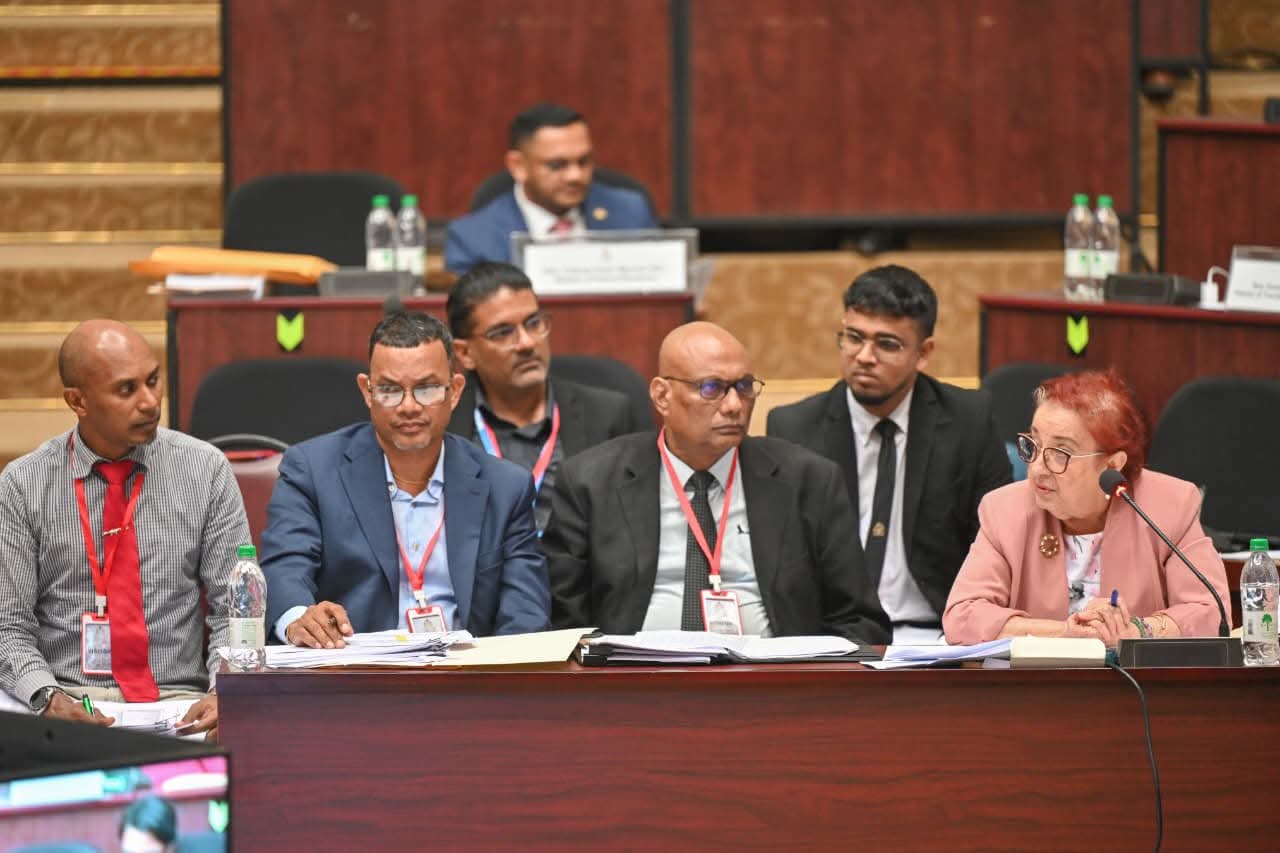


Minister of Parliamentary Affairs and Governance Gail Teixeira has defended the existing legal provision that allows Commonwealth citizens to vote in Guyana after residing in the country for one year.
The issue arose during the consideration of the 2026 budget estimates for the Guyana Elections Commission (GECOM), when Opposition Member of Parliament Dr Terrence Campbell questioned whether there was strict compliance with both residency and domicile requirements for Commonwealth citizens being issued identification cards and added to the voters’ list.
In response, Teixeira said the legal framework dates back decades and forms part of Guyana’s post-independence arrangements.
“If you go back to the legislation… the Commonwealth citizens would be allowed to vote in Guyana elections if they’ve been here for one year,” the Minister informed.
She further explained that eligibility is determined through documentary proof. “How do you know what that one year means? One has to check their passport… maybe the stamp or their work permit or whatever they came in with.”
Teixeira rejected suggestions that there was ambiguity in how the provision is interpreted. “The law is very clear. There’s no interpretation to it,” she stated.
During the exchange, Opposition members raised concerns about the distinction between residency and domicile, but in response, Teixeira stated that Guyana’s legal system does not provide for a formal residency regime similar to other jurisdictions.
“We have no residency arrangement in Guyana. There’s no residency requirement,” she said, adding, “Once you are in Guyana and you are living here, and you say you are living here, this is your home – that’s it.”
She further emphasised that officials administering elections cannot deviate from what is set out in the statute.
“They cannot breach the law. They have to follow what the law says until the politicians and the Parliament decide that we want to change the law,” the Minister said.
Pressed on the current operating procedure, Teixeira reiterated, “The law provides for one year. So, one year and registration.”
The exchange formed part of a broader debate on electoral processes and oversight as lawmakers scrutinised the allocations for the Elections Commission ahead of this year’s Local Government Elections.
Subscribe to get the latest posts sent to your email.
Related News
Teens detained following MDMA discovery at Essequibo secondary school

“Selective interpretation, chronic and barefaced distortion” – Finance Minister hits...

56 doctors, 234 nurses, 51 clinical staff at Diamond Hospital – Health Minister