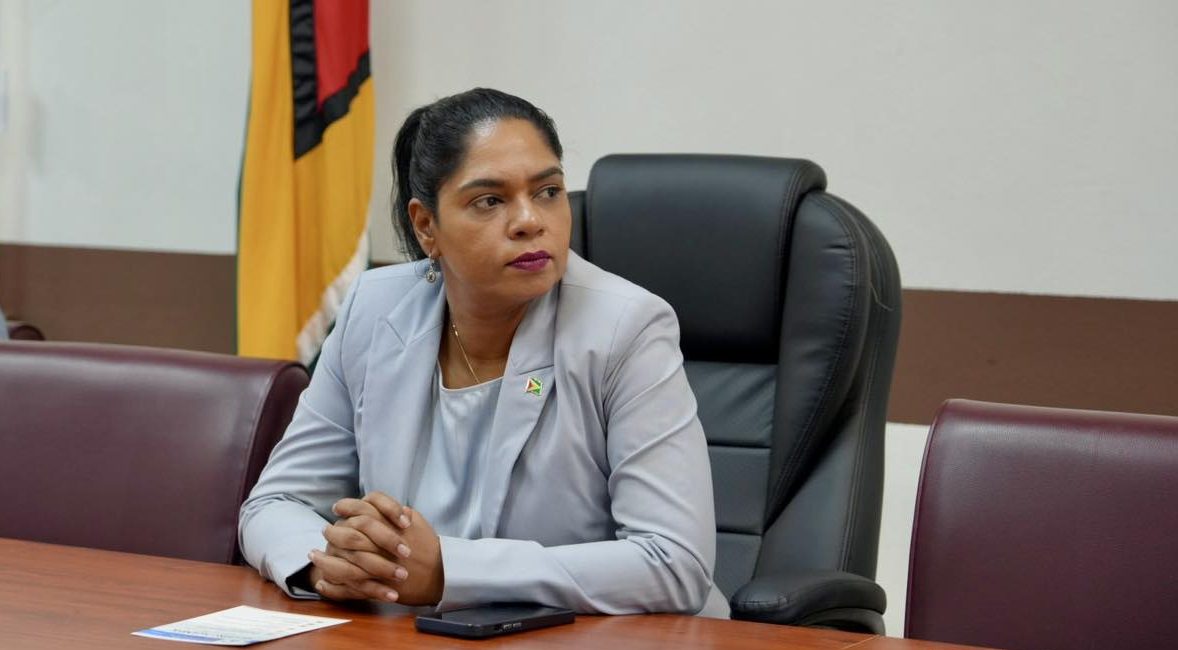


In light of the significant investments being made to strengthen the education sector, Education Minister Sonia Parag has pledged to enforce stronger accountability across schools and among teachers.
This will be achieved through the reintroduction of teacher appraisals and the introduction of school report cards.
Speaking during the Start Point podcast, the minister disclosed that both initiatives will be implemented this year.
Teacher appraisal system, she explained, was piloted before the Covid-19 pandemic but later suspended, and will be re-introduced this year.
“It is an evaluation of teachers performance, their attendance…the objective of doing that is accountability, and ensuring that we have…quality, ensuring that the quality of what is delivered in the classroom is coming from those teachers,” Parag noted.
The system will also support teachers’ career advancement in terms of promotions and other opportunities for growth.
“It’s a formal process and it is a process that has been piloted before and the I believe the ministry would have had several engagements with the GTU [Guyana Teachers Union] in terms of these appraisals. So, this is not this is not something that is coming from the ministry alone, or this is not this is not a decision that was made by the ministry to do this alone,” the minister added.
Meanwhile, to further ensure accountability in the education sector, the Ministry is gearing up to launch the school report cards initiative.
“We’re building schools. We’re ensuring that resources are placed in schools for students to be able to benefit from that,” Minister Parag affirmed.
“This report card is going to be based on the performance of that school overall,” she explained, noting that the appraisal system will take into account the performance of students and the attendance rate and performance of teachers.
“Again, it’s going towards accountability, holding the schools accountable,” the education minister emphasised.
This initiative is expected to be developed and implemented in time of the National Grade Six Assessment (NGSA) this year. “That will definitely give us a good idea of the schools that performed,” Parag noted.
Moreover, she explained that these accountability measures are necessary, especially in light of the significant investments being made by the government to improve the education sector.
“You are training teachers, you’re ensuring that you give all the resources, whether financial resources or otherwise for students to be able to attend school, you are having the necessary content available in terms of the textbooks. So, there should be no excuse why someone can’t develop,” she posited.
Among the initiatives that have been implemented to support the education system is the ‘Because We Care’ cash grant which is expected to be increased to $100,000. Also to be introduced this year is an annual transportation grant for students valued at $100,000 per child. Together, this means that every schoolchild will benefit from a minimum of $200,000 per year – a policy expected to inject $40 billion annually into households across Guyana.
Students are also benefitting from a school feeding programme being implemented by the Ministry of Education, which will be expanded this year. They are also benefiting from the provision of textbooks from the ministry, further eliminating a financial burden on parents.
Additionally, the government has begun covering the costs for students writing CSEC and CAPE examinations. Under the initiative, the government will cover the full cost of CSEC and CAPE exam fees for up to eight subjects for all students, both in the public and private sectors.
Furthermore, teachers are receiving grants to help support their activities in the classroom. Under this initiative, schools on the coastland receive $4,500 per student per term while hinterland schools receive $5,500 per student per term. In nursery and primary schools along the coast, teachers receive $3,500 per student while $1,000 will remain with the school’s administrative department to offset expenses in common areas. Similarly in hinterland nursery and primary schools, $4,500 will be given to the teacher and the remaining $1,000 will be used by the school’s administrative department to offset common expenses.
Teachers are also benefitting from free training at the Cyril Potter College of Education (CPCE) and have opportunities to access free tertiary education at the University of Guyana and through the Guyana Online Academy of Learning (GOAL).
Subscribe to get the latest posts sent to your email.