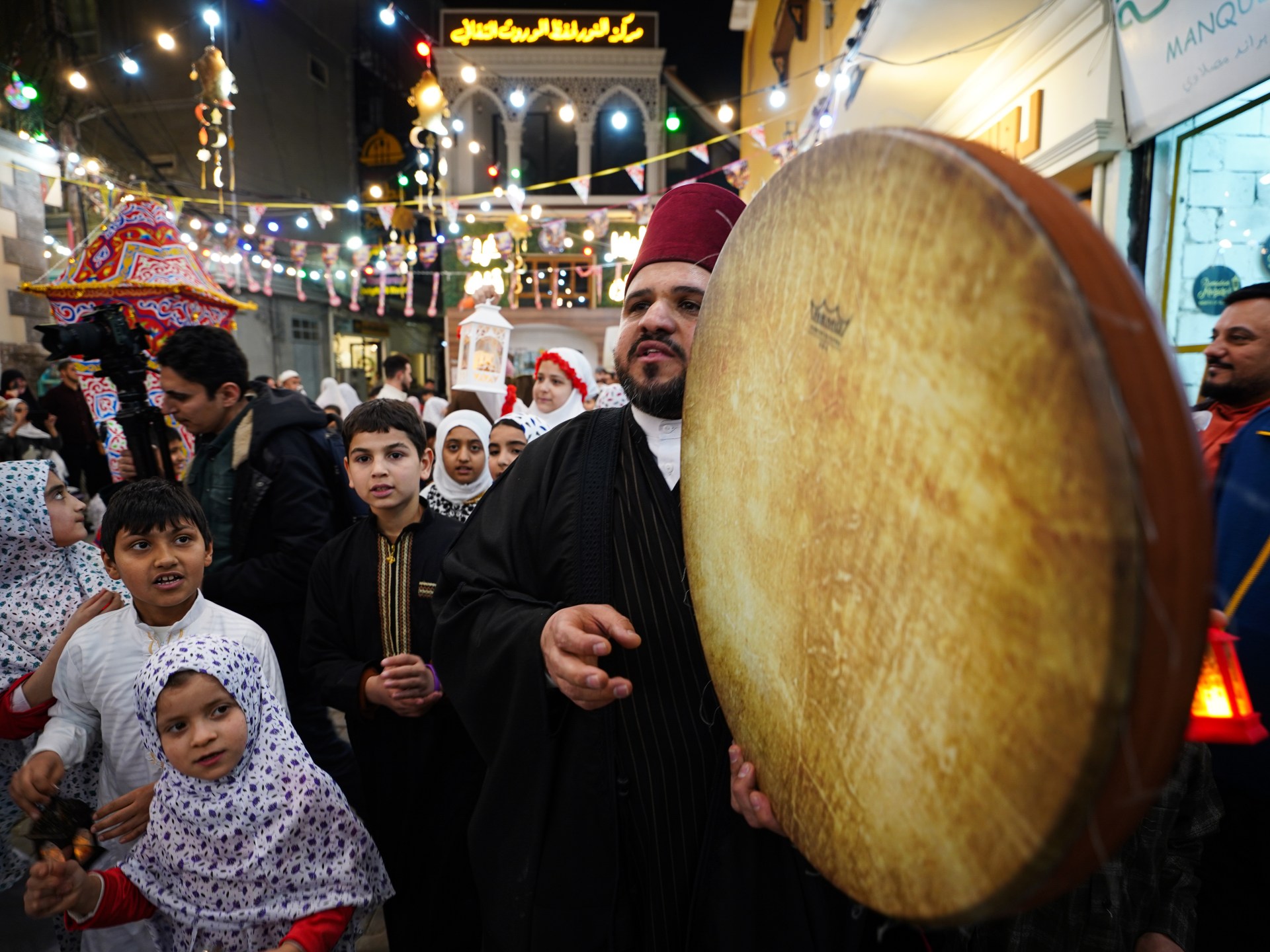

As the Muslim holy month of Ramadan began last week, the Iraqi city of Mosul regained its spiritual and cultural vibrancy, with religious rituals blending with cultural activities that reflect the city’s heritage, identity and collective memory after years of war and devastation.
On the first night of Ramadan, immediately after the Maghrib call to prayer, the chant “Majina ya Majina”, a traditional Ramadan song, echoes through the old neighbourhoods. Children in traditional clothing roam the streets singing Ramadan songs, in a scene that revives longstanding customs.
“This gathering of children revives Mosuli and Iraqi heritage and teaches them the values of sharing and celebrating the holy month,” said Yasser Goyani, 31, a member of the Bytna Foundation for Culture, Arts and Heritage
Tarawih prayers, performed at night during Ramadan, have also returned to the Grand al-Nuri Mosque and its iconic leaning minaret, al-Hadba, for the first time in nearly nine years, just before the bombing of the mosque in 2017 by ISIL (ISIS) fighters at the peak of an Iraqi government campaign against the group that had taken control of the city.
“I feel great joy performing prayers again in the mosque after its restoration and reopening, which reflects its spiritual and historical importance,” adds Goyani.
The traditional storyteller, or hakawati, has also re-emerged during Ramadan evenings, recounting stories from Mosul’s past.
“The hakawati represents a link between the past and the present. We narrate stories about how life in Mosul used to be, especially during the holy month of Ramadan. Despite technological development, people still love returning to their old memories,” explained Abeer al-Ghanem, 52, who plays the storyteller.
Advertisement
Meanwhile, the musaharati – the traditional predawn caller who wakes people up for a small meal to help them cope with the daylong fast – still walks through neighbourhoods in the Old City of Mosul before dawn.
Ghufran Thamer, 34, who performs the role, says, “The musaharati reminds people of authentic Ramadan rituals and keeps the nights of Ramadan alive, despite the changes in modern life.”
Traditional games remain a key part of the Ramadan atmosphere.
“We have been playing the siniya game since the 1980s. It is closely associated with Ramadan and creates a warm and joyful atmosphere among participants during the nights,” said Fahad Mohammed Kashmoula, 55.
Mosul’s markets, particularly the historic Bab al-Saray, come alive during Ramadan as residents flock to buy seasonal staples. Dates are especially in demand, providing a quick source of energy for those fasting. Khalil Mahmoud, 65, who has been selling dates in Bab al-Saray for nearly 40 years, says date sales increase significantly during Ramadan, especially in this market.
“Dates are highly sought after by those fasting, because they help compensate for the sugar lost during the day,” he said
Raisin juice, another Ramadan drink, is also popular across the city.
“The juice is prepared from high-quality raisins and fresh mint from the mountains of Kurdistan. The raisins are soaked, strained, crushed and strained again before being poured into bags for sale. Shops become crowded as people seek to replenish their energy after fasting,” said Hussein Muwaffaq, a raisin juice maker.
Alongside religious and cultural activities, the city also sees growing humanitarian initiatives during Ramadan, including paying off the debts of people in need, distributing food baskets, setting up free iftar meals, and promoting the values of social solidarity.
Related News

Court orders Trump administration to facilitate deported student’s return
Photos: Mexico descends into violence after most wanted drug lord killed

US issues new sanctions as it dials up pressure on Iran