Public servants volunteer in e-ID rollout as Govt working to enact data protection laws – Nandlall
 03 December 2025
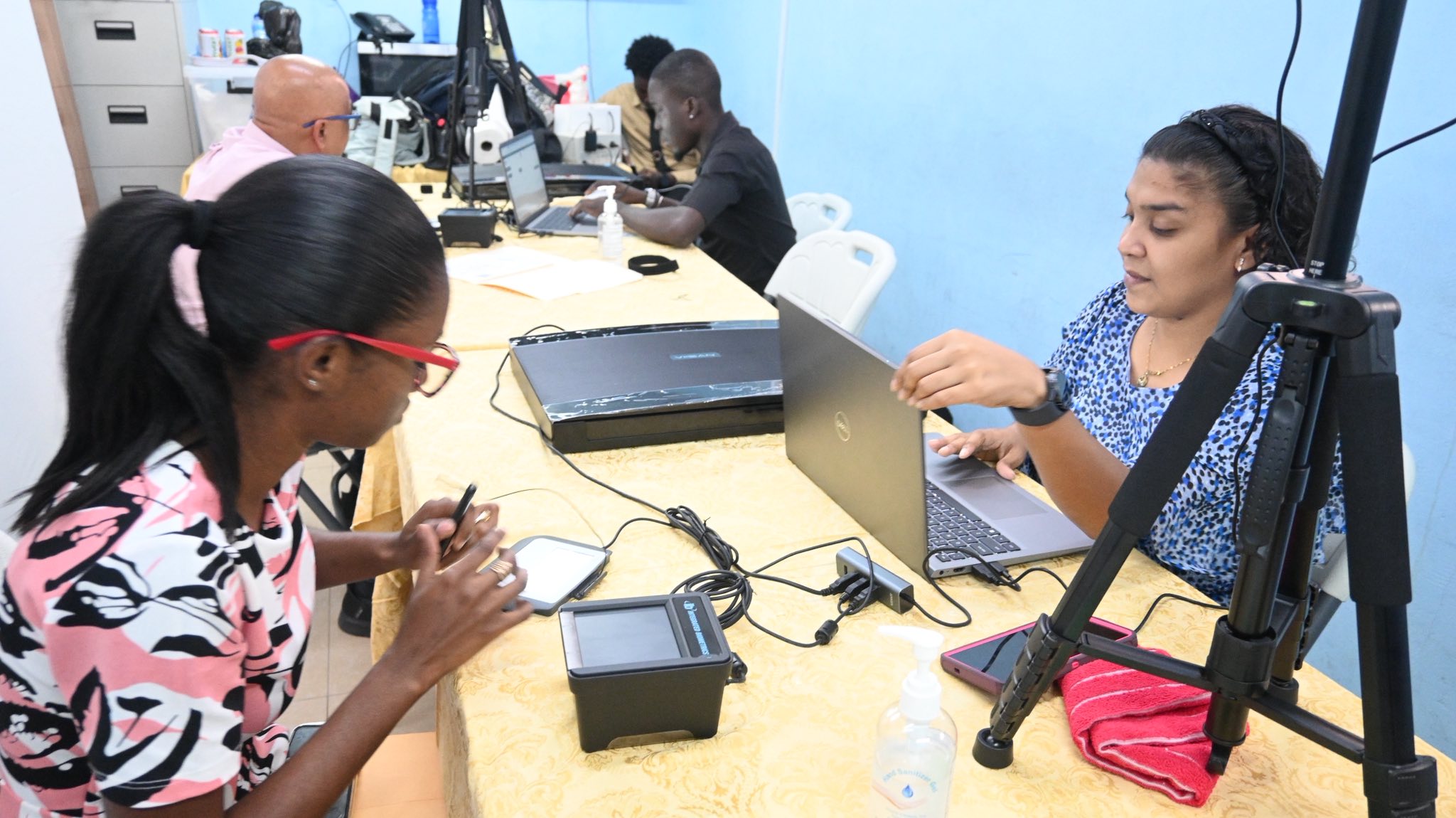


Attorney General and Minister of Legal Affairs Anil Nandlall has clarified that public servants currently signing up for the electronic identification card (e-ID) are doing so voluntarily, while the government works to enact the necessary data protection laws.
On Monday, the Ministry of Home Affairs revealed that the Government of Guyana has started rolling out the new Electronic National Digital Identity Card, with the enrollment of workers in the public sector.
To register, they must present a valid national ID, proof of address, and relevant civil status documents as part of the enrollment process.
During his programme ‘Issues in the News’ on Tuesday, Nandlall explained that the workers participating are doing so voluntarily.
“It was explained that the legislation governing the data and the cards are not in place. The persons who were invited to participate in this process were told that they don’t have to participate if they wish not to, because the law is not in force, that when the law comes into force, then everyone will be compelled or compellable by law to participate,” he said.
“Every person was offered the opportunity to refuse to participate in the process,” he added.
The government has not enacted the necessary data protection laws, the Digital Identity Card Act and the Data Protection Act, which were passed in the last Parliament.
According to Nandlall, “these two pieces of legislation have been hailed as modern, as visionary and as containing all the protective safeguards that are necessary in relation to legislation of their type.”
But he explained that both pieces of legislation have in them commencement orders and neither of the commencement orders have been brought into force.
“The reason why the mechanism of a commencement order was used in each legislation is because it was recognised that these are complex legislation. They create complex administrative apparatus within them,” he explained.
“They have a multi-tier governing structure and a huge regulatory framework, all of which are required to be in place before the legislation come into force,” he added.
Nandlall said the government is working towards enacting the laws but noted that the process cannot be rushed.
“This area is relatively modern. Few persons are trained in these very specialised fields of activity and they are concepts and processes that are new to Guyana. All of that is being said to make the point that time is required and a lot of preparation must be done before these legislation are operationalised. And I wish to assure you that the government is moving with every convenient urgency to ensure that the requisite mechanisms are in place, the human resources duly qualified are in place, and the relevant infrastructure are in place before the legislation are brought into force.”
“These legislation require centres to be established from one end of Guyana to the other in every administrative region. And each centre and sub-centre, as the case may be, will have to be equipped with equipment, technical machinery, equipment, and personnel qualified and trained to function in these centres and operate the processes in these centres. This is not an easy task. But as I said, every effort is being made to accelerate these preparatory processes urgently and to complete them.”
Amid the current rollout of the e-ID card initiative in a limited capacity, Nandlall is assuring that the data being collected is not “private, peculiar information”.
Data being collected during this process includes names, addresses, ID card numbers, passport numbers, TIN, photographs, driver licence numbers, marriage certificates, etc. – all information that’s already in the public information system, Nandlall said.
“This is not private, peculiar information. So no personal medical data, personal information data, personal financial data, such as bank accounts and medical information…,” he contended.
Against this backdrop, the Attorney General criticised attempts by the opposition to create hysteria over the development.
“The fears that I see being expressed by the APNU and by some commentators in the media are, I dare say, unfounded, without basis, and polluted by politics. The data that is currently being taken from citizens are data that are available in the public domain and accessible by the government in any event. So this fear that government is accumulating data and will misuse the data and will manipulate the data for ulterior design and purposes is one that is without basis and unfounded.”
“What use will we make of your passport number? What use will we make of your driver’s licence number? Those are information that any person, you know, governments have access to those types of information.”
The Government of Guyana in 2023 signed a US$35.4 million contract with German-based company, Veridos Identity Solutions for the implementation of the national electronic ID.
The e-ID card is intended to ensure holders have streamlined access to government services and healthcare services.
The e-ID card will be issued to both citizens and non-citizens. There will be an e-ID Citizen card for Guyanese nationals and an e-ID Resident card for migrants who meet the required legal criteria – such as those holding valid work permits.
The Home Affairs Ministry had explained that the e-ID Resident card is designed to ensure compliance with national regulations, including those of the Guyana Revenue Authority (GRA) and the National Insurance Scheme (NIS), while also providing secure access to Government and private sector services.
E-ID Resident cards issued to non-citizens will remain valid only for the period of their approved legal stay, after which they automatically become invalid.
Subscribe to get the latest posts sent to your email.
Related News
IICA assesses preparations for establishment of Situation Room at Agri Ministry

$75,000 fine for illegal tint, cops to be equipped with meters for testing – Walrond

Health Minister engages World Bank team on advancing One Health Project