Public assistance is a temporary support, not a permanent income source – Min. Persaud
 22 January 2026
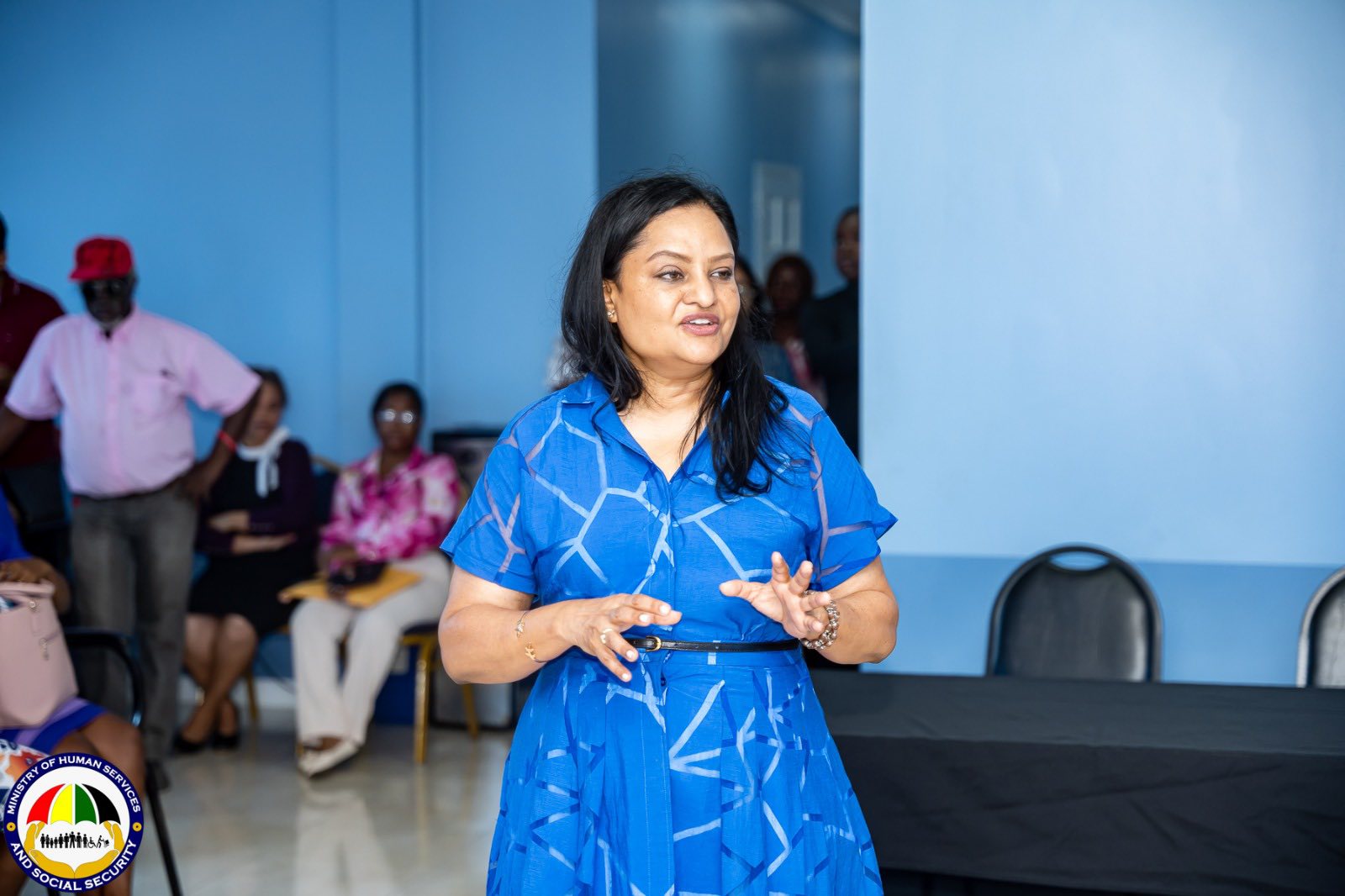


Human Services and Social Security Minister Dr Vindhya Persaud has moved to clarify widespread public confusion surrounding eligibility for public assistance, permanent disability support, and pension benefits, saying many Guyanese continue to misunderstand how the system is designed to operate.
Speaking with this publication during an engagement on Wednesday, the Minister said public assistance is intended as temporary support, not a permanent income source.
She explained that two main categories exist under public assistance: economic and medical; and eligibility depends on an applicant’s specific circumstances.
Using medical cases as an example, Persaud noted that persons receiving assistance for temporary conditions, such as injuries, are expected to transition off the programme once their health improves.
In contrast, she explained that individuals approved for permanent disability support remain on that register until they qualify for an old-age pension, at which point they transition directly into the pension system without submitting a new application.
She emphasised that permanent disability support is continuous, subject only to the annual renewal of documentation.
The Minister also addressed pension eligibility, stressing that residency remains a key requirement.
Applicants must be living in Guyana to qualify for state pension benefits, she said, noting that the rule is intended to ensure fairness and accountability in the system.
Persaud said much of the confusion surrounding social assistance arises from misinformation circulating within communities, which often discourages eligible persons from applying or leads others to assume benefits are automatic.
She said improving public understanding of how the system works is a priority for the Ministry.
The Minister also encouraged persons receiving public assistance to view the programme as a bridge, not a destination.
She urged beneficiaries, particularly women, to use the support period to access training and employment opportunities offered through Government programmes.
According to Persaud, economic independence remains the long-term goal of social support policies, and citizens must be empowered to move beyond dependence on state assistance.
“Public assistance is there to help persons when they are vulnerable, but it should also motivate them to prepare for a better future,” she told this publication.
The Minister said training and upskilling opportunities are available to all, regardless of whether a person is currently receiving assistance, andshe encouraged beneficiaries to actively pursue those options.
Persaud also outlined the support available under the permanent disability programme, including access to mobility aids such as wheelchairs and walkers and other forms of assistance tailored to individual needs.
She said the Ministry continues to work to expand access to these resources nationwide, particularly in rural and hinterland communities.
Residents, she noted, often raise questions about application procedures, documentation requirements, and processing times, and the Ministry remains committed to improving transparency and efficiency in those areas.
Persaud said social support systems must balance compassion with accountability, ensuring that assistance reaches those who truly need it while encouraging long-term self-reliance.
She reaffirmed that while Government remains committed to protecting the vulnerable, social assistance must also promote empowerment, independence, and dignity.
Subscribe to get the latest posts sent to your email.
Related News
Stronger accountability for schools, teachers this year – Parag
Opposition Leader to be elected on Monday

3 arrested as police probe assault on 16-Y-O student at De Willem