

See full statement from the Private Sector Commission:
The Private Sector Commission (PSC) and representatives of the bottled water industry have agreed to pursue a collaborative public-private sector approach aimed at reducing the cost of bottled water, strengthening local manufacturing, and ensuring that savings are ultimately passed on to consumers.
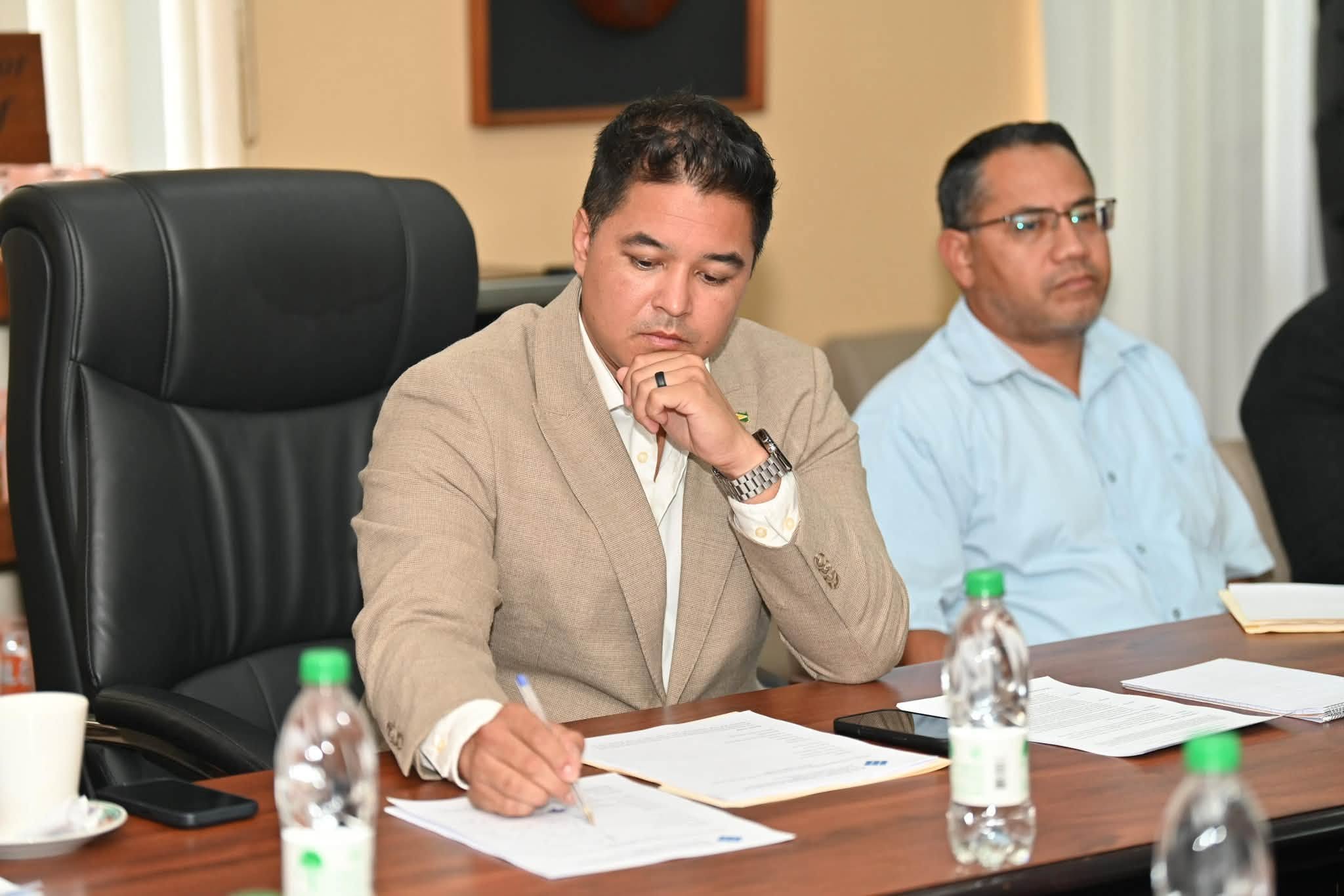
The agreement follows a further engagement held [on Wednesday] with the Minister of Public Utilities and Aviation Hon. Deodat Indar; representatives of Guyana Water Incorporated (GWI); executives of the Private Sector Commission; and private sector bottled water manufacturers.
The PSC was represented by Chairman Capt. Gerald Gouveia Jr.; Vice Chairwoman Ms. Kathy Smith: Honorary Secretary Ms. Josephine Tapp-Rutherford; President of the Guyana Manufacturing and Services Association (GMSA), Mr. Rafeek Khan; PSC’s Trade and Investment Chairman Mr. Timothy Tucker; and representatives of major bottled water manufacturers, including Blue Spring Waters, Clear Waters, Pure Waters, Aquafina, and Banks DIH Limited,
Minister Indar was accompanied by representatives from GWI, including Chief Executive Officer Mr. Shaik Baksh; Executive Director of Business Development Mr. Jaigopaul Ram; Executive Director of Finance Mr. Mark David; Monitoring and Evaluation Officer Ms. Julie Mingo-Todd ; and Communications Manager Mr. Travis Bruce.
The discussions identified production costs and distribution margins as the two key factors contributing to the price of bottled water.
Against this background, the private sector proposed a two-phase approach to addressing the concerns
surrounding the cost and availability of bottled water. The first phase would focus on the standardisation of PET preforms used by local manufacturers, where technically feasible, alongside the development of local PET preform manufacturing capacity through a public-private partnership or broader private sector consortium. PET-related inputs were identified as a significant component of production costs. Local production of PET preforms could also benefit other industries that rely on PET packaging.
The second phase would address environmental tax and other input costs, as well as distribution and retail margins. The private sector emphasised that reducing manufacturing costs alone would not necessarily result in lower prices for consumers if excessive distribution and retail margins remain within the supply chain. The lowering or removal of environmental tax and VAT, together with a review of distribution arrangements and retailer mark-ups, was therefore identified as critical to achieving meaningful price reductions.
Minister Indar indicated that Government will examine the movement of bottled water through the supply chain, including distributors, supermarkets, and other intermediaries, as well as the margins applied at various stages.
He further clarified that Government intervention is intended to address the immediate affordability challenge and does not necessarily signal permanent Government participation in the bottled water manufacturing sector. A defined period of Government involvement, together with a clear transition and exit strategy, was discussed as a possible component of a public-private arrangement.
The private sector will now submit formal proposals identifying participating manufacturers, opportunities for PET preform standardisation and local production, recommendations regarding the lowering or removal of environmental tax and VAT, distribution arrangements, and a proposed framework for Government’s eventual transition or withdrawal. These proposals will then be submitted to Cabinet for consideration.
The PSC welcomed the progress made and reaffirmed its commitment to working with Government to
improve affordability for consumers, strengthen local manufacturing, and protect confidence in private
sector investment. The Commission stressed that the objective must remain clear: to reduce the cost of
bottled water while supporting the private sector that is already investing, producing, and creating jobs in the industry.
Subscribe to get the latest posts sent to your email.
Related News

Govt tables Gaming Authority Bill following calls from religious community for stronger ga...
Mackenzie-Wismar Bridge nearing completion

Success of 'Model Village' Initiative depends on citizens’ commitment – Pres. Ali