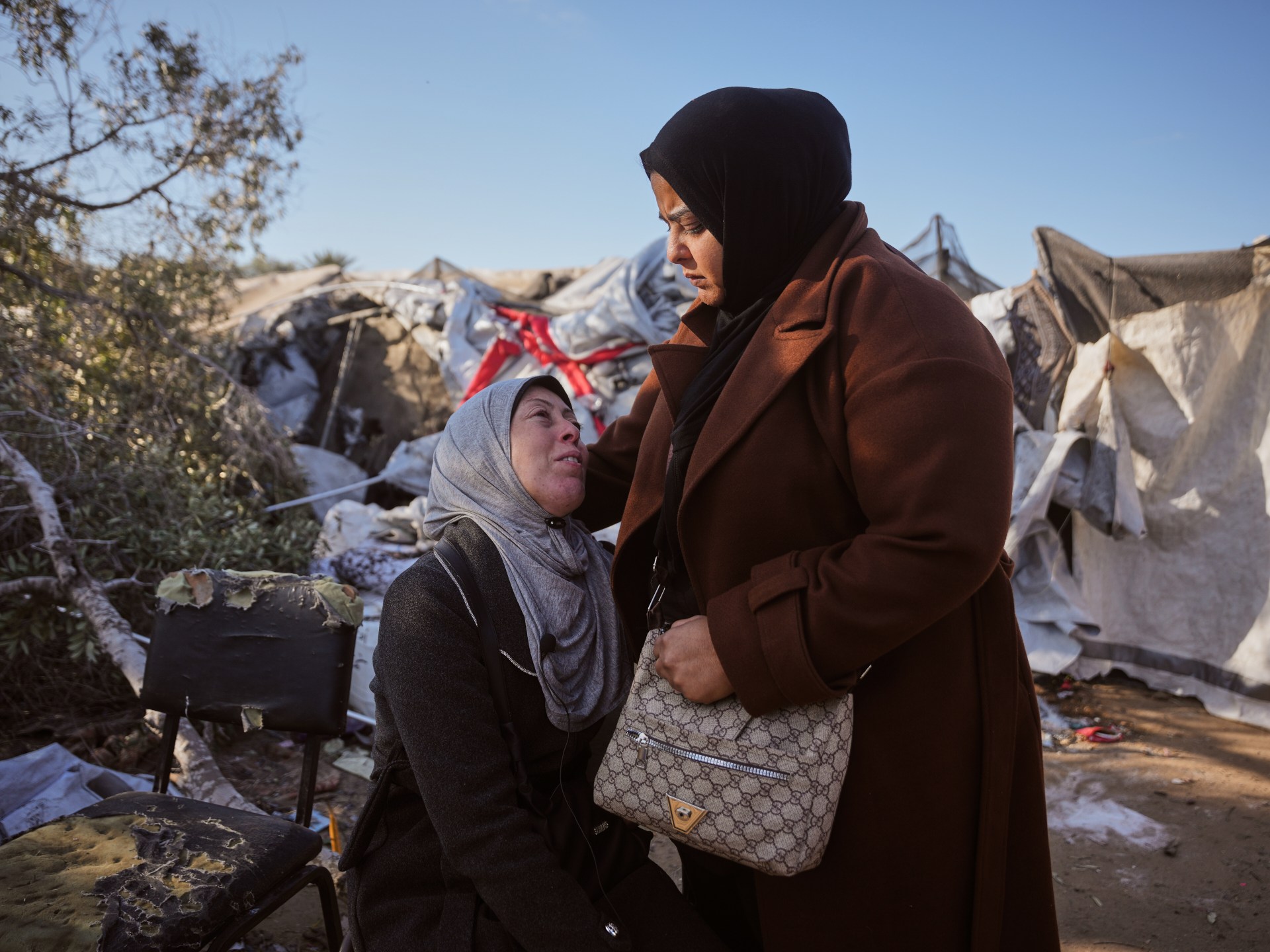

Palestinian women in the Gaza Strip have been “denied the conditions needed to live and to give life safely” by Israel amid its genocidal war on the enclave, according to Amnesty International, a global rights group.
Amnesty warned on Tuesday that women and girls in Gaza have been pushed “to the brink” as the Israeli war has spurred a series of hardships, from mass displacement to the destruction of the local healthcare system.
- list 1 of 3How US-Israel war on Iran deepens Gaza crisis
- list 2 of 3‘No middle ground’: Israelis back Iran war, despite taking mounting hits
- list 3 of 3Gaza food prices soar as border closures deepen shortages amid Iran war
end of list
Pregnant women, as well as those who need treatment for cancer and other illnesses, have been particularly hard-hit by the lack of adequate health services in the territory, Amnesty said in a statement.
“This systematic erosion of their rights to health, safety, dignity and a future is not an unfortunate by-product of war; it is a deliberate act of war targeting women and girls,” the group said.
“It is also the foreseeable consequence of Israel’s calculated policies and practices of multiple mass displacement, deliberate restrictions on basic and essential items, as well as humanitarian relief, and two years of relentless bombardment that have devastated Gaza’s health system and decimated entire families.”
More than 72,000 Palestinians have been killed since Israel’s war on Gaza began in October 2023.
Israeli attacks have continued despite a US-brokered “ceasefire” that came into effect in October of last year, killing more than 600 people, according to the latest figures from the Palestinian Ministry of Health in Gaza.
Israel also continues to impede the steady flow of humanitarian aid deliveries to Gaza, where hundreds of thousands of people remain displaced across the Strip due to the Israeli bombardment.
Advertisement
Last week, the United Nations humanitarian office (OCHA) said the health sector in Gaza remains “under significant constraints” as a result of the restrictions on medical supplies and equipment, as well as fuel.
“Sexual and reproductive health services remain severely disrupted due to damaged infrastructure, shortages of essential medicines and supplies and limited referral capacity,” OCHA said, noting that as many as 180 women give birth daily in Gaza.
“Severe bed shortages mean women undergoing major procedures, including Caesarean sections, are often discharged within hours and return to overcrowded displacement settings, increasing risks of complications and infection,” the agency said.
That was echoed by Amnesty, which said on Tuesday that medical workers in Gaza reported “an exponential increase in maternal and neonatal health conditions over the past 29 months” as a result of Israel’s genocide.
That includes pre-term births, low-weight babies and babies suffering from respiratory conditions, malnutrition of pregnant women, and postpartum depression, the rights group said.
“Displacement conditions have led to infectious diseases,” Dr Nasser Bulbol, a neonatologist at Al Helou Hospital hospital in Gaza City, told Amnesty, noting that there has been an increase in high-risk pregnancies due to conditions in the Strip.
“And most women come here under stress, trauma and uncertainty, having suffered multiple displacements, lost loved ones, unable to obtain the nutritious food they require.”
A 22-year-old Palestinian woman originally from the Jabalia refugee camp in northern Gaza said she weighed only 43 kilogrammes (94 pounds) when she gave birth to a son in mid-January.
“My baby was born with lung infection in both lungs; he spent several days in the intensive care unit and now is a bit better, but still cannot breathe properly on his own and is in an incubator,” said the woman, who is displaced and living in southern Gaza’s al-Mawasi area.
“I am afraid he will get sicker because I live in a tent by the sea, and it has been very cold, and there is no way to keep warm. I also have another baby aged 18 months, and he too has been sick from the cold,” she told the rights group.
Related News
Heavy rains, deadly floods hit southern Peru; thousands seek shelter
Iran’s Foreign Ministry defends retaliatory strikes, slams US betrayal
Trump orders federal agencies to stop using Anthropic as dispute escalates