

Pointing to studies that predict a global recession of water in decades to come, President Dr Irfaan Ali has emphasised the importance of recognising water as an economic commodity and developing an optimisation plan of the total water assets in Guyana.
One option to optimise the value, especially of the country’s vast freshwater resources, is harnessing it to produce energy, Ali posited.

“Water is also energy. Water is not only for human consumption and for agriculture and industrial [use]. We have to understand there is something called industrial water, and we will have to move to a situation where we define water based on sector use – agriculture, industrial, residential.”
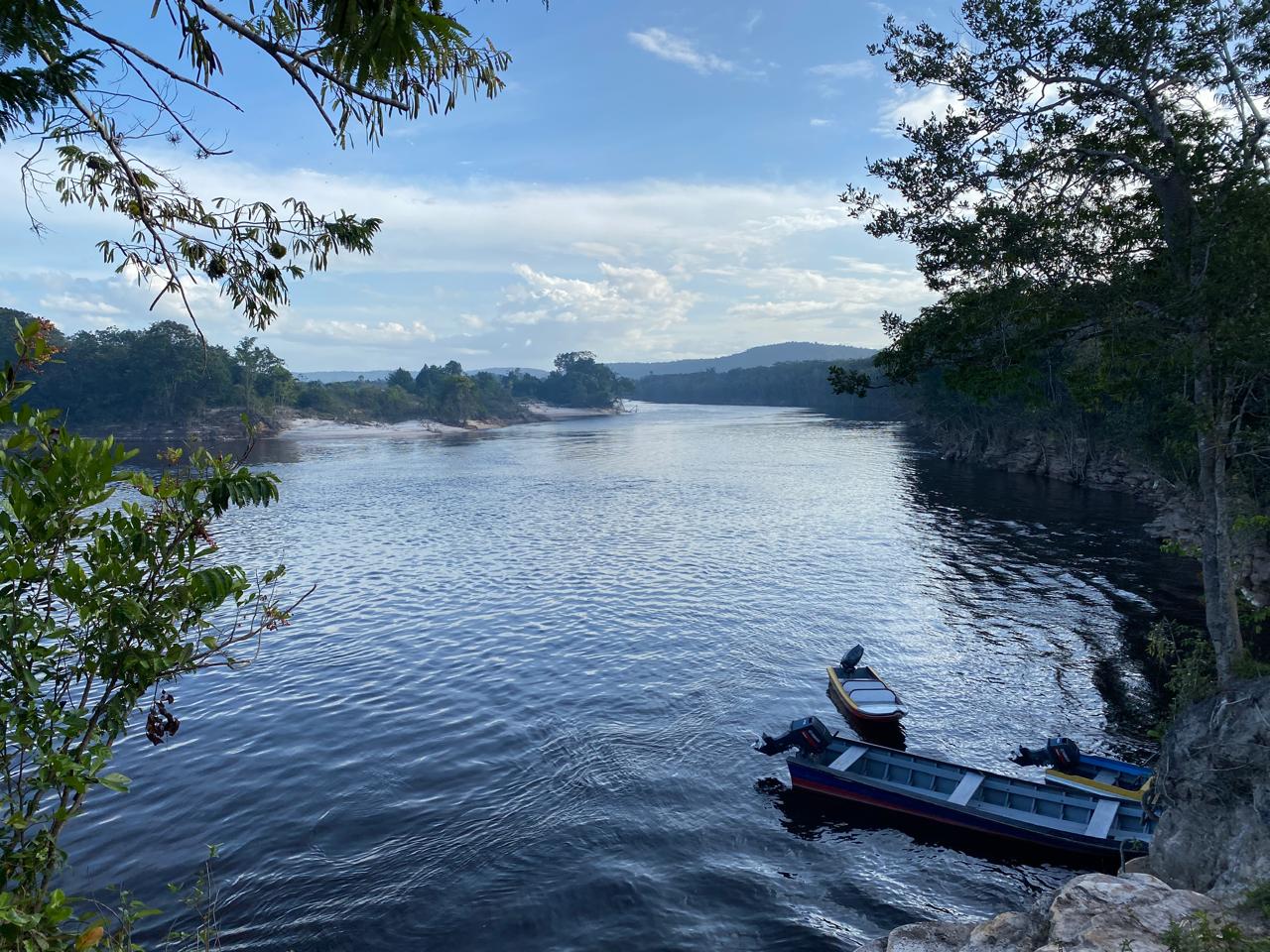
“We have to study the energy potential. We know that the Mazaruni River has a very intense current flow. And if we are going to the river as the source for surface water, then we also have to examine in these studies how we convert that energy flow in a simple way to generate enough power or energy for the [water treatment] plants,” the Head of State noted.
The Guyana Government is already pursuing the 165-megawatt (MW) Amaila Falls Hydropower Project and has invited proposals to develop this initiative under a Build-Own-Operate-Transfer (BOOT) model. That invitation is open until April 9.

Meanwhile, at least three other mini-hydropower projects have been built out across the country. Only recently, Head of the Guyana Energy Agency (GEA) Dr Mahendar Sharma says two of these projects alone – the 0.7 MW Moco Moco Hydropower Plant and the 1.5 MW Kumu Hydropower Station, both in Lethem, Region Nine – have already saved the Guyana Government in excess of 17,000 drums of fossil fuel in less than two years.
Nevertheless, President Ali on Saturday added that the Government will also have to explore using the Haags Bosch Landfill site at Eccles, East Bank Demerara (EBD), to generate power that can be used to operate the water treatment plant there, thus reducing the country’s high energy bill.
“That is a strategic objective of the sector. How do we use surface water? How do we convert wastewater management? How do we deploy energy to our treatment plants to reduce cost of operation? These plants consume a lot of energy. We have to build in LNG (Liquefied Natural Gas) and LPG (Liquefied Petroleum Gas) options for these plants… and that is how we optimise the economic value of water. Because the objective of having a Ministry dedicated to this is to allow us to optimise our value creation in terms of water,” Dr Ali stressed.
Currently, the Guyana Government is undertaking the highly anticipated Gas-to-Energy (GtE) Project, which will see a 300-megawatt (MW) combined cycle power plant and Natural Gas Liquids (NGL) facility at Wales, West Bank Demerara.
When this project comes on stream by this year’s end, electricity costs in the country are expected to go down by half. Already, some 250 kilometres of 12-inch pipelines have been laid to bring the gas onshore. This first phase, however, will only utilise 40 per cent of the pipeline’s capacity, bringing 50 million standard cubic feet per day (mmscfd) of dry gas onshore.

But with the pipelines having the capacity to push as much as 120 mmscfd of gas and given Guyana’s rapidly growing energy demand, Government has moved ahead with the second phase to utilise the remaining 60 per cent capacity of the pipeline.
Moreover, there are plans underway for another major gas project in Berbice, Region Six (East Berbice-Corentyne), that will bring even more natural gas onshore. These initiatives, slated for 2030, are part of a much larger vision to position Guyana to take advantage of the energy demand within the Caribbean region.
In fact, President Ali stated on Saturday that Guyana has to look at “how are we building out our energy infrastructure to meet global changes and national changes that will incorporate gas, LPG and LNG… and how are we positioning Guyana and our private sector to build out an ecosystem that will allow us to be a major supplier of energy across the Caribbean?”
“Take, for example, one of the island states; they will use about 50 to 40 MW of power. With our LPG and LNG coming on stream, it gives us an opportunity to partner in the building out of these plans and having power purchase agreements throughout the region. This allows us a natural market for LPG and LNG. It a llows us to build out our services industry, expand our private sector reach and create opportunities. It is this [Utilities and Aviation] Ministry that must now actively look at the deployment of these resources.”
Subscribe to get the latest posts sent to your email.