

Prime Minister (PM) Mark Phillips on Friday defended the Government’s 2026 National Budget, telling the National Assembly that major investments in Gas-to-Energy (GtE) and renewable power are reshaping Guyana’s economy while driving down electricity costs for households and businesses.
Speaking as the debate on the national budget continued, Phillips anchored his presentation in what he described as Guyana’s “lived reality,” drawing a sharp contrast between conditions before the restoration of democracy in 1992 and the trajectory being pursued under the current administration.
He warned that forgetting the country’s past would place Guyana at risk of repeating it.
“I want to tell you about lived reality in Guyana,” Phillips told the House, cautioning that “those who forget the past are condemned to repeat it.”
The PM recalled that while Guyana attained independence in 1966 under a democratically elected Government, the period that followed was marked by electoral malpractice and economic decline. He said that by the time the People’s Progressive Party/Civic (PPP/C) returned to office in 1992, Guyana had become among the poorest countries in the region.

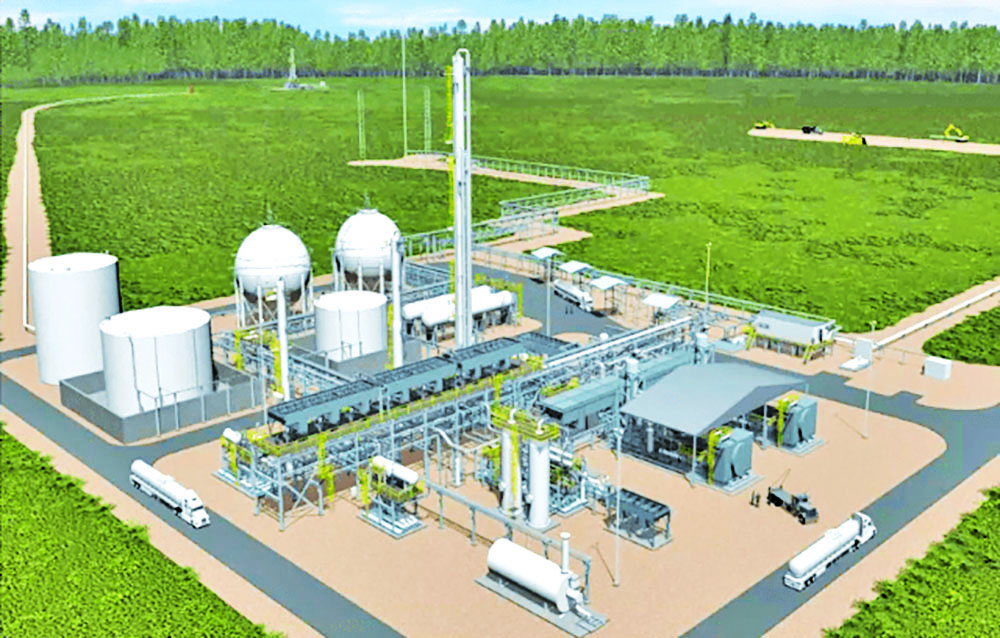
“By the time we took office in 1992, we were among the three poorest countries in Latin America and the Caribbean (LAC),” Phillips said, recounting shortages, rationing and hardship that defined daily life for many Guyanese. Turning to the present, Phillips argued that Budget 2026 reflects a deliberate shift away from that past, with energy investment forming the backbone of economic transformation. He described the GtE Project at Wales, West Bank Demerara (WBD) as the single most important investment being pursued by the Government. “The Gas-to-Energy project remains the most consequential investment undertaken by this Government and is aimed at transforming Guyana’s economic foundation,” the PM told the House.
He said construction at the Wales site has moved firmly from planning into large-scale execution, with foundations, turbines and transformers already in place. According to Phillips, the project is on track to deliver results within the Government’s stated timeline.

“We will have electricity from that project in the last quarter of 2026 – reliable and low-cost electricity,” he said. Phillips explained that cheaper, more stable power would enable heavy manufacturing, anchor the Wales development zone and attract both local and foreign investors, with wide-ranging benefits for the economy. “That will have a tremendous industrial and economic impact here in Guyana,” he said.
Renewable energy, digital connectivity
Alongside GtE, the PM highlighted significant expansion in renewable energy, particularly in hinterland, riverine and regional communities. He said that between 2020 and 2025, the Government invested $25.4 billion in renewable energy interventions, dramatically increasing national capacity. “We expanded capacity from 5.35-megawatts (MW) to 37.23-megawatts,” Phillips said, noting that the expansion also generated employment.
“More than four thousand five hundred jobs were created across construction, installation, operations and maintenance,” he added. Looking ahead to 2026, Phillips said the Government plans to install 21 new solar photovoltaic (PV) mini-grids across the country, while upgrading existing systems and advancing additional solar projects, including at Cheddi Jagan International Airport (CJIA) and in Linden. “Linden will receive a combined 25-megawatts of renewable energy by the end of 2026,” he said.
The PM said renewable investments are designed not only to expand power generation, but to reduce costs, strengthen local industries and improve quality of life, particularly in underserved communities. “More stable electricity supply, lower energy costs over time, new jobs and skills training and stronger local industries, that is how it will affect people,” Phillips told the Assembly. He said more than 12,300 residents in hinterland and riverine communities will benefit directly from new solar projects, naming several villages that will receive mini-grid installations.
Phillips also pointed to parallel investments in digital connectivity as part of the Government’s broader development agenda. He reported that all 253 hinterland villages are now fully connected to the internet, alongside significant improvements in connectivity across schools, health centres, police stations and fire stations nationwide. “253 villages in the hinterland of our country are now 100 per cent connected,” he said.
Digital ID system, disaster preparedness
Addressing concerns raised by opposition members, Phillips defended the rollout of the national digital identification system, stressing that the programme is governed by law and remains voluntary during its pilot phase. “This process is governed by law. The current pilot phase is strictly voluntary,” he added. The PM also underscored the importance of disaster preparedness in a developing country, announcing that Budget 2026 allocates $73 billion to strengthen disaster management, early warning systems and contingency planning.
“This budget will provide seventy-three billion dollars to ensure all of us are safe in Guyana,” he said. Phillips concluded by reaffirming the Government’s central message for Budget 2026, insisting that its measures are designed to benefit all Guyanese, regardless of political affiliation.
“If you are disabled, if you are old, if you are young, if you are unemployed or underemployed… there is something in this budget for all of you,” he said. “This budget is about putting people first,” the PM reiterated.
Subscribe to get the latest posts sent to your email.
Related News

Tickets for Republic Bank CPL 2026 finals go on general sale on Feb 7
Barama to increase local plywood production under $1B reinvestment plan
CANU finds ammo in Brazilian-registered vehicle; drugs, firearm, ammo at Achiwib