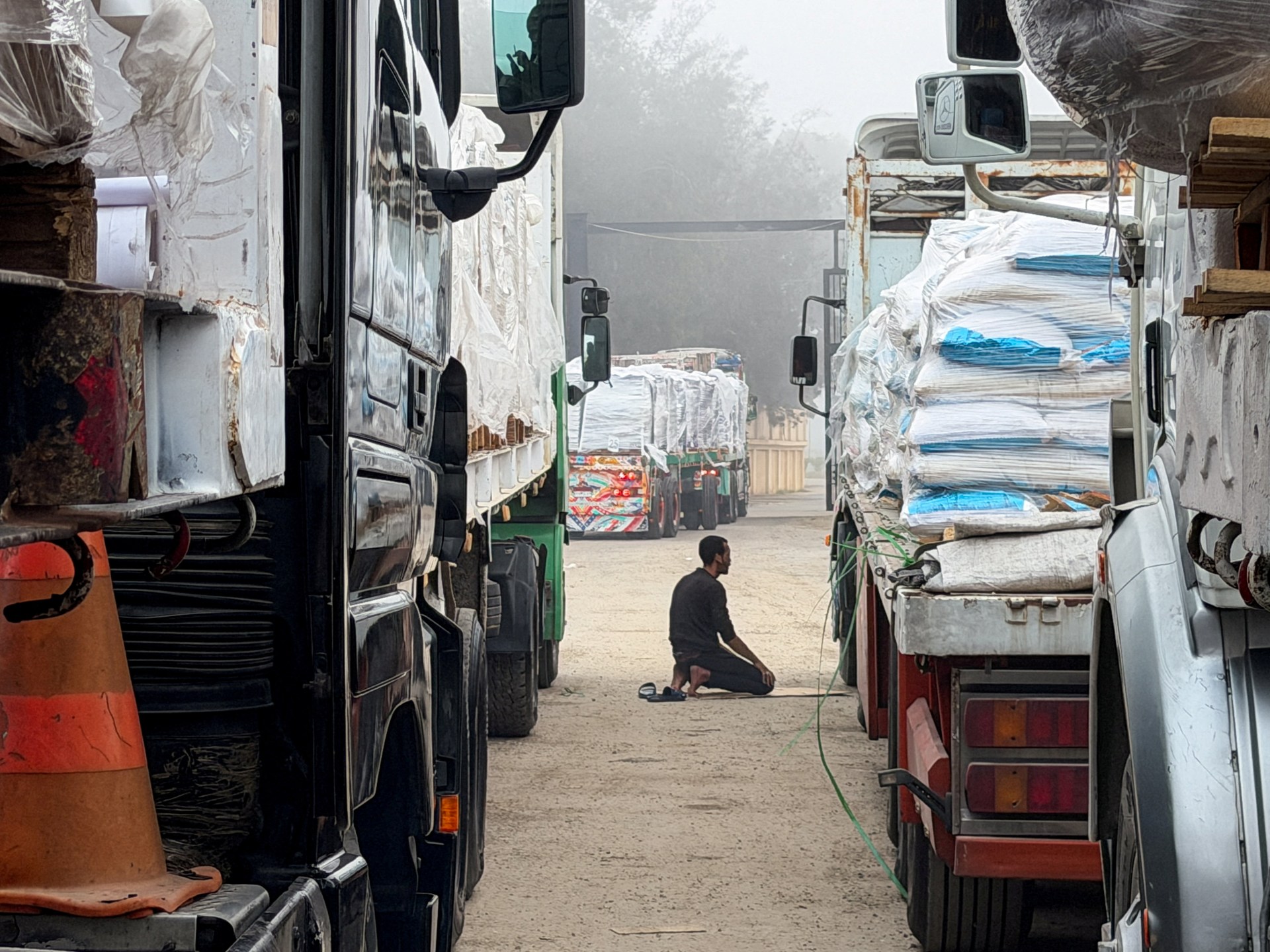

People in Gaza are once again rushing to markets to buy whatever food they can afford, as the regional war involving the United States, Israel and Iran sends shockwaves through an enclave already dependent on fragile aid and commercial lifelines.
Residents and traders say prices have jumped in a matter of days, while some staples have become scarce or disappeared altogether.
- list 1 of 3Honouring Gaza’s women who refused to let the world look away
- list 2 of 3How US-Israel war on Iran deepens Gaza crisis
- list 3 of 3Gaza food crisis worsens due to Iran war and border closures
end of list
Reporting from Gaza City, Al Jazeera’s Hani Mahmoud said that “the latest escalation is being felt in the most immediate way possible: through shrinking supplies and tightening access at border crossings”.
In local markets, shoppers are trying to secure food before stocks run lower, fearing that whatever is available today may not be there tomorrow.
That anxiety reflects Gaza’s dependence on crossings with Israel and Egypt. Nearly all food, fuel, medicine and other basic goods enter the territory by truck. When those crossings are shut or operate at reduced capacity, the impact is quickly felt in markets, hospitals and water systems.
Israel closed Gaza’s crossings on February 28, as Israeli and US forces attacked Iran, halting humanitarian access in and out of Gaza and the movement of patients in need of medical evacuation. Israeli authorities later reopened the Karem Abu Salem (Kerem Shalom to the Israelis) crossing for the “gradual entry” of aid, but access has remained restricted.
The Rafah crossing with Egypt has stayed shut, and aid agencies say the current volumes are far below what is needed.
Hanan Balkhy, World Health Organization (WHO) regional director for the Eastern Mediterranean, told Reuters this week that only about 200 trucks a day were entering Gaza, compared with roughly 600 needed daily to support the territory’s population. She also said about 18,000 people, including wounded children and patients with chronic illnesses, were still waiting to be evacuated.
Advertisement
Prices spike in local markets
On the ground, Mahmoud said the impact is clear in the cost of fresh produce. A kilogram of tomatoes that sold for about $1.50 a month ago is now close to $4. Cucumbers and potatoes have also become significantly more expensive, putting fresh food out of reach for many families whose incomes have already been shattered by months of war and displacement.
“People can no longer afford to buy vegetables and fruits due to high prices caused by the war between Israel and Iran,” one shopper told Al Jazeera.
Mahmoud said traders, business owners and shoppers were all describing the same pattern: fewer goods entering, faster sellouts, and rising prices across the board. He said essentials, including cooking oil, flour and some canned foods, had largely vanished from shelves in parts of Gaza City.
The United Nations humanitarian office, OCHA, said on March 6 that the closure of crossings “in the context of the regional escalation” had already increased the prices of both food and non-food items across Gaza. It said the current pace of truck entry was too low to sustain restocking, with many items selling out within days.
This marks a reversal from only weeks earlier. The World Food Programme’s (WFP) market monitoring for February had shown some improvement in food availability and lower prices for certain staples compared with earlier phases of the war. But the WFP now says the latest border closures have triggered sharp food price increases, and that although some crossings have reopened, prices remain high.
Aid system under strain
Aid agencies say the pressures extend far beyond market stalls. OCHA said the shutdown had forced limited fuel reserves in Gaza to be rationed, prompting humanitarian partners to suspend vehicle-based solid waste collection and reduce water production. It added that contingency measures had been activated across hospitals and primary healthcare centres.
The broader food security backdrop remains extremely fragile. The Integrated Food Security Phase Classification (IPC), the global hunger-monitoring system used by UN agencies and aid groups, said in December that Gaza was no longer in famine conditions after aid access improved during the ceasefire between Israel and Hamas. But it had warned that renewed hostilities or halted aid could quickly reverse those gains.
The WFP has also warned that Gaza’s fragile gains could quickly unravel if access is not sustained. It said the reopening of Karem Abu Salem may offer some relief, but that without reliable humanitarian corridors, the agency could be forced to slash food rations for a large number of people.
Advertisement
With access still limited, families across Gaza face growing uncertainty over whether essential food supplies can be sustained in the days ahead.
Related News
US, Israel bomb Iran: A timeline of talks and threats leading up to attacks

North Korea promotes Kim Jong Un’s sister as he vows to boost economy

Human rights court orders reparations for forced sterilisation case in Peru