Guyana demonstrates how forest carbon revenues can translate into development & community investments
 11 November 2026
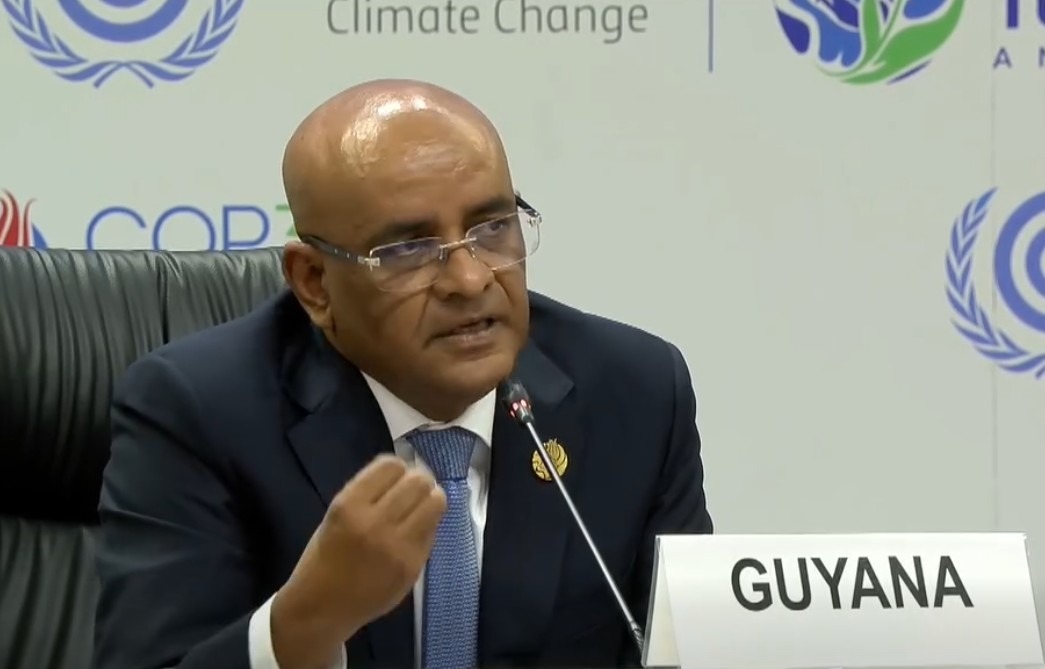


Guyana’s experience in linking forest conservation with economic development demonstrates how high-integrity forest carbon markets can generate resources for communities, climate adaptation and sustainable economic activity, Vice President Dr Bharrat Jagdeo has said.
Addressing the COP31 Leaders’ Summit on Forests in Antalya, Türkiye, Jagdeo highlighted Guyana’s two decades of experience in developing a low-carbon development pathway, demonstrating how the economic value of standing forests can be recognised while advancing national development priorities.
Guyana’s 18 million hectares of forest cover approximately 85 per cent of the country. In 2009, the country launched its Low Carbon Development Strategy (LCDS), challenging the conventional assumption that economic development necessarily requires deforestation.
That same year, Guyana established a partnership with Norway, earning US$227 million by 2015 through its efforts to maintain its forest cover.
The country subsequently became the first to issue credits under the Architecture for REDD+ Transactions’ (ART) The REDD+ Environmental Excellence Standard (TREES), secured a US$750 million agreement with Hess Corporation in 2022 and became the first country to issue CORSIA-eligible forest credits.
Jagdeo reported that more than 30 airlines now purchase Guyana’s credits, with ART-TREES sales expected to exceed US$100 million this year.
Crucially, he emphasised that the value of these transactions extends beyond the carbon market itself, with revenues supporting investments that deliver tangible development benefits.
These include more than 3,000 projects advanced by Indigenous Peoples and local communities according to their own priorities, as well as investments in climate adaptation and agriculture on non-forested land.
Guyana’s deforestation rate remains among the world’s lowest, at approximately 0.04 per cent, demonstrating the country’s continued commitment to maintaining its extensive forest resources while pursuing economic transformation.
Jagdeo argued that this experience illustrates why jurisdictional forest carbon markets should remain an important component of the global climate finance architecture.
However, he cautioned against viewing carbon markets as the only solution or positioning them against other emerging financing mechanisms.
He welcomed the Forest Finance Roadmap developed by the FCLP, Brazil and UNEP, which identifies six financing options for tropical forests: the TFFF, jurisdictional forest carbon markets, the forest bioeconomy, sustainable supply-chain finance, public finance and subsidy reforms, and sovereign-debt instruments.
He said the international community must support all six pathways, recognising that countries have different circumstances and should be able to select the mechanisms that work best for them.
Guyana, he noted, fully supports the TFFF championed by Brazil and wants to see it fully capitalised and operational as quickly as possible. At the same time, jurisdictional forest carbon markets remain Guyana’s principal financing pathway.
Importantly, Jagdeo explained that the six options can strengthen one another, rather than compete for resources or international attention.
Carbon markets, for example, can strengthen the TFFF and forest bioeconomy, ease government fiscal pressures and improve the financial position of private entities undertaking sustainable forestry activities.
Valuing forest climate services can also change the economic incentives surrounding conservation, helping to make standing forests a more valuable national asset.
The Vice President said that the wider objective must be to create economic realities in which protecting forests becomes an integral part of national development, improving the lives and livelihoods of forest communities.
He also underscored the importance of political leadership, international cooperation and the involvement of Indigenous Peoples, civil society and the private sector in ensuring that financing mechanisms deliver lasting results.
“Ultimately, our success will be measured by whether we change the economic realities facing forest communities and countries, making action on forests a vital part of development and improving lives and livelihoods,” Jagdeo stated.
He noted that the world already has the financing options, experience and political leadership needed to make significant progress.
The challenge now, he said, is to ensure that these mechanisms are supported, mobilised and implemented at the scale and speed required.
Subscribe to get the latest posts sent to your email.
Related News

Bank of Baroda eyes expanding services as new Head Office opens

Shooting outside extradition witness’ home: “All I am doing is my duty” – senior c...

Mobilise finance, science to protect natural assets – Pres Ali urges Commonwealth nations