
Samburu County, Kenya – A motorbike roars to life, kicking up pale dust in the June heat of northern Kenya.
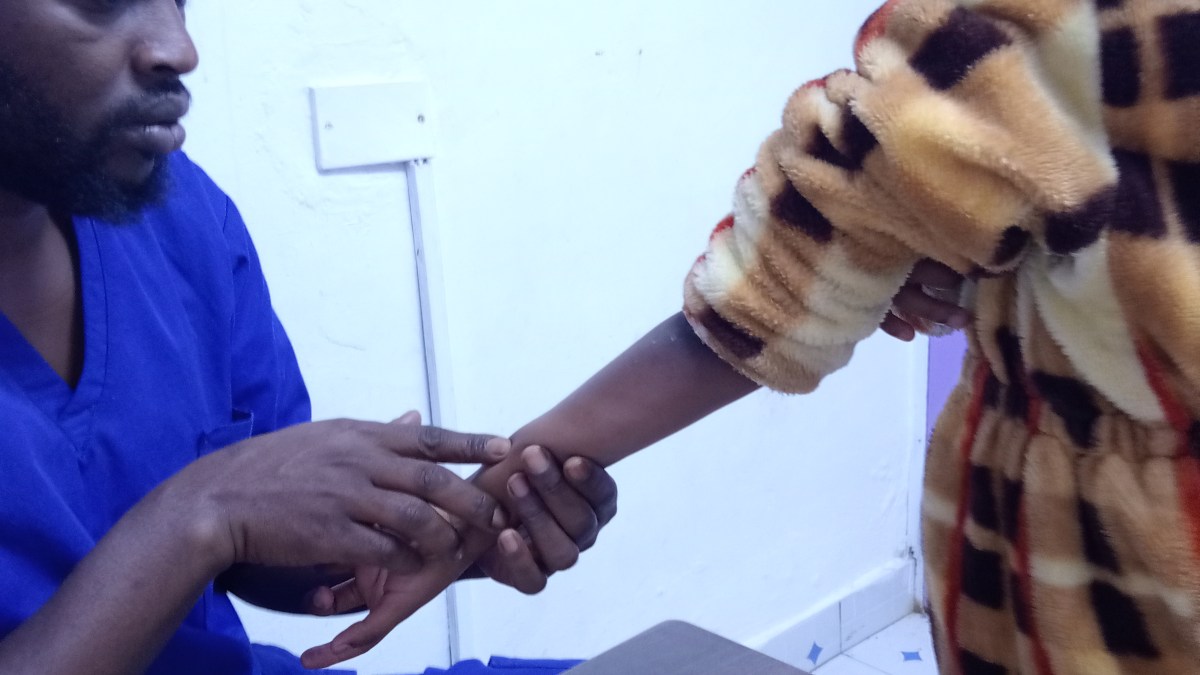
Eroi Lemarkat accelerates along a dirt track after reports of another child who has suddenly lost the use of one or both limbs. It could be polio. It could be another illness. Either way, he cannot afford to wait.
Every report takes him deeper into remote settlements, often several hours from the nearest health facility.
Across Africa, wild poliovirus has been eliminated, and Kenya has not recorded a case since 2013. But a vaccine-derived strain can still circulate where too few children are immunised, allowing the weakened virus used in the oral polio vaccine to spread and mutate. It poses a risk only in under-immunised communities, particularly in remote and nomadic parts of the country.
To stop it spreading, Kenya relies on two complementary surveillance systems.
Silent search
In Nairobi, health officials routinely test wastewater for traces of poliovirus, often detecting it before anyone develops symptoms.
“The information gathered by community health volunteers in high-risk counties, such as Turkana and Samburu, allows the ministry to respond quickly with targeted interventions,” Dr Galm Glelo, the Ministry of Health’s national point person for polio surveillance, told Al Jazeera.
Yet wastewater surveillance has its limits. It only works where sewer networks exist.
In Kenya’s sparsely populated north, where there are no wastewater-sampling sites, the search depends on community health volunteers.
Advertisement
Instead of waiting for sick children to reach health facilities, volunteers investigate reports of acute flaccid paralysis (AFP) and collect stool samples to determine whether poliovirus is circulating in communities that formal health services rarely reach.
For Lemarkat, every investigation begins with a rumour.
News that a child has suddenly stopped walking or lost the use of an arm or leg spreads quickly through villages and nomadic settlements, passing from neighbours to elders and local leaders long before it reaches health workers.
Lemarkat follows every lead, often riding for hours to isolated families. Before approaching parents, he first seeks the support of village elders, administrative chiefs or religious leaders to reassure communities and gain their trust.
Time is critical. Health workers must collect two stool samples within 14 days of the onset of paralysis to maximise the chances of detecting the virus.
“It is a race against time. If we arrive too late, we may lose the opportunity to confirm whether polio is responsible,” Lemarkat told Al Jazeera.
A missed case can allow transmission to continue unnoticed, particularly in communities where children rarely reach health facilities.
Winning trust
Surveillance is even more difficult along Kenya’s border with Somalia, which pastoralist families regularly cross in search of water and grazing land.
“Nomadic pastoralist communities constantly move back and forth across these invisible international borders in search of water and pasture,” Dr Emmanuel Okunga, who heads disease surveillance at Kenya’s Ministry of Health, told Al Jazeera. “They are completely oblivious to regional healthcare jurisdictions.”
Winning the confidence of those communities is often as important as reaching them.
Parents can be wary of outsiders or unfamiliar medical procedures, making it difficult to persuade them to allow stool samples to be taken from their children.
Lemarkat has spent more than five years building relationships with families across the region and knows how easily that trust can be lost.
“If a volunteer fails to handle these conversations with absolute respect and care, a family might simply pack up their shelter and vanish into the bush before a sample can be collected,” he said.
“That could leave a potential outbreak unmapped and uncontained.”
Containing the virus also depends on cooperation beyond Kenya’s borders.
“Teams on both sides of the international border must move in perfect tandem to ensure that no migratory child slips through the cracks undetected,” Dr Pius Mutuku of the Ministry of Health’s Public Health Emergency Operations Centre told Al Jazeera.
Advertisement
Last mile
Every report Lemarkat investigates helps health officials determine whether poliovirus is still circulating and respond before it spreads further.
For all the laboratory testing, wastewater surveillance and cross-border coordination, Kenya’s final push against polio still depends on people willing to follow rumours across vast distances, often to places where roads end and phone signals disappear.
For Lemarkat, there is always another report to investigate, another family to visit and another community to reach.
“It’s a lot of work, but it’s worth the effort,” Lemarkat said. “We have to save every child. Children are our future.”
Related News
Thousands forced to evacuate in Colorado as wildfire spreads
Pakistan says its security forces killed 29 fighters along Afghan border

Trump announces meeting with Iran in Qatar despite military skirmishes