
Ukraine must make every effort to start domestic production of desperately needed Patriot interceptor missiles as soon as possible, now that Washington has agreed to grant Kyiv the necessary licences, President Volodymyr Zelenskyy has said.
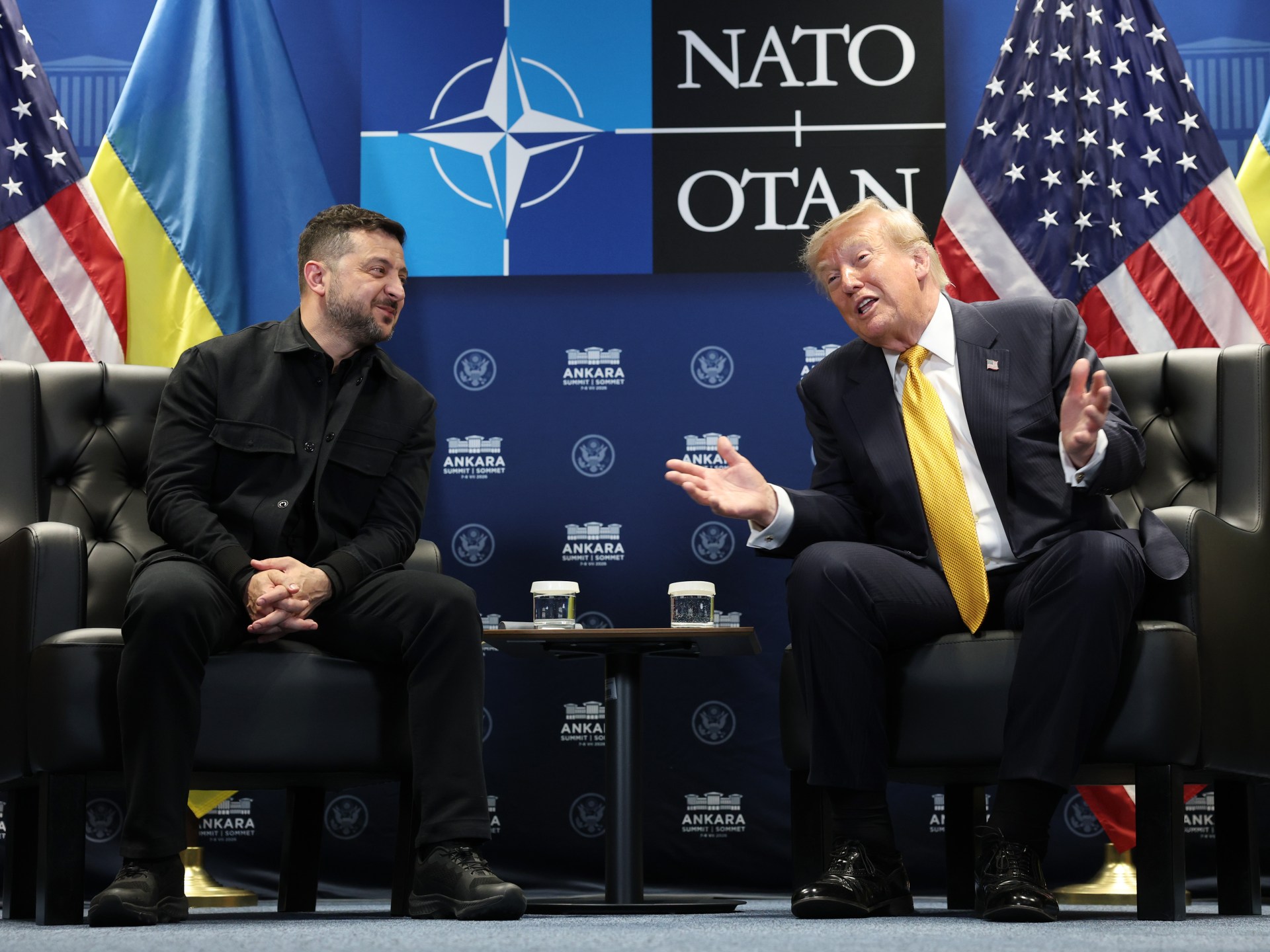
Speaking to reporters on Thursday after returning from this week’s NATO summit in Turkiye, Zelenskyy said that political approval had been obtained from US President Donald Trump when they met in Ankara and the challenge now was to quickly take the practical steps needed to begin production.
- list 1 of 3Ukraine targets Russian oil depots and tankers in drone attacks
- list 2 of 3NATO pledges 70 billion euros for Ukraine as Trump praises peace ‘progress’
- list 3 of 3Five key takeaways from the NATO summit in Ankara
end of list
“We resolved this issue politically,” he said. “It’s now very important that our technical teams, all our representatives from different ministries, representatives of the executive branch, start working on this without delay, so that we can get licences very quickly and start production in Ukraine as soon as possible.”
Although Kyiv has received regular donations of Patriot missiles from its allies for its defence against Russia’s invasion, global supplies are running low, and Ukraine is using the interceptors at a faster rate than they can be produced in the US.
Zelenskyy has been pressing the US to allow Ukraine to start producing the missiles itself to overcome the supply shortage.
At a joint news conference with Zelenskyy in Ankara on Wednesday, Trump told him: “We’re going to give a licence to you to make Patriots. This way, you can’t complain that we’re not giving them enough.”
The Patriot is a US-made air defence system. Its PAC-3 interceptor – short for Patriot Advanced Capability-3 – is one of the few Western weapons capable of shooting down the ballistic missiles Russia has increasingly fired at Ukrainian cities.
Advertisement
Zelenskyy said his meeting with Trump had been a success, and he had also reached agreements with European allies.
“I believe this was a productive summit for Ukraine. In the coming days, we’ll receive a package from the United States, and there were also some separate agreements,” he said, referring to securing more PAC-3 interceptors.
“President Trump has repeatedly emphasised that today, only two to three countries in the world can produce Patriots, because the others are not technologically ready. Ukraine is recognised by America as a country that is ready to do this,” Zelenskyy said.
“Now, after our agreement with the president, our teams, our diplomats, the foreign ministries and defence ministries need to agree on all the remaining technical details. The sooner we reach those agreements, the sooner we will be able to produce Patriots.”
Patriot production will take months
However, Serhii Beskrestnov, an adviser to Ukraine’s defence minister, warned that setting up domestic production of the mobile, surface-to-air systems will take many months.
On his Telegram channel, Beskrestnov said a production licence would typically come with technical process documentation, training for specialists, supplier contacts and foreign consultants to help launch manufacturing.
The main obstacle would be time, rather than Ukraine’s technical or organisational capacity, he said, due to bottlenecks, including the long production cycle for some subcontracted components, which could take 12 to 24 months.
During the NATO summit, Trump praised Zelenskyy for doing “an amazing job”, a sharp change in tone from past criticisms of the Ukrainian leader.
Trump insisted that he remained determined to facilitate a peace deal between Russia and Ukraine.
“It’s not the easiest; not the easiest thing,” the US president said of an eventual peace settlement. “There’s a lot of commitment, and there’s a lot of love of the countries and everything else. But I think we’ve made a lot of progress in the last couple of weeks.”
Related News

Why have 100,000 people been signed off work with ADHD in the UK?
Trump threatens tariffs for countries that levy digital tax on US firms
Russia-Ukraine war: Why has Putin rejected limits on long-range strikes?