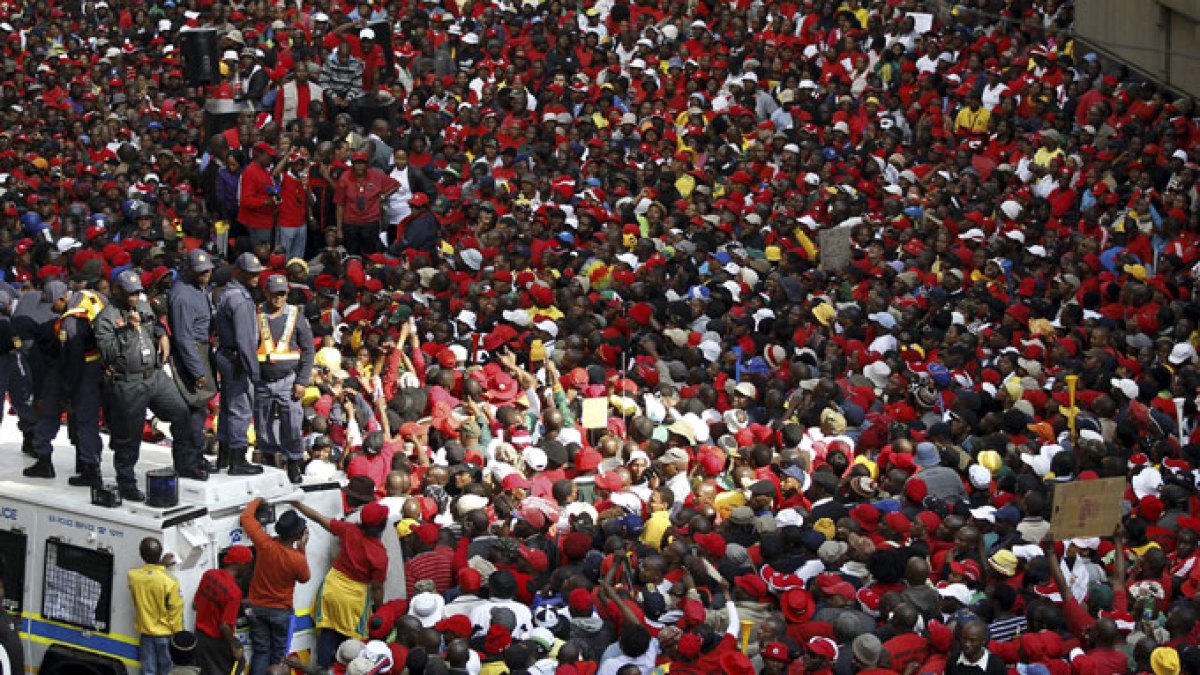

The top United Nations court has ruled that workers and unions have the right to strike under a key international treaty, an opinion that could shape labour laws around the world.
International Court of Justice (ICJ) President Yuji Iwasawa said on Thursday that the court was “of the opinion that the right to strike of workers and their organisations is protected” under the International Labour Organization’s (ILO) 1948 Freedom of Association treaty.
- list 1 of 4About 50 million people trapped in ‘modern slavery’, says UN
- list 2 of 4UN warns of social unrest after ‘striking’ drop in global wages
- list 3 of 4South Korean truck drivers vote to end nationwide strike
- list 4 of 4Why are nearly 50,000 Samsung workers about to strike in South Korea?
end of list
The finding came in a 10-4 ruling by the court’s 14-member panel.
The ILO, a United Nations agency that sets global labour standards, had asked for the advisory opinion in November 2023 amid a battle between workers’ and employers’ representatives over whether the treaty – known as Convention 87 – implicitly protects workers’ right to strike.
Although ICJ judges affirmed the treaty enshrines such a right, they emphasised their opinion was narrow.
The conclusion “does not entail any determination on the precise content, scope or conditions for the exercise of that right”, Iwasawa said.
While the ruling is not binding, many local courts view the ICJ’s opinions as authoritative. Labour advocates expect it will influence countries that have not recognised employees’ right to strike.
Convention 87 has been ratified by 158 countries.
The treaty lays out protections concerning workers’ and employers’ freedom to organise, establish and join federations.
In its 43-page advisory opinion, the ICJ reasoned that strikes are “one of the main activities engaged in and tools used by workers and their organisations to promote their interests and improve conditions of labour”.
Advertisement
“At the same time, freedom of association is instrumental in facilitating workers’ organisations to take collective action to further and defend the interests of their members, including through the exercise of the right to strike,” the opinion continued.
The right to strike is thus “in line with the object and purpose” of the convention, the judges said.
The ruling puts an end to what the ILO described on Thursday as “a long-standing difference of views” over Convention 87 among employers and workers.
Asking the ICJ to resolve such a disagreement was an “exceptionally rare” move, the organisation added.
Harold Koh, who represented the International Trade Union Confederation, told the court the case was “about more than legal abstractions”.
“It will affect the real rights of tens of millions of working people around the world,” he said.
Related News
Trump and Xi: The history of encounters between superpower leaders
‘Leader of the pack’: What next as Reform makes huge election gains?

India-Africa summit postponed as Ebola spreads to M23-held DR Congo area