Farmers attempting to exploit, manipulate subsidy system will be prosecuted – Mustapha warns
 10 May 2026
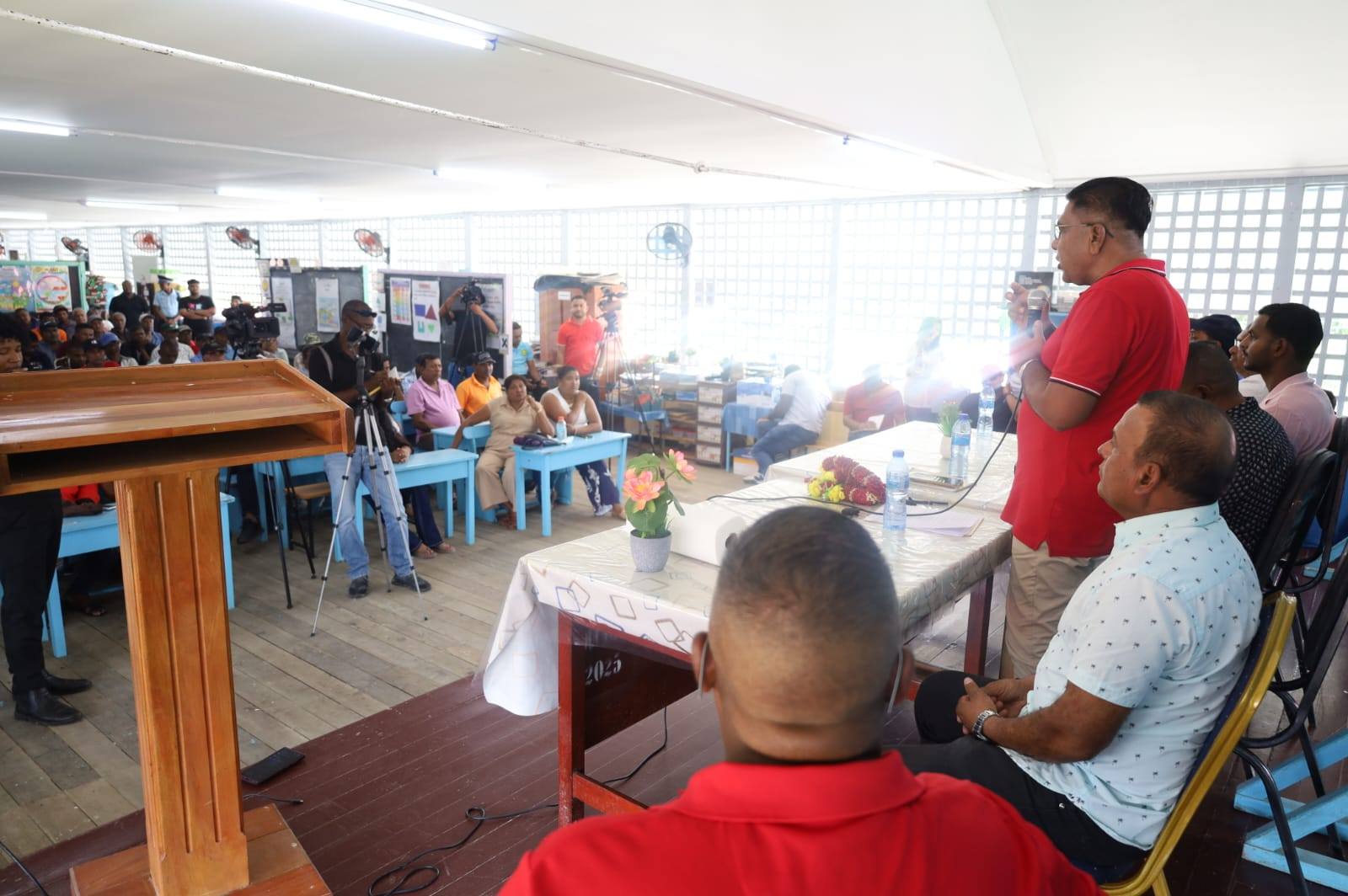


Agriculture Minister Zulfikar Mustapha on Saturday warned that the police would be called in if rice farmers attempt to manipulate the government’s newly announced subsidy programme by falsely dividing acreage among relatives to qualify for higher payments.
The warning came during a farmers’ meeting at Auchlyne Primary School, Corentyne, Region Six (East Berbice-Corentyne), where the Minister addressed concerns surrounding the Government’s $3 billion support package for rice farmers.
According to Mustapha, the government has already begun seeing attempts by some farmers to restructure acreage declarations following President Dr Irfaan Ali’s recent announcement that rice farmers cultivating 50 acres or less would receive $15,000 per acre, while those cultivating more than 50 acres would receive $10,000 per acre.
“We are seeing people who want to smart the system. They would have planted 100 acres, 150 acres, 200 acres. And because of the government announcement, some of them are now trying to say that, look, my wife will plant 50 acres, the son will plant 20 acres, divide it. That can’t work,” the Agriculture Minister told farmers.
He explained that the Guyana Rice Development Board (GRDB) already possesses cultivation records for rice farmers across the country and warned that the Government intends for the process to be transparent and accountable.
“GRDB already has a register with the amount of acreage you are cultivating. So, over the years, the amount of acreage you are cultivating, the GRDB has a register,” Mustapha said.
At another meeting earlier in Black Bush Polder, the Minister reportedly warned that law enforcement authorities could become involved if there are deliberate attempts to defraud the system.
Mustapha said the new assistance programme forms part of a wider effort by the Government to cushion the impact of declining paddy prices and rising input costs affecting the rice industry.
“Instead of farmers receiving $4,000 a bag for their paddy, they now start receiving $2,500, $2,700 a sum,” he said.
According to the Minister, the Government has spent the last two years implementing a series of measures aimed at supporting rice farmers, including fertiliser assistance, seed paddy support and direct subsidies linked to paddy sales.
“So, over the last two years, we have tried as much as possible to bring relief to the farmers in terms of helping them with fertilisers, paddy seed, helping them with inputs in the rice industry, things like chemicals, different varieties of seed paddy, and other inputs,” he said.
Mustapha noted that rice farmers also benefited from a subsidy programme tied to paddy sales during the last two crops.
“So, every farmer who would have sold paddy over the last two years, last year, both crops, we gave $300 a bag for every bag of paddy sold to the mill. So, farmers who planted both crops last year would have received $600 for every bag of paddy for last year,” he explained.
The Minister said the Government had also increased fertiliser support from half a bag per acre to one bag per acre for both rice and cash crop farmers.
However, he said international conflicts have significantly increased fertiliser prices globally.
“We had the Ukraine-Russian war to deal with when the input costs would have gone up too, because Ukraine produced a lot of fertiliser. But most of our fertiliser normally comes from the areas in the Middle East… and because of that, we have seen fertiliser prices jump from $6,000 to almost $10,000 a bag or more,” Mustapha said.
He said the government is now examining options to source cheaper fertiliser supplies ahead of the second rice crop of 2026.
“We are looking to see if we can get cheaper fertiliser for the new crop or the second crop of 2026,” he said.
President Dr Irfaan Ali announced on April 30 that the government would provide $3 billion in support to rice farmers. Farmers cultivating 50 acres or less are to receive $15,000 per acre, while those with more than 50 acres are to receive $10,000 per acre.
President Ali said the assistance is intended for farmers actively cultivating rice and not absentee landowners. The announcement was linked to rising input costs, shipping challenges, fuel and fertiliser pressures, and wider global disruptions affecting the rice sector.
Mustapha on Saturday defended the government’s continued investment in agriculture, saying the sector remains critical to Guyana’s long-term economic stability despite the growth of the oil and gas industry.
“As a government, we see agriculture as one of the bedrocks of our country’s economy. As long as oil and gas could finish, agriculture will remain,” he told farmers.
Subscribe to get the latest posts sent to your email.
Related News

Guyana, Zambia to deepen ties through, governance, economic growth

Govt to launch community outreaches to identify areas for co-investment in care centres

ICJ ruling expected until year-end - Guyana's Foreign Ministry