

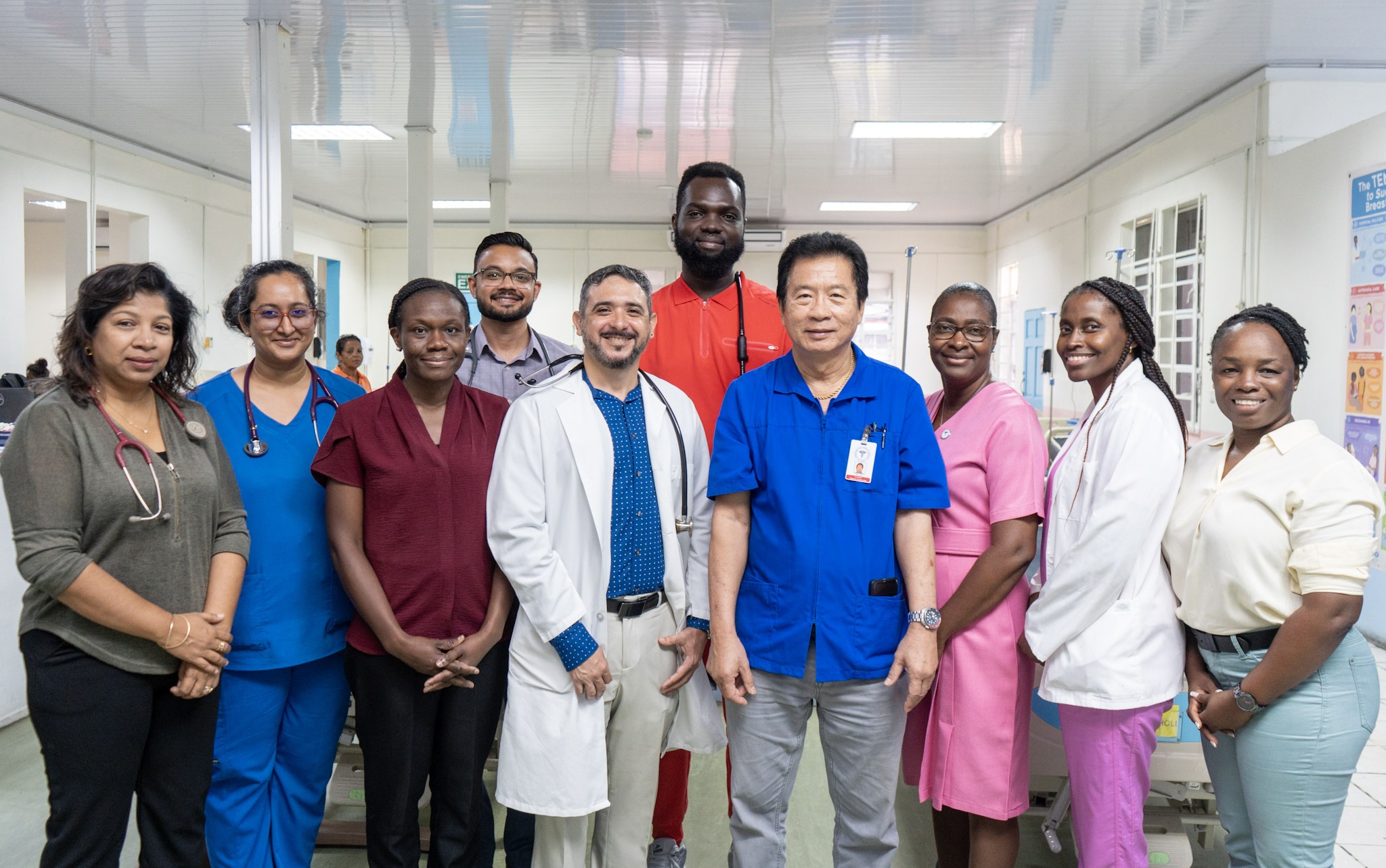


A 37-year-old pregnant woman with a complex medical profile experienced a successful maternal and neonatal outcome following coordinated multidisciplinary care at Georgetown Public Hospital Corporation.
The patient, this being her 7th pregnancy at 35 weeks, with 6 previous deliveries, presented with a two-day history of abdominal pain, painful urination, fever and nasal discharge.
On admission, the patient’s vital signs revealed a mild fever, increased heart rate and normal blood pressure. Obstetric examination confirmed a viable pregnancy. Her medical history was notable for anaemia requiring blood transfusion in a previous pregnancy. Initial laboratory investigations revealed severe anaemia, with a haemoglobin level of 5.4 g/dl (Normal range HB in pregnancy depending on trimester (10.5-11g/dl)).
The Internal Medicine team was consulted at this time to be included in the management of the patient, with plan to optimise anaemia. Maturation of foetus, delivery and minimising complications discussions and management were initiated.
On the second day of admission, the patient developed chest pain radiating to her left arm, unrelieved by antacids. This raised concern for acute coronary syndrome. Cardiac evaluation revealed elevated troponin levels, supporting a diagnosis of myocardial injury.
The cardiology team was consulted and managed as a case of type 2 myocardial infarction, likely due to severe anaemia. Additional investigations revealed a positive test for Helicobacter pylori, alongside vitamin B12 deficiency. These findings pointed to a possible upper gastrointestinal bleed contributing to her anaemia. The patient was treated with a combination of antibiotics, stomach protectant medication, Iron and vitamin B12 supplementation. Over the course of her admission, she received seven units of packed red blood cells, improving her haemoglobin to 7.2 g/dL and later to 9.1 g/dL.
A comprehensive care plan was developed through collaboration between specialists in cardiology, internal medicine, obstetrics and gynaecology, anaesthesiology, and intensive care. Multidisciplinary meetings were held to carefully plan the delivery with minimal complications. The team agreed to optimise the patient’s haemoglobin (blood count) to avoid cardiac (heart) decompensation, and at the same time allowing enough maturation of the pregnancy, which would be in two weeks.
However, on day nine of admission, the patient developed an increased in her and foetal heart rate. Considering these findings, the team made the decision to proceed with an emergency caesarean section.
The multidisciplinary team met again, planned and executed the successful uncomplicated caesarean delivery, with minimal blood loss, thereby avoiding any worsening anaemia and cardiac complication.
She delivered a healthy infant. Both mother and baby had an uneventful postoperative course. Follow-up investigations showed improving cardiac markers and a haemoglobin level of 10 g/dL prior to discharge.
According to the GPHC, this case highlights the importance of early recognition and aggressive management of severe anaemia in pregnancy, particularly in patients with multiple risk factors such as advanced maternal age and grand multiparity (many pregnancies / deliveries). The hospital noted that it also underscores the critical role of multidisciplinary collaboration in managing complex obstetric cases.
“Our message to the public, yet another case, highlights the importance of following in a pregnancy clinic regularly, adequate management of anaemia and nutritional support for iron deficiencies. Early booking (attendance) to antenatal clinic, at which time complications such as low blood count(anaemia) can be identified with treatment started in a timely manner before it leads to further complications such as, the myocardial injury. Iron deficiency is very common in our population, especially in females, including B12 deficiency in young adults and teens. Also, not every chest pain is caused by stomach issues alone, heart attack can happen in young age groups as well,” the hospital said.
Among the multidisciplinary team involved in care were: Dr. Guy Low, Dr. La Toya Shury, Dr. Daniel Odongo and Dr. Leticia Samuel from Obstetrics; Dr. Kamela Bemaul-Sukhu, Dr. Girish Rambarran & Dr. Vedika Latchmi Panday from Internal Medicine; Dr. Jesus Valdes Alvarez & Dr. Omal Owner from Cardiology; Dr. Althea Robertson from Anesthesia; and Sister George and the team of nurses involved in care from Nursing.
The patient was discharged in stable condition on postoperative day three, with ongoing follow-up arranged for hematology, gastroenterology, and postpartum care.
Subscribe to get the latest posts sent to your email.
Related News

Over 1800 persons employed through Labour Ministry’s job bank – Griffith

Guyana reaffirms sovereign rights over maritime areas and rejects Venezuela’s objection ...
'A true soldier standing strong at 100' - GDF honours World War II veteran
