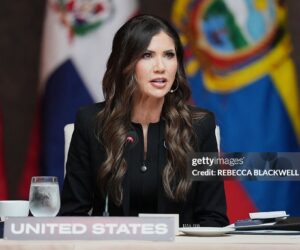

News Americas, NEW YORK, NY, Weds. March 25, 2026: Just weeks after being removed from her role as U.S. Secretary of Homeland Security, Kristi Noem is already back on the international stage – this time making high-level visits to Guyana and Costa Rica that are raising new questions about U.S. strategy in the Caribbean and Central America.
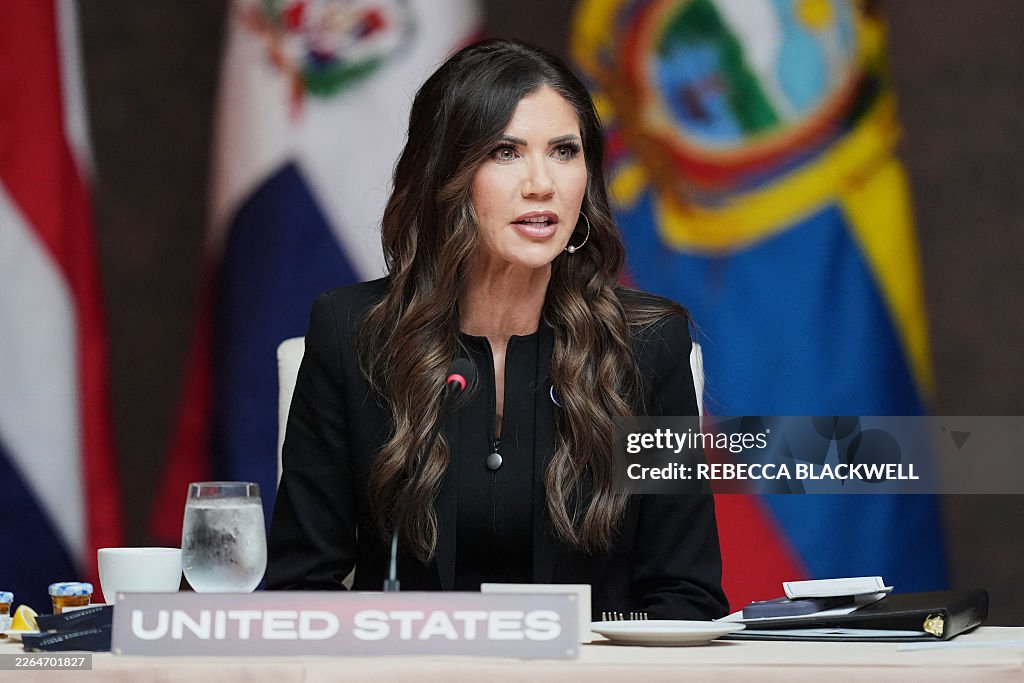
Now serving as a Special Envoy under the Trump administration’s “Shield of the Americas” initiative, Noem’s regional engagements signal a continued and possibly expanded focus on migration control, transnational crime, and security cooperation across key countries in the hemisphere.
In Guyana, Noem is meeting with President Irfaan Ali, senior government and defense officials, and representatives of U.S. energy companies operating in the country. According to U.S. Embassy statements, the discussions are centered on dismantling drug cartels, disrupting firearms trafficking, discouraging illegal immigration, and strengthening regional security.
But it is the timing – and the scope – of these visits that are drawing increased attention.
Noem’s removal from the Department of Homeland Security followed mounting criticism over the administration’s aggressive immigration policies, including mass deportations and controversial third-country agreements. Yet her rapid reemergence in a diplomatic and strategic role suggests continuity, rather than retreat, in Washington’s approach.
Her stop in Costa Rica further underscores this point.
During her visit there, Noem met with President Rodrigo Chaves, President-elect Laura Fernández, and senior officials to advance cooperation on migration enforcement and counter-narcotics efforts. Notably, she was involved in signing a migration cooperation agreement designed to facilitate the transfer of third-country nationals deported from the United States – part of a broader strategy to manage migration flows beyond U.S. borders.
Costa Rica has also joined initiatives aimed at strengthening regional security coordination, including efforts to dismantle criminal networks and enhance border control mechanisms. U.S. officials have framed these partnerships as critical to ensuring stability throughout the hemisphere.
Taken together, the visits to Guyana and Costa Rica point to a coordinated regional push.
Guyana, with its rapidly expanding oil sector and growing geopolitical importance, has become an increasingly strategic partner for the United States. Engagement with U.S. energy companies during Noem’s visit highlights the economic dimension of the relationship, particularly as global energy dynamics continue to shift.
At the same time, Costa Rica represents a key node in migration management efforts, serving as both a transit country and a partner in implementing U.S.-backed deportation and security initiatives.
For analysts, the broader picture is becoming clearer. It is not just about individual country visits but reflects a wider effort by the U.S. to strengthen its influence across the Caribbean and Central America, particularly in areas tied to migration, security, and economic interests.”
The dual-country visit also comes at a time when international scrutiny of U.S. immigration policies remains high. Human rights organizations have raised concerns about deportation practices and the use of third countries to manage migration flows, adding another layer of complexity to these agreements.
For Guyana and Costa Rica, the benefits of closer cooperation with the United States may include enhanced security support, economic partnerships, and increased global visibility. However, these relationships also bring challenges, particularly as governments balance domestic priorities with international commitments.
As Noem continues her regional engagements, one thing is clear: her role – and the policies she represents – remain central to the United States’ evolving strategy in the hemisphere.
What began as a personnel change in Washington is now playing out as a broader geopolitical signal. And for the Caribbean and Central America, the implications are only beginning to unfold.

Related News

Cuba – Cuba’s Fuel Crisis Deepens As Castro Grandson Highlights Growing Issue

Caribbean Nationals From Three Caribbean Countries Now Face $15,000 U.S. Visa Bond Require...

Belize Advances National Eye Health With Launch of WHO SPECS 2030 Initiative