
C’bean must move away from rewarding memorisation & move towards validating critical thinking -Parag
 20 March 2026
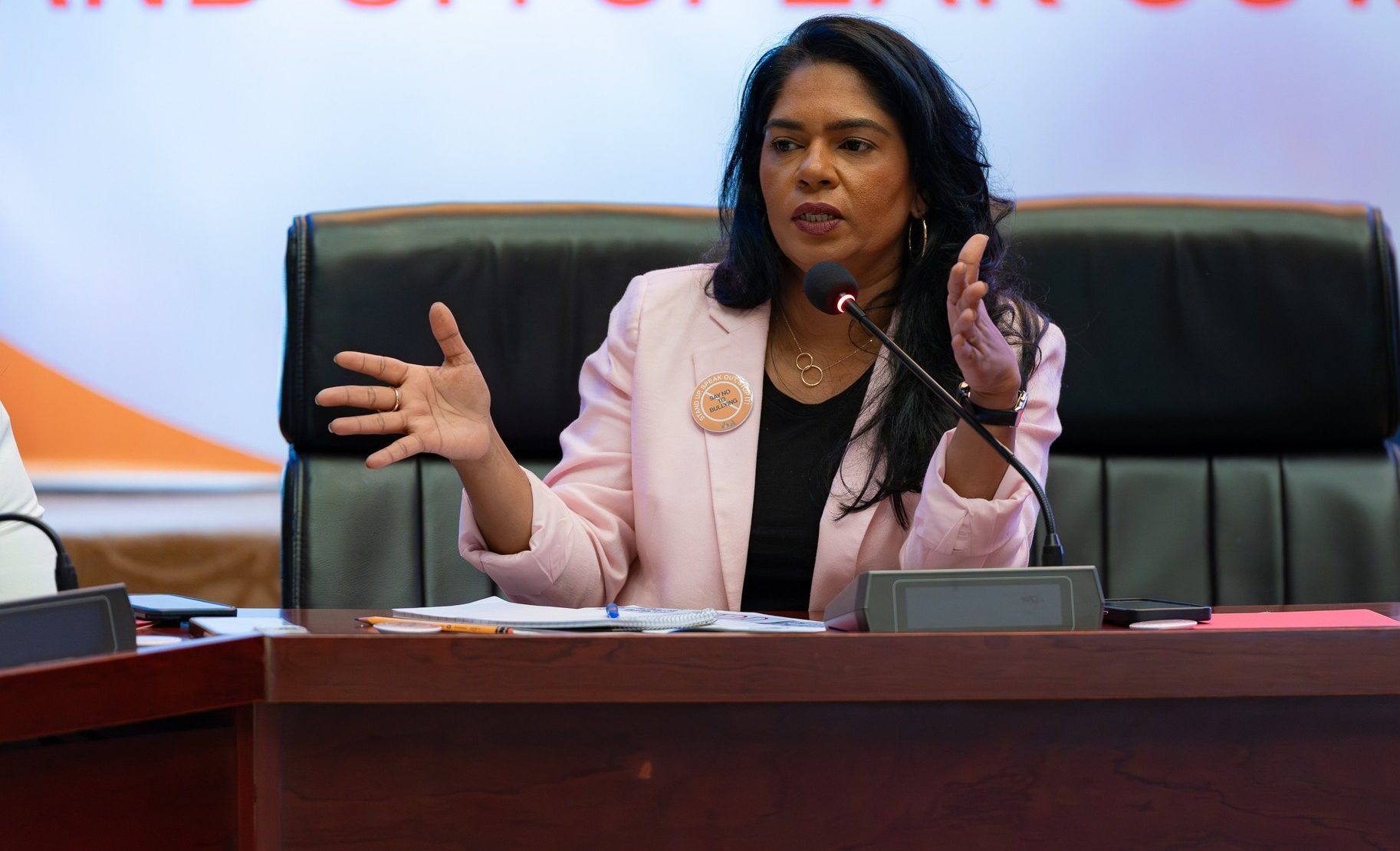


At a time when answers to complex questions can simply be sourced within seconds through AI tools, Minister of Education, Sonia Parag, has called for assessment reform across the Caribbean Community (CARICOM), one that moves away from traditional “test-taking” models.
“When a machine can generate an answer, the value shifts from the answer itself to the thinking behind it,” Minister Parag told the inaugural CXC Regional Education Conference on Wednesday evening, held in Kingston, Jamaica.
She reasoned that because artificial intelligence can almost instantly generate high-level essays, create high-quality images and video content and even find solutions to an unlimited number of complex issues, the old metrics of success are no longer fit for purpose.
Minister Parag believes the region must pivot from rewarding memorisation and move towards validating critical thinking, where students are able to effectively question, verify and defend their logic within a real-world Caribbean context.
The goal, she urged, is to stimulate curiosity rather than academic exhaustion, ensuring that assessments capture a child’s thought process. Recognising the rise of a generation immersed in technology, Minister Parag cautioned that digital access must not be mistaken for understanding.
“Connectivity without competency is merely noise,” she said.
The minister, who also heads the CARICOM Council for Human and Social Development (COHSOD) – Education, maintained that reform must stay anchored in the foundational pillars of literacy and numeracy.
“If a child cannot read with comprehension, then an e-library offers little value. And if a student cannot reason with numbers, then the promise of coding, data analysis and digital innovation becomes inaccessible,” Minister Parag posited.
She made it clear that AI is not a replacement for the teacher, but a support system.
“An algorithm can provide a fact, but it cannot provide the mentorship, the emotional intelligence, or the moral guidance that a Caribbean teacher brings to a developing mind,” Minister Parag asserted.
She further emphasised that when used correctly, technology can effectively level the academic playing field, bridge gaps and dismantle barriers created by geography.
“Digital platforms allow for a democratisation of knowledge where a student in a remote riverain community or a hinterland village like Aishalton can access the same high-quality resources as a student in a city centre,” Minister Parag shared.
The Education Minister congratulated CXC for hosting the inaugural forum, referring to it as a timely and necessary step towards a bright future where technology is capitalised on as a tool for massive development and not a replacement for reason and critical thinking.
Minister Parag is confident that once this balance is achieved, the Caribbean will be able to accelerate from simply keeping pace with digital change to redefining and reshaping the future of education.
Minister Parag is hopeful for a second phase of this regional forum that shifts the focus from dialogue to delivery. She called for a follow-up session where regional teams can move into action, drafting the specific policies and frameworks required to modernise Caribbean education.
For the Education Minister, the true measure of the conference will be the tangible changes felt in classrooms across the region.
Subscribe to get the latest posts sent to your email.
Related News
STEMGuyana joins Eastern Caribbean Robotics and Innovation Association

Development Bank key to bringing people out of poverty -Teixeira
Pres. Ali pushes ‘prison avoidance system’ to prevent youth incarceration
