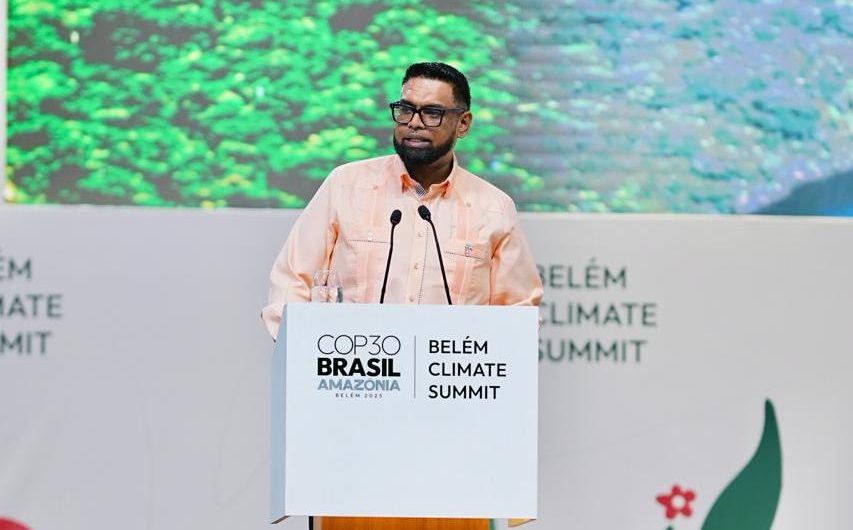


President Dr Irfaan Ali says the time has come for the status quo in Cuba to change in order to improve the lives of the people there and ensure they enjoy prosperity and democracy in the Caribbean nation.
His comments come on the heels of the United States continuing to mount pressure for regime change in Cuba.
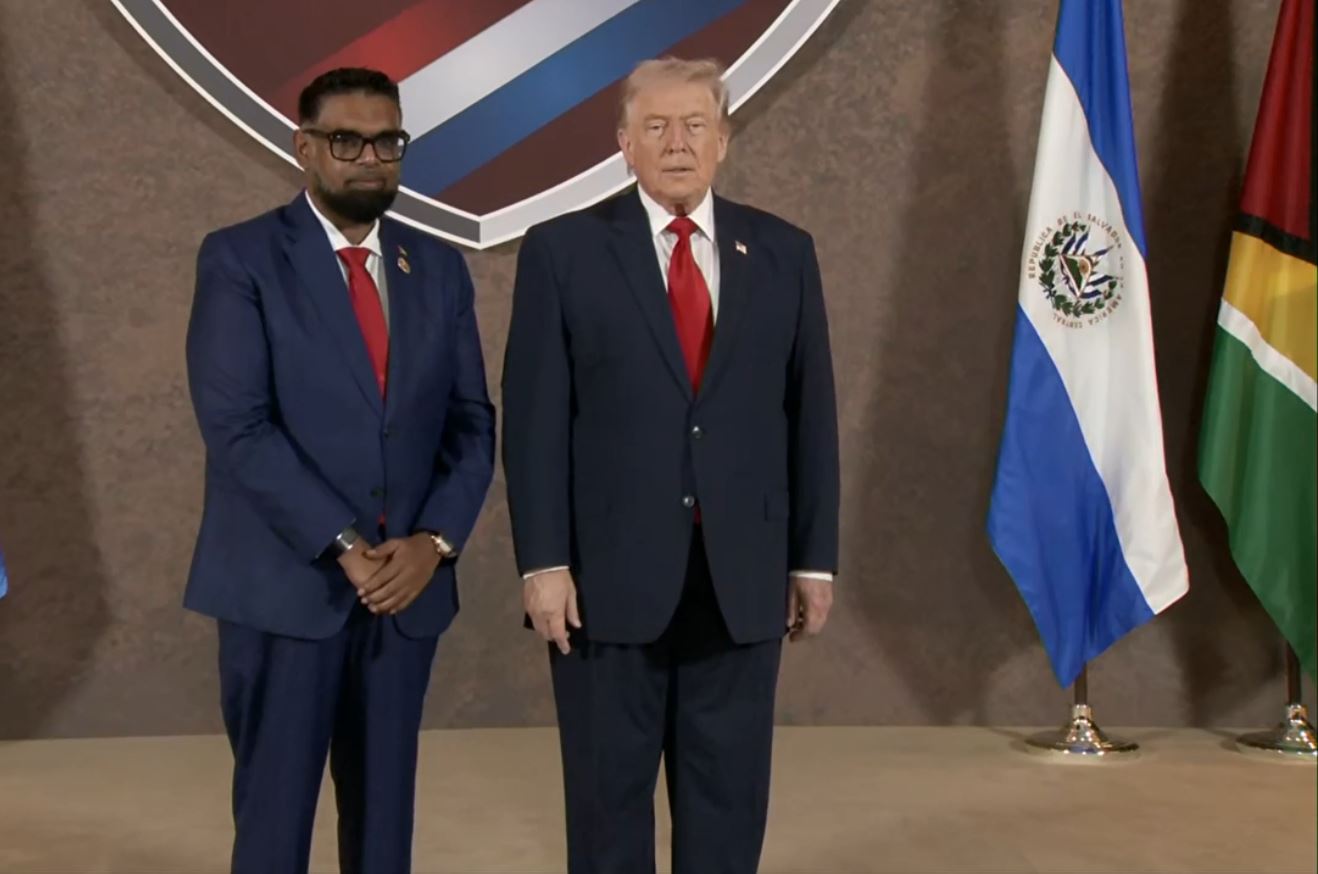
On Saturday, the Guyanese Leader attended the Shield of the Americas Summit hosted by US President Donald Trump in Florida.
Speaking with Fox News’ Aishah Hasnie on the sidelines of the summit, President Ali pointed out that the crisis in the island nation has been a concern for regional leaders.
“We have had many discussions at the CARICOM (Caribbean Community) level. We had discussions recently with Secretary [of State, Marco] Rubio, and we all agree that the status quo cannot remain. We agree that there must be an attempt to have the status quo changed, and we all are aware that it will take time. It has to be incremental,” the Guyanese Head of State noted.
He went on to state that, “There must be dialogue, but those changes must lead to the improvement of the people of Cuba, must lead to better conditions for the people of Cuba, must lead to a society in which the rule of law, in which democracy, in which freedom is celebrated… So, yes, a transition that involves these…a type of transition that allows the people of Cuba to benefit from prosperity and democracy.”
During Saturday’s summit, President Trump hinted that, like Venezuela, great changes will also come soon for Cuba.
“Cuba’s at the end of the line… They have no money, they have no oil. They have a bad philosophy. They have a bad regime that’s been bad for a long time… They are negotiating with Marco [Rubio] and myself and some others, and I would think a deal would be made very easily with Cuba… But Cuba is in its last moments of life. It will have a great new life,” the US President told about a dozen regional leaders at the summit.
Just last month, the Caribbean Community (CARICOM) signalled its intention to provide humanitarian support to Cuba in light of the crisis in the Spanish‑speaking country.
Following the 50th Meeting of the Heads of Government, CARICOM Chairman, Prime Minister of St Kitts and Nevis, Dr Terrence Drew, said that regional leaders discussed the situation in Cuba and agreed to take steps to support humanitarian efforts. He explained that the Community is preparing a coordinated response, with a detailed plan to be finalised shortly.
The US Secretary of State had attended the CARICOM Conference and discussed a transition framework with the Caribbean leaders.
In fact, President Ali, who had also attended that meeting in St Kitts, told reporters on the sidelines that the bilateral talks he had with Secretary Rubio included the humanitarian crisis in Cuba.
“We spoke about Cuba, and of course, in dealing with Cuba, it’s not a simple issue,” the Guyanese Head of State posited, adding “…but speaking about a framework of which CARICOM could be a part of that would deal with Cuba and deal with transitions that are necessary for the people of Cuba and for the development of Cuba… So, it is for us to work out what that framework is.”
“On the issue of humanitarian aid, Guyana’s position has always been very clear. And even Secretary Rubio would have alluded to the fact that there is nothing preventing humanitarian aid from going to Cuba. But the challenge that Cuba has is a challenge of power. So, where do you store the food if you don’t have power and energy to store food.”
In lamenting on the situation in Cuba, however, President Ali ruled out any possibility of Guyana supplying the island-nation with fuel. Responding to questions posed, the Head of State explained that oil is an economic commodity that is traded via strict regulations that Guyana subscribes to.
This comes on the heels of the United States Treasury Department announcing it could send oil from Venezuela to Cuba to bring relief to the humanitarian crisis there.
Rubio explained, after being questioned during the press briefing in St Kitts on Wednesday, that the idea is to sell the oil directly to the Cuban private sector – not the government.
“These would be sales to a very small private sector that exists in Cuba, and that’s always been legal… But that alone will not solve Cuba’s very dramatic problems that have been caused by 60-some-odd years of mismanagement, ineptitude, and a failed economic model,” the US Secretary of State had noted.
Subscribe to get the latest posts sent to your email.