“Greater stability, improvements” – President Ali says following Maduro’s capture
 08 March 2026
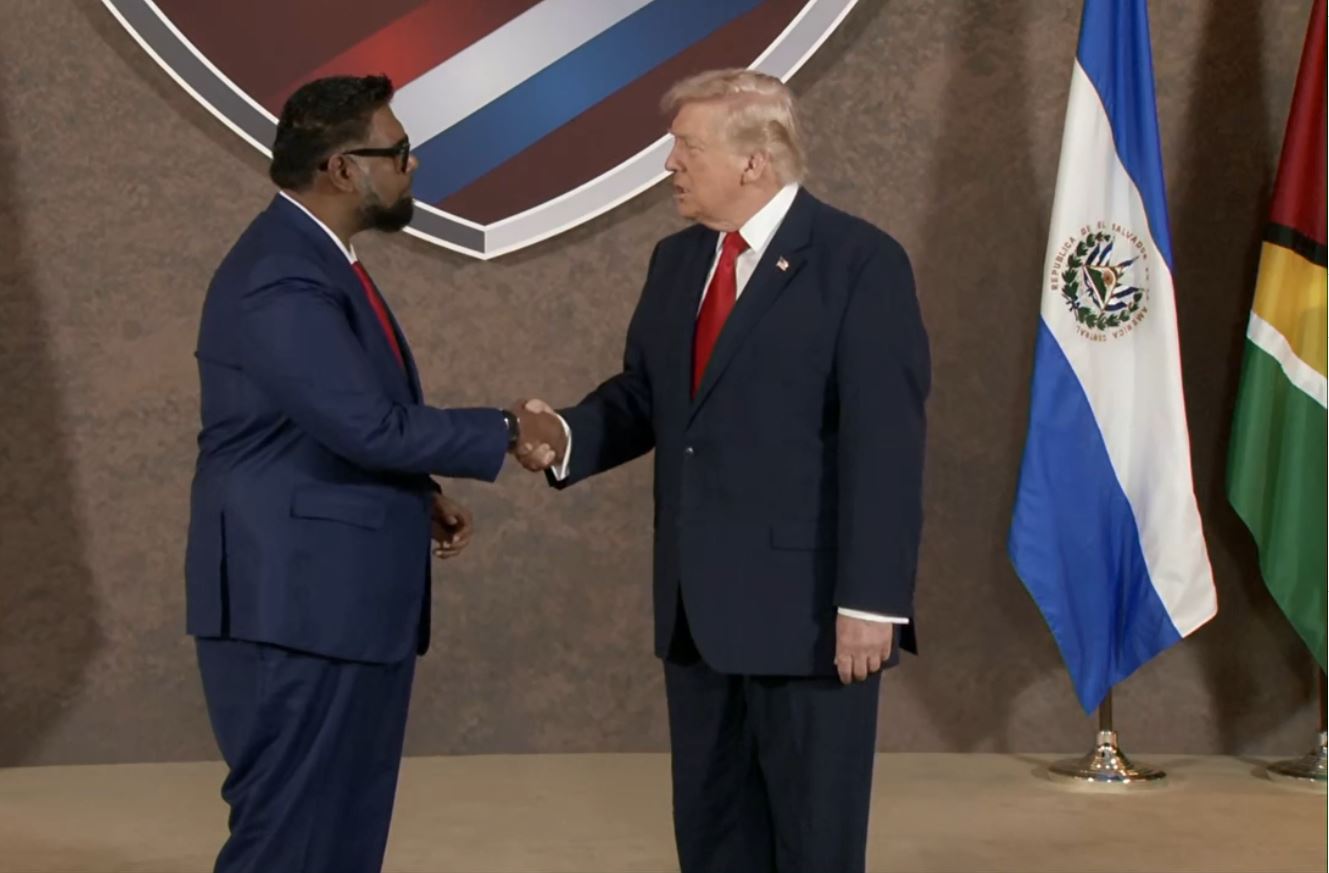


Since the capture and ousting of Venezuelan leader Nicolás Maduro in Caracas, President Dr Irfaan Ali says that there has been greater stability and improvements in Guyana and the wider region.
He made these during an interview with Fox News’ Aishah Hasnie on the sidelines of the Shield of the Americas Summit hosted by United States President Donald Trump in Miami, Florida, on Saturday.
Late last year, Washington had deployed about 10,000 troops in the Caribbean as part of efforts to combat transnational crime and the illicit drug trade in the region, especially coming out of Caracas.
The Trump Administration has stated that designated narco-terrorist organisations like Venezuela’s Cartel de los Soles are using the region’s air and sea corridors to funnel drugs into the US, thus posing a direct threat to American lives and security.
On January 3, US troops captured the Venezuelan leader and his wife in Caracas, taking them to New York to face several indictments on drug trafficking and narco-terrorism. Vice President Delcy Rodriguez has since been sworn in as Venezuela’s interim president after Maduro’s ouster.
During Saturday’s interview, President Ali was asked whether security and stability had changed in Guyana since those events eight weeks ago.
“Guyana came under threat from Venezuela under the Maduro regime, and what we have seen since the capture of Maduro is, you know, an attempt by the government, of course in keeping with the agreement of the U.S., to move towards a safer environment in which the Venezuelan people would enjoy greater prosperity, greater development prospects, and move towards a more democratic society – values that we share, values that we uphold,” the Guyanese Leader said in response.
President Ali went on to add, “And that by itself has brought a change in the mindset, a change in the condition, and we have seen greater stability, less rhetoric, and wherever there is less rhetoric about conflict, there’s greater confidence in the system. And wherever there is momentum towards democracy, there is greater prospects for the region. So yes, that [operation] would have brought improvement.”
Over the years, Venezuela has been increasing its aggression towards Guyana in furtherance of its spurious claims to more than two-thirds of Guyana’s landmass – the entire Essequibo region, and a portion of the country’s Exclusive Economic Zone (EEZ), where over 11 billion barrels of oil equivalent (boe) have been found and oil operations are currently ongoing offshore by US-oil major, ExxonMobil and its partners.
Back in 2018, Guyana had approached the International Court of Justice (ICJ), seeking a final and binding settlement of the 1899 Arbitral Award, which establishes the boundaries with neighbouring Venezuela.
After receiving written pleadings on the merits of the case from both countries, the World Court will hear oral arguments in May from the two sides, after which it will deliberate and issue a judgement that would be binding on both nations.
The Guyana Government has already indicated its confidence in a favourable ruling.
Subscribe to get the latest posts sent to your email.