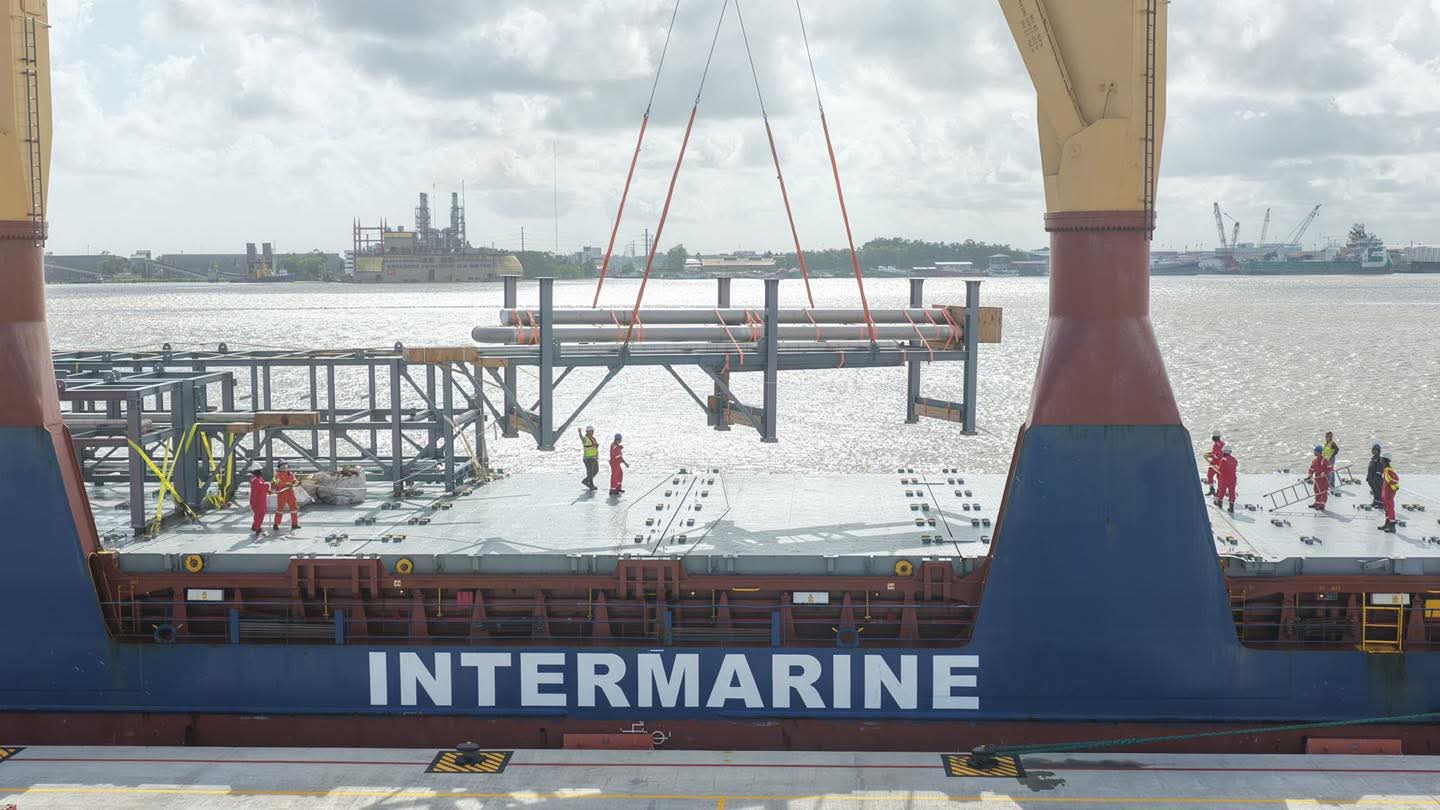


The first set of pipe racks for the US$759 million Gas-to-Energy (GtE) Project has arrived in the country, marking another significant step in the development of the highly anticipated facility at Wales, West Bank Demerara (WBD).
The GtE Project comprises a 300 megawatt (MW) combined cycle power plant and a Natural Gas Liquids (NGL) facility, utilising natural gas that will be piped from oil operation activities in the Stabroek Block offshore Guyana.
Already, some 250 kilometres (km) of pipelines have been laid to bring the gas onshore.
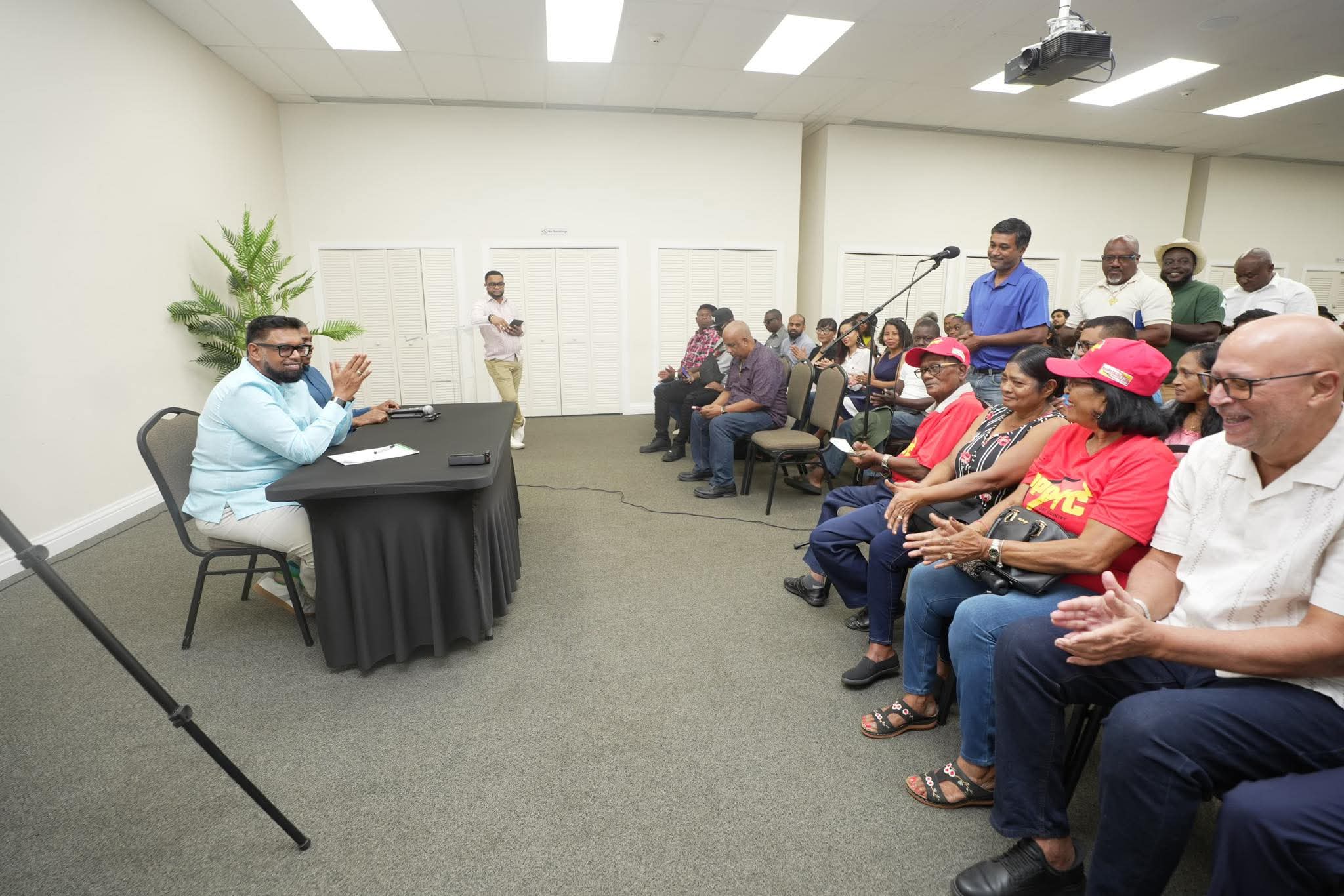
In a Facebook post on Friday, President Dr Irfaan Ali shared photos of the arrival of the manufactured equipment for the GtE Project.

These pipe racks will support the network of pipelines that will transport natural gas from the offshore pipeline system to the NGL plant and the power generation facility under construction at Wales.
The GtE Project is expected to be operational by the end of this year, delivering stable and reliable clean energy while also slashing the current high cost of electricity by half.
At the Wales site, all four turbines have been installed on their foundations alongside all four main transformers as the contractor, United States (US)-based Lindsayca, has ramped up its work cycle and increased labour.
“Our contractor… has promised us that they’re going to complete the 300-MW project – first on simple cycle, which is essentially the four gas turbines with a total installed capacity of about 228-megawatts. So, we expect to have it online by the end of the year. Coming with that will be the Natural Gas Liquids plant… By the middle of next year, we’re going to have the combined cycle [power plant] fully completed,” GtE Project Lead Winston Brassington disclosed during a panel discussion at the energy conference held last month.
This power plant and NGL facility under construction are just Phase One of the GtE Project. The second phase will see another 300MW power plant and NGL facility constructed at the same Wales site, utilising the excess rich gas from offshore.

At the recent Energy Conference, it was revealed that Guyana’s current peak demand is around 236MW, but this figure is estimated to increase to over 1600MW by 2030 – reflecting a 600 per cent growth.
Against this backdrop, Brassington underscored the need to start working on building capacity to deliver that electricity demand.
The first phase of the GtE Project will only utilise 40 per cent of the 250-kilometres of the 12-inch pipeline’s capacity, bringing 50 million standard cubic feet per day (mmscfd) of dry gas onshore. But with the pipelines having the capacity to push as much as 120 mmscfd of gas, the Government has moved ahead with Phase Two to utilise the remaining 60 per cent capacity of the pipeline, which will see an additional 75 million cubic feet per day (mmcfd) of rich gas brought onshore for the second power plant and NGL facility right at the Wales location.
The Government issued a request for proposals (RFP) to qualified firms to design, finance and operate Phase Two of the project under a 20- to 25-year Power Purchase Agreement (PPA). At least five shortlisted companies are expected to submit their bids sometime this month.
“We expect construction to start this year [on Phase Two] because we need the additional power as soon as possible,” the Project Lead indicated.
Meanwhile, beyond power generation, the Guyana Government is also laying the foundation for a broader energy economy through gas bottling and logistics, as well as value-added industrial development as part of a long-term strategy to tackle the rising cost of living in Guyana.

Just last week, 10 regional and international firms submitted proposals to design, build and operate a cooking gas bottling facility in Guyana. Among the Engineering, Procurement, and Construction (EPC) proposals received was one from a Guyanese company, Guygas, in a joint venture with Makeen Energy from Denmark and the Indian-headquartered Ramco Industries. Other local operators, Trinidad-based Massy Gas Products, Sol Guyana Inc. – part of the Sol Group, which is the leading supplier of petroleum-based products in the Caribbean and French-owned Rubis Guyana Inc, were also among the bidders. US-based Lindsayca Inc., which is building the GtE Project, is also interested in the gas bottling project. Proposals were also received from India-based Divyan International Inc. (Guyana); Gas Zipa SASESP (Colombia) JV Fix It Depot and Standard Energy Company; Gate Ventures and Consulting Guyana Inc. in a consortium with Propak Systems Ltd. (Canada) and Makeen Energy (Denmark); ILF Consulting Engineering Inc. (India) in collaboration with MAHAPREIT (Mahatma Phule Renewable and Infrastructure Technology Limited); and BB Energy (BBE) and Dec Ogeco (Singapore). Based on the EPC document, the proposed Guyana Gas Bottling and Logistics Company (GGBL), a company to be incorporated under a Public-Private Partnership (PPP) model, will bottle, transport and distribute cooking gas for domestic use. The objective of GGBL is to lower the price of domestic cooking gas.
In addition to the gas bottling facility, the Guyana Ammonia and Urea Plant (GAUP) is another project the Government will be undertaking at the Wales site. Bids were closed off on Thursday for this plant, which will produce fertiliser for both local use and export.
Both of these projects are set to come online when Phase Two of the GtE Project is operational by 2030 and are expected to drive down costs in Guyana.
Subscribe to get the latest posts sent to your email.
Related News

Trump confirms Iranian Supreme Leader Ali Khamenei is dead
No significant increase in dengue cases – Dr Anthony
Avianca Airlines to begin weekly cargo operations between Guyana, Miami