
Iranian authorities have arrested four people on charges of attempting to “disrupt the country’s political and social order” and working “for the benefit” of Israel and the United States during the antigovernment protests of January.
The detainees, who were arrested on Sunday, included three prominent reformist politicians, according to Iranian media.
- list 1 of 4Iran sentences Nobel laureate Mohammadi to seven more years in prison
- list 2 of 4Iran FM says Tehran ready for deal with US with peaceful nuclear enrichment
- list 3 of 4Iran calls for respect, says it’s ready for nuclear-focused talks
- list 4 of 4Somalia’s president on Israel, Somaliland and rising regional tension
end of list
They are Azar Mansouri, head of Iran’s Reform Front, Mohsen Aminzadeh, a former diplomat, and Ebhrahim Asgharzadeh, a former parliamentarian.
The fourth remains unnamed.
Iran’s judiciary accused the group of “organising and leading extensive activities aimed at disrupting the political and social situation” at a time when the country faced “military threats” from Israel and the US, according to the official Mizan news agency.
The individuals had done their utmost “to justify the actions of the terrorist foot soldiers on the streets”, it said.
Iran’s Reform Front confirmed the arrests in a statement on X.
It said Mansouri was arrested from the “door of her home under a judicial order” by the intelligence forces of Iran’s Revolutionary Guard Corps (IRGC).
It added that the IRGC has also issued summons to other senior members, including its deputy chairman, Mohsen Armin, and its secretary, Badral Sadat Mofidi.
The arrests come amid anger in Iran over the deaths of thousands of Iranians during the January unrest. The protests began in the capital, Tehran, over a worsening economic crisis, but escalated into a nationwide antigovernment movement.
Advertisement
Iranian authorities labelled the protesters as “terrorists” and blamed the “riots” on foreign interference from Israel and the US.
The government later said that 3,117 people were killed during the unrest, and rejected claims by the United Nations and international human rights organisations that state forces were behind the killings, most of which occurred on the nights of January 8 and 9.
The US-based Human Rights Activists News Agency (HRANA) said it has verified 6,854 deaths and is investigating 11,280 other cases.
Thousands of others were also arrested during the unrest.
Al Jazeera’s Tohid Asadi, reporting from Tehran, said the latest politicians arrested on Sunday face “serious allegations”.
He said Aminzadeh was a former deputy foreign minister during the presidency of Mohammad Khatami, who governed from 1997 to 2005, and that Asgharzadeh is a former lawmaker who was a student leader “involved in the takeover of the US embassy” in 1979.
“These figures have a background of political activism and imprisonment,” Asadi said. “So this is not the first time that they are facing such allegations, and they are going through a trajectory which could pave the way for other imprisonment for them,” he said.
The Iranian crackdown in January also ratcheted up tensions with Washington.
US President Donald Trump, who is seeking to curb Iran’s nuclear and missile programmes, threatened Tehran with new attacks if it used force against the protesters. Trump, who ordered the US military strikes on three Iranian nuclear sites last June, went on to order the deployment of a naval “armada” to the Gulf region.
The move prompted Iranian Supreme Leader Ayatollah Ali Khamenei to warn of a “regional war” if Iran is attacked and as well as diplomatic push by regional powers to try and ease tensions.
The diplomacy resulted in Iran and the US holding indirect talks in Oman on Friday. President Masoud Pezeshkian described the discussions as “a step forward” in a social media post and said his government favoured continued dialogue.
Another round of negotiations is scheduled for next week.
Iran’s top military commander, meanwhile, issued a new warning on Sunday, saying that the entire region will be engulfed in conflict if Iran is attacked.
“While being prepared, we genuinely have no desire to see the outbreak of a regional war,” Major-General Abdolrahim Mousavi told a gathering of air force and air defence commanders and personnel.
“Even though aggressors will be the target of the flames of regional war, this will push back the advancement and development of the region by years, and its repercussions will be borne by the warmongers in the US and the Zionist regime,” he said in reference to Israel.
Advertisement
Related News
US military says it shot down an Iranian drone in Arabian Sea
Polls open in Thailand with three main parties vying for power
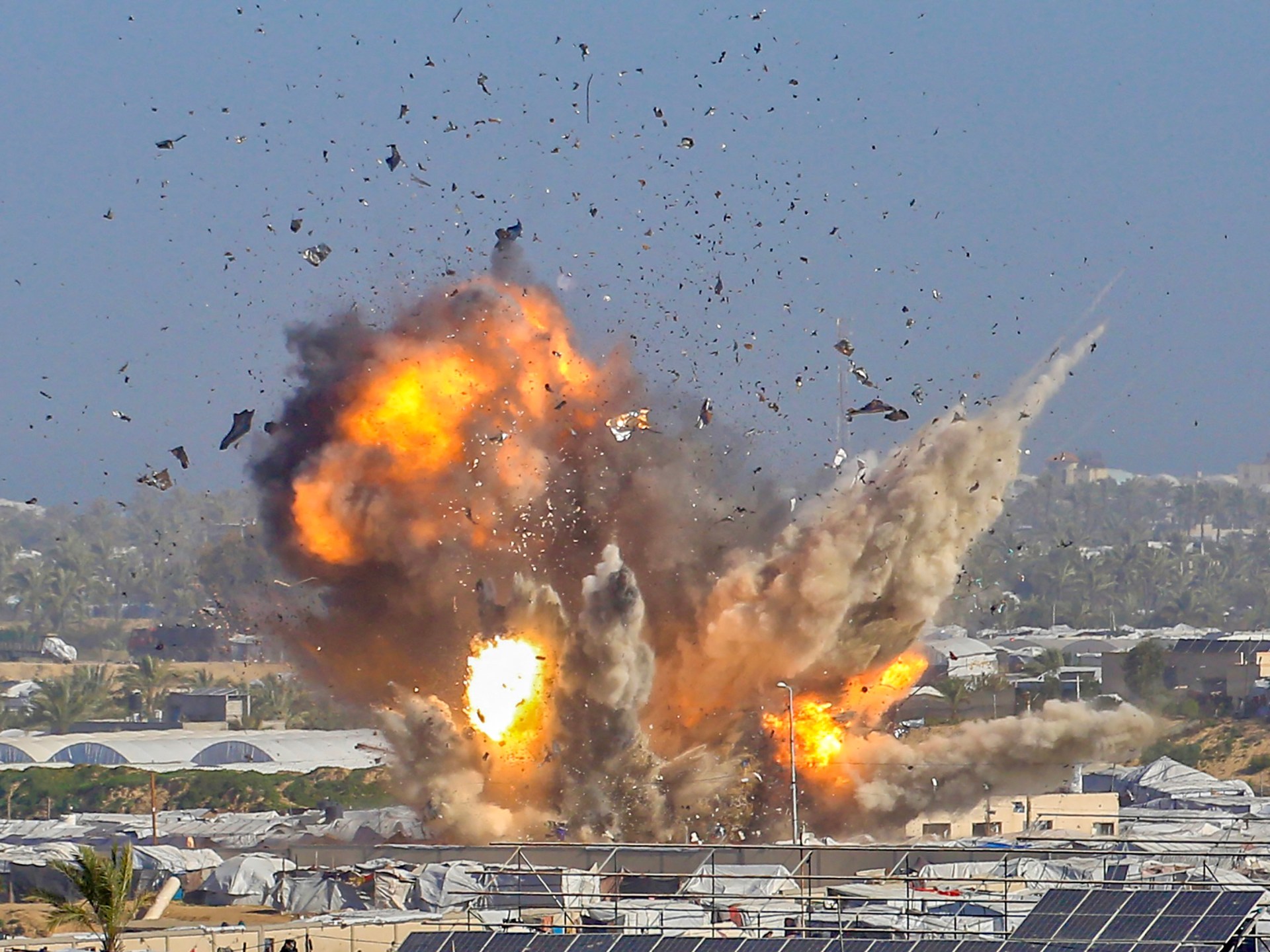
Week in pictures: From Israel’s Gaza killings to Russian strikes in Ukraine