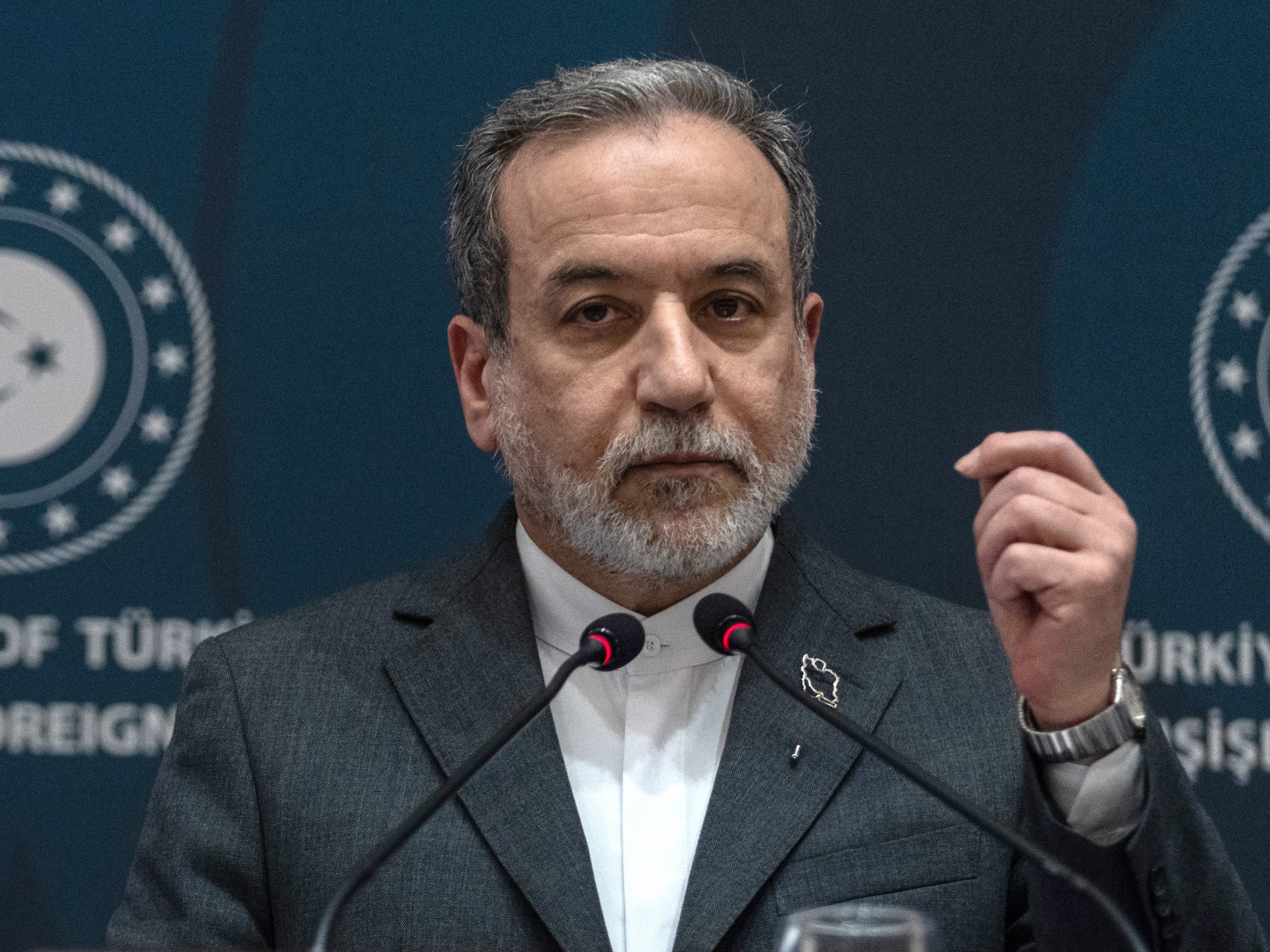

Iranian Foreign Minister Abbas Araghchi has confirmed that nuclear talks between his country and the United States will take place this week in Oman.
Araghchi announced late Wednesday that the talks were scheduled to take place at 10am in Muscat on Friday (06:00 GMT), after reports earlier suggested the anticipated meeting was faltering amid disagreements over format and location.
- list 1 of 4What would be the impact of a US attack on Iran?
- list 2 of 4‘Game is over’: Iran’s ex-leaders, hardliners clash after protest killings
- list 3 of 4Can US-Iran diplomacy work? Inside the narrow window for talks
- list 4 of 4Some in Israel question its influence over US as Iran war decision nears
end of list
“I’m grateful to our Omani brothers for making all necessary arrangements,” the foreign minister wrote on social media.
On Tuesday, Iranian President Masoud Pezeshkian wrote on social media that he has instructed the country’s foreign minister to “pursue fair and equitable negotiations”.
Washington confirmed that the US will take part in high-level talks with Iran in Oman instead of Turkiye as originally planned, according to a White House official quoted by The Associated Press news agency.
Mediators from Qatar, Turkiye and Egypt have presented Iran and the US with a framework of key principles to be discussed in the talks, including a commitment by Iran to significantly limit its uranium enrichment, two sources familiar with the negotiations have told Al Jazeera.
Key points in the proposed framework also include restrictions on the use of ballistic missiles and the arming of Iran’s allies in the region, according to the sources, who include a senior diplomat who asked to remain anonymous due to the sensitive nature of the negotiations.
The talks come as the region braces for a potential US attack on Iran after US President Donald Trump ordered forces to amass in the Arabian Sea following a violent crackdown by Iran on protesters last month.
Advertisement
US Secretary of State Marco Rubio said Washington hoped to discuss a number of concerns beyond Iran’s nuclear programme, including discussions on its ballistic missiles, support for proxy networks across the region and the “treatment of their own people”.
“The leadership of Iran at the clerical level does not reflect the people of Iran. I know of no other country where there’s a bigger difference between the people who lead the country and the people who live there,” he told reporters.
This is not the first time Iranian and US officials have met in a bid to revive diplomacy between the two nations, which have not had official diplomatic relations since 1980. In June, US and Iranian officials gathered in the Omani capital to discuss a nuclear agreement, but the process stalled as Israel launched attacks on Iran. The US later briefly joined the war, bombing several Iranian nuclear sites.
Related News
South Sudan hospital hit by government air strike, MSF says
‘Red line’: Global NGOs working in Gaza defy Israel’s threats after MSF ban
UK’s Mandelson to resign from House of Lords over Epstein ties