‘Ignore the nonsense from the Opposition’ – Ramsaroop urges as budget debates unfold
 01 February 2026
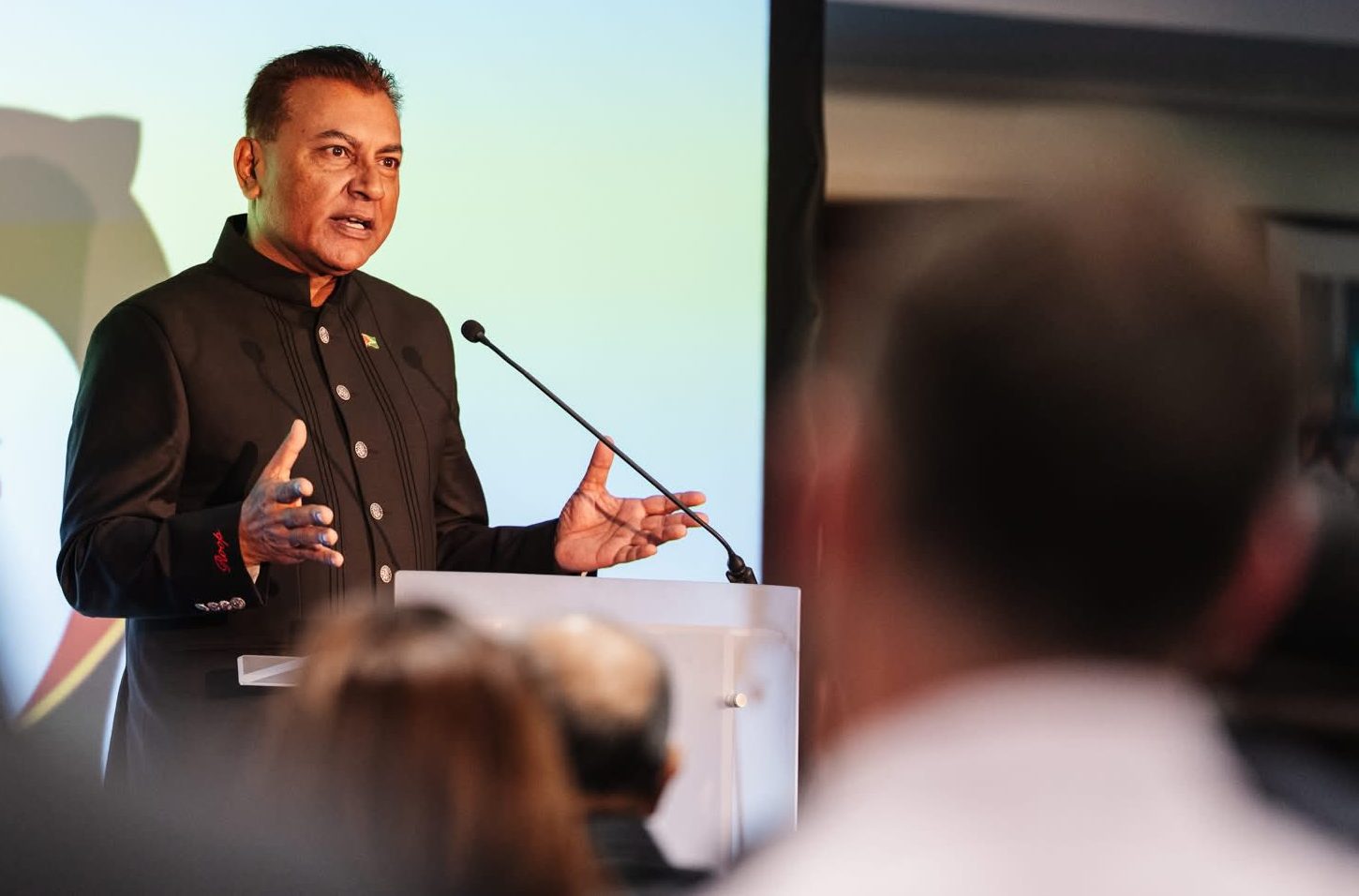


As this week’s parliamentary debates unfold, Member of Parliament (MP) Peter Ramsaroop, who is also the country’s Chief Investment Officer, is urging investors and citizens to look beyond what he described as predictable nonsense by the Opposition, including recycled economic ideas now being promoted by familiar figures hiding under new party names.
“You will hear a lot of noise this week,” Ramsaroop said. “What makes it almost laughable is that many of the same voices—some now rebranded—are recycling the very economics that failed Guyana between 2015 and 2020.
“You can change your party name, your logo, and your colours, but you cannot change your record. Failure has a memory.”
Ramsaroop said Guyana’s economic direction is firmly anchored in President Dr. Mohamed Irfaan Ali’s Vision 2030, which focuses on long-term growth, productive investment, education and skills, and modern infrastructure.
“This growth is not accidental,” Ramsaroop said. “Under President Ali’s leadership, Guyana is building an economy by design—planned, disciplined, and focused on results, not improvisation.”
He pointed to the Government’s 2020–2025 record, reinforced by Budget 2026, as clear evidence that the approach is working.
“Guyana already tested their economics once,” Ramsaroop said. “It failed. The people rejected it. No amount of political rebranding can resell a rejected product.”
Ramsaroop said Budget 2026 sets out major economic planks that will structurally strengthen Guyana’s economy and competitiveness.
He noted that $14.5 billion is allocated to the University of Guyana in 2026, alongside continued free tertiary education, expanded technical and vocational training, and Government payment of CSEC and CAPE examination fees—a direct signal to investors focused on workforce readiness.
He also outlined that in 2026 alone, budget measures will inject over $100 billion in direct disposable income through cash grants, tax relief, increased wages and stipends, and targeted cost-of-living measures.
“These are not giveaways,” Ramsaroop said. “They are targeted productivity measures. These policies help businesses grow, create jobs and strengthen the economy over time.”
Ramsaroop highlighted continued investment in gas-to-energy, generation, and transmission will deliver lower and more reliable electricity costs, improving competitiveness for manufacturing, agro-processing, and services.
Additionally, he recalled that more than $200 billion continues to be invested in roads, bridges, hinterland connections, ports, river facilities, and logistics hubs, cutting transport costs and moving goods to market
faster.
Ramsaroop further highlighted that agriculture and agro-processing are now tax-free, a decisive move that directly benefits farmers, processors, and exporters.
“This is a game-changer,” he said. “When farmers and agro-processors keep more of what they earn, production expands, value-added increases, and more Guyanese goods reach local, regional, and international markets.”
He further pointed out that $159.1 billion is allocated to housing, with a commitment to 40,000 new homes, supporting construction, local manufacturing, finance, and household wealth creation.
Further, he said $161.1 billion is allocated to healthcare in 2026, strengthening hospitals, regional services, and workforce stability—reducing long-term investment risk.
“These are real economic levers,” Ramsaroop said. “Lower energy costs, tax-free
agriculture, efficient ports, educated workers, and manageable living costs—this is how productivity rises and competitiveness is built.
“These are the fundamentals investors and citizens care about,” he added. “Stable leadership, clear policy, and results on the ground.”
“So as Guyanese listen to the debates this week,” Ramsaroop said, “they should be clear about what they are hearing. The opposition may change names, but failed economics do not change. Guyana is not recycling the past—it is designing the future, and the results speak for themselves.”
Subscribe to get the latest posts sent to your email.
Related News
Fatal 'truck wheel' accident case dismissed after $4.4M settlement
Police seize 23 grams of ganja, $3M in cash during Bartica operation; 40-Y-O arrested

$3.7B budgeted to support development of Orange Economy