2nd gas-to-energy project to create a new wave of generational wealth – President Ali
 05 January 2026
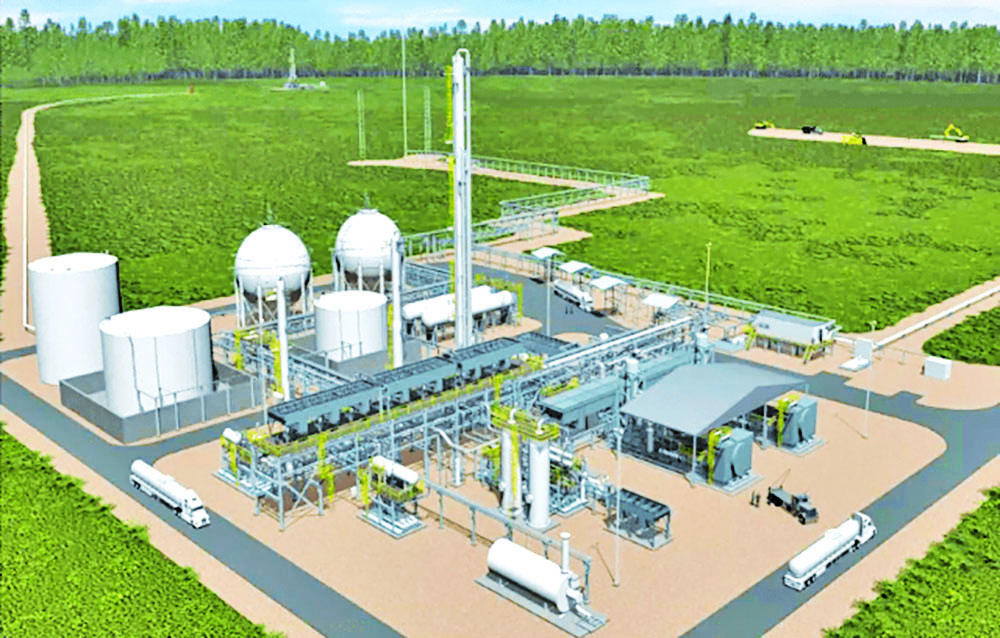


As the Guyana Government continues to pursue an aggressive energy agenda, President Dr Irfaan Ali says that the second Gas-to-Energy (GtE) project that is earmarked for Region Six (East Berbice-Corentyne) will be the catalyst to drive a new wave of generational wealth in a bold, innovative way.
The Guyanese leader has been pushing the development of a second gas project in Berbice to support large-scale industrial growth with power plants, a data centre and an alumina plant, among other heavy industries – an initiative that will be separate from the highly anticipated GtE project at Wales, West Bank Demerara in Region Three (Essequibo Islands-West Demerara).
During an interview with a group of local female journalists and high school students last week, President Ali pointed out that the second GtE project will create wealth while simultaneously positioning Guyanese as industry leaders.
“We will have Gas-to-Energy Two in Berbice, creating the new wave of generational wealth and revenue stream, whether it’s a fertiliser plant, glass factory, data centres, energy powerhouse, or the LNG (Liquefied Natural Gas), all of that – creating an infrastructure and logistics hub that would drive opportunities.”
“We don’t want everybody to [just] own a sand truck. We want to get these families…the women, to come together. Let’s sit with you and tell you what type of trucks will be needed to move the gas to Roraima [in Northern Brazil] so you guys can invest in those trucks and you can own the transport and logistics arms of the business. That is what we want. That is the type of wealth creation. Incentivising the entire system geared towards wealth creation – not in a shy way, in a bold, innovative way,” the Head of State declared.
The Guyana Government has already selected United States energy firm Fulcrum LNG Inc to work in a tripartite arrangement with ExxonMobil, which is operating the oil-rich Stabroek Block offshore, to develop the Berbice gas project.
During the interview, President Ali underscored the importance of sustainable investments in the energy sector given the volatile global environment. He said that his Administration’s energy agenda has been carefully designed against the upside and downside of the oil and gas market.
Sustainable investments
He went on to point to the Middle East, where the focus has been shifted now on leveraging their petroleum potential for energy and energy-related investments like hyperscale data centres that will power the next generation of jobs.
“It’s about investment in technology and AI [artificial intelligence]. It’s about converting their petroleum into petroleum-based products for home construction, for drainage, and for steel production. It’s an investment in innovation, research and development, because it’s not the raw product. It’s converting a lot of that excess demand into new forms of production, into energy that drives new industries and new forms of wealth creation. And we have to be part of that model.”
“Otherwise, we would find ourselves oil- and gas-rich but not rich from an economic standpoint long into the future. That is why sustainable, resilient investments are key in the model that we are building.

That is why the incentives are geared towards making Guyana a powerhouse in food production, a powerhouse in environmental services, a powerhouse in climate services, an industrial hub for the Caribbean and Latin America, an agro-processing hub for the Caribbean and Latin America, a powerhouse in ecotourism, and a powerhouse in the orange economy. It is using this phase to power this generational wealth opportunity and to expand the pillars of the economy at a rapid pace,” the Guyanese leader had asserted.
Meanwhile, Berbice is being placed at the centre of Guyana’s next phase of energy expansion as the country braces for a fivefold increase in national electricity demand by 2030.
Only last November, President Ali had disclosed that the second pipeline, bringing the natural gas from offshore oil fields, would be routed through Berbice before the end of the decade.
“Before the end of 2030, the second gas line must be brought to shore,” he had said while addressing the Fifth UK Trade Mission in Georgetown. “And that will be linked to the port and the whole infrastructure that will be built out in Berbice. And for that to happen, we will have to break every single record in the world. It will be the fastest actualisation of a gas line of that magnitude from conceptualisation to delivery. And we intend to break that record and make it happen.”
Ali told UK investors then that a robust, diversified economy cannot emerge without “cheap, reliable, clean energy”, and the gas-to-energy platform, now set to include a separate Berbice line, is the bedrock on which the country’s industrial ambitions will be built.
The Berbice gas line will form part of a massive national energy buildout that includes the Amaila Falls Hydropower Project, large-scale solar farms, mini-grids, and upgraded transmission and control systems that are linked to the much-anticipated Wales project.
Wales 2026 completion
The US$759 million GtE project in Wales consists of a 300-megawatt (MW) combined cycle power plant and an NGL facility that will utilise the rich natural gas that will be piped from the Liza Field in the Stabroek Block, offshore Guyana.
When completed, the project will see the cost of electricity slashed by half and ensure a reliable power supply.
According to the Head of State during last week’s interview, “We are hoping by the last quarter in 2026, the Gas-to-Energy project will be in a position to deliver.”
With the aim of reaching the extended project deadline, the contractor, US-based Lindsayca, has already moved into round-the-clock operations.
Subscribe to get the latest posts sent to your email.